Puppy Not Eating But Acting Normal — When to Wait, When to Worry
Puppy not eating but acting normal — when to wait, when to worry. The 7 most common reasons, a 5-minute checklist, and the 4 signs that mean call the vet.
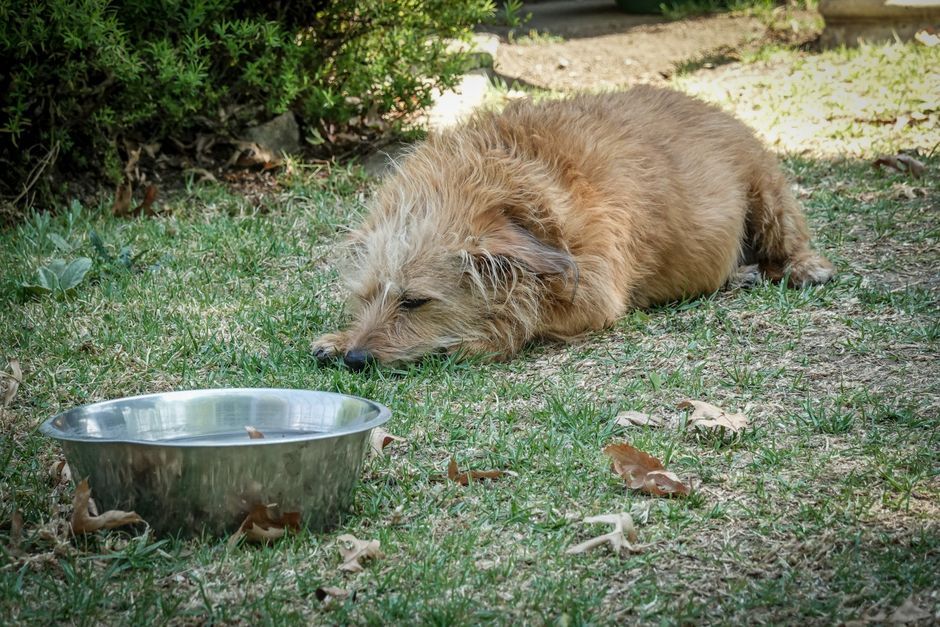
If your puppy is acting normal but won't eat, the honest answer is usually wait — healthy puppies skip a meal for benign reasons like a stale bag, teething, recent vaccination, hot weather, or stress. Watch for 24 hours if they're playful, drinking water, and producing normal stool. Call the vet immediately for vomiting, lethargy, pale gums, or bloody stool.
This guide walks through the seven most common reasons a puppy stops eating despite acting fine, the simple at-home checks that solve about 80% of cases, and the four warning signs that mean stop reading and call the vet.
TL;DR: Most healthy puppies will skip a meal or two without explanation. If your puppy is drinking water, alert, playful, and producing normal stool, watch for 24 hours before worrying. Call the vet immediately if any of these are true: vomiting, lethargy, more than 24 hours of complete refusal in puppies under 12 weeks (or 8 hours for small-breed puppies under 12 weeks — hypoglycaemia risk), pale gums, or a distended belly. Otherwise, work through the checklist below — most of the time you'll find the answer in 5 minutes.
What "acting normal" actually means
Before you decide it's safe to wait it out, run a quick mental check. "Acting normal" for a healthy puppy means:
- Bright, alert eyes. Not glassy, not squinting, not unusually droopy.
- Normal energy. Engaging with toys, family, or surroundings the way they usually do.
- Drinking water. This matters more than eating in the short term — dehydration is the bigger risk.
- Normal stool. Solid, shaped, normal colour. No diarrhoea, no blood.
- Pink gums that capillary-refill in under 2 seconds when pressed.
- Normal breathing. Not panting at rest, no laboured breathing.
If all six are true, your puppy is genuinely acting normal — and it's safe to investigate non-urgent causes. If any one of those is off, skip to the "when to call the vet" section further down.
The seven most common reasons (in order of how often we see them)
1. The food itself
The single most common cause. Puppies sometimes refuse a specific kibble — a new bag from a different lot, a brand switch you forgot you made, food that's been open too long, or food that just doesn't smell right to them.
Quick check: Smell the kibble. If it smells stale, rancid, or noticeably different from the last bag, that's your answer. Open a fresh bag or try a small handful from a different brand. A genuinely-hungry puppy will eat fresh food.
2. They're not actually hungry yet
Puppy feeding charts are conservative. If you're following the bag's recommended amount and your puppy is naturally a smaller eater, they may simply not need that much yet. Re-running the feeding calculator with their actual weight + activity level often reveals the chart is over-feeding by 15–20%.
A puppy who's been over-fed for a week will skip meals while their body works through the surplus. That's not a problem — it's self-regulation.
3. Teething (3 to 6 months)
At 3–6 months, puppies are losing baby teeth and growing in adult teeth. Their gums hurt. Hard kibble is uncomfortable to chew.
Quick check: Run a finger gently along their gums. If they flinch or you see redness, missing teeth, or unusually wobbly teeth — teething is the answer.
Fix: Soak the kibble in warm water for 5 minutes before serving. Or temporarily switch to wet food, or mix wet + dry. Most teething eating issues resolve as soon as the discomfort eases.
4. Recent vaccination
Puppies often go off food for 12–24 hours after a vaccination, especially the first few rounds (8, 12, 16 weeks). Their immune system is working hard, they may have a low-grade fever, and food is the lowest priority.
This is normal and self-resolving. Don't try to "make up" the missed meals over the next day — let appetite return naturally.
5. Stress / environment change
New home, new family member, a noisy weekend, a recent boarding stay, a thunderstorm — puppies are sensitive. Stress suppresses appetite the same way it does in humans.
Fix: Don't push food. Let things settle. Most puppies eat normally within 12–48 hours of any environmental change. A consistent crate routine helps — it gives the puppy a stable den and a predictable rhythm even when the rest of the environment is new. See how to crate-train a puppy for the 7-day protocol.
6. The weather
This sounds minor but is real. Puppies eat less on hot days. Their thermoregulation isn't fully developed, and reducing food intake is a normal way they shed metabolic heat. A 25°C summer afternoon meal often gets ignored. The same puppy will clear the bowl at 7am and 7pm when temperatures drop.
Fix: Time meals for cooler parts of the day. Ensure shade and fresh water.
7. Free-feeding behaviour creep
If you leave food out all day, puppies graze. They might "eat normally" in your eyes but actually be self-managing intake across many tiny snacks — which means meal-time refusal is just timing, not appetite. Free-feeding is one of the things we recommend against in our puppy feeding pillar guide for exactly this reason. Switch to scheduled meals (3–4 per day under 6 months) and the question of "is my puppy eating" gets clearer fast.
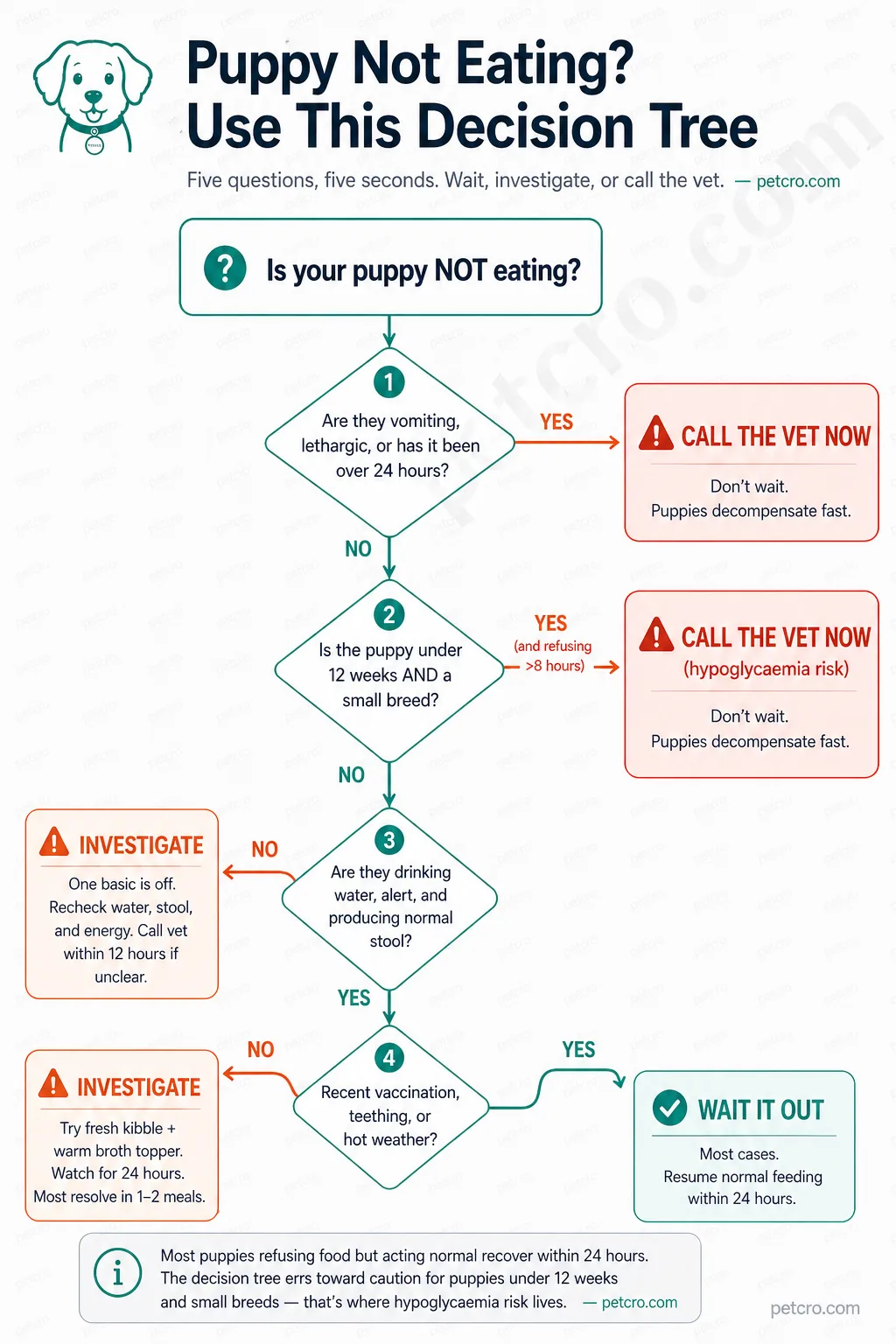
The 5-minute investigation checklist
Run through this list in order. Most of the time, you'll have your answer before you reach #5.
- Are they drinking water? Check the bowl. If yes, dehydration isn't the issue — keep going. If no, this needs vet attention sooner.
- What does the food smell like? Stale, rancid, or oily? Replace it with fresh.
- When was their last vaccination? Within 24 hours = expected, wait it out.
- Are gums sore or are baby teeth wobbling? Soak the kibble or switch temporarily to wet.
- What's their stool quality? Run our poop health tool — abnormal stool changes the urgency. Normal stool means whatever's happening isn't GI-related.
- Have you changed the food recently? Even a different bag of the same brand can cause refusal. Try a tablespoon of plain bone broth (unsalted, no onion) over the kibble — many puppies will eat after the smell upgrade.
- What's the room temperature? Hot day? Try the meal again 4 hours later when it's cooler.
If steps 1–7 don't surface a cause and the puppy is still acting normal but skipping food at the 24-hour mark for puppies under 12 weeks or the 48-hour mark for puppies over 12 weeks, call the vet. Even acting-normal puppies can mask early illness — the threshold is age-dependent.
When to call the vet immediately (non-negotiable)
Stop reading and call your vet if any of these appear, even if your puppy seems otherwise fine:
| Sign | Why it's urgent |
|---|---|
| Vomiting more than once | Possible parvo, intestinal blockage, foreign body, parasites |
| Lethargy | Off-energy puppies who won't engage with toys/family are not "fine," even if they look fine sitting still |
| 24+ hours of complete refusal in puppies under 12 weeks | Hypoglycaemia risk, especially in toy and small breeds. Can become emergency fast |
| Pale gums or gums that don't refill in <2 seconds | Possible anaemia, shock, or internal bleeding |
| Distended (swollen) belly | Possible bloat — emergency in any breed, especially deep-chested |
| Bloody stool or vomit | Parvo, severe parasites, or GI ulceration |
| Recently exposed to unvaccinated dogs | Parvo / distemper risk — even if symptoms are mild now |
| Recently swallowed something unusual | Foreign body / intestinal obstruction |
Hypoglycaemia warning for small breeds: Toy and small-breed puppies (Yorkies, Chihuahuas, Maltese, Pomeranians, etc.) under 12 weeks can crash into hypoglycaemia within 12 hours of not eating. Symptoms: weakness, wobbliness, glazed eyes, eventual seizures. If your small-breed puppy hasn't eaten in 8 hours, rub a small amount of honey or maple syrup on their gums while you call the vet — that buys you time.
"But they're drinking water — that's good, right?"
It's better than not drinking. But drinking water alone doesn't rule out the urgent issues above. Healthy puppies drink water AND eat. Drinking-but-not-eating only matters as a positive signal when paired with normal energy, normal stool, and a known explanation (teething, vaccination, weather).
If your puppy is drinking more water than usual while not eating, that's a separate signal worth flagging to the vet — increased thirst can indicate kidney issues, diabetes (rare in puppies but possible), or other systemic problems.
The healthy ratio: about 50–100 ml of water per kg of body weight per day. Significantly above that range alongside no eating is a vet conversation.
What to feed a puppy who won't eat their normal food
If your investigation suggests a non-urgent cause and you want to bridge until normal eating resumes, here's the safe-bet ladder:
- Soaked kibble — pour warm (not hot) water over their normal kibble, let sit 5 min, mash slightly. Easier on sore gums, releases more aroma.
- Plain bone broth topper — 1 tbsp unsalted plain bone broth over the kibble. Aroma upgrade. Confirm it's onion- and garlic-free — these are toxic to dogs.
- Tiny amount of plain boiled chicken — 1–2 tbsp over the kibble. Almost always works. Don't make this a habit, but it's fine for a meal or two.
- Wet food topper — 1 tbsp of their puppy-formula wet food over the kibble.
- Switch entirely to wet food temporarily — for teething or post-vaccine days specifically, fine for 1–3 days.
What not to use: human leftovers (especially anything with onion, garlic, chocolate, raisins, or xylitol), raw meat as a quick fix (food safety issues — see our raw diet for puppies guide), or different brand kibble (causes diarrhoea on top of the eating issue).
When the puppy resumes eating
Once they're eating normally again, do not over-correct. The instinct is to give an extra big meal to "make up" for the skipped ones. Don't. Their stomach has shrunk slightly, and a sudden large meal often triggers vomiting or loose stool — which restarts the worry cycle.
Resume normal portions immediately. If they're hungry, they'll show you at the next meal. Most puppies are back to baseline within 1–2 days of whatever caused the off-food window.
This guide is general guidance, not veterinary advice. For your specific dog's nutrition, health, or behavior needs, consult your veterinarian.
Frequently asked questions
My 8-week-old puppy isn't eating much but is acting normal. What should I do?
At 8 weeks, the threshold for vet attention is shorter — 24 hours of complete refusal is the line. Run the 5-minute checklist above. If they're drinking, alert, and producing normal stool, watch for 24 hours. If small-breed (under 5 kg adult target), drop that to 8 hours because of hypoglycaemia risk — and rub a little honey or maple syrup on the gums while you call the vet.
My puppy is drinking water but not eating. Is that okay?
Better than not drinking, but doesn't rule out the urgent signs in the table above. The "drinking water + acting normal" combination buys you 24 hours of patience for typical puppies. If they're a small breed, drinking more than usual, or showing any other signs from the urgent list, call the vet.
Can puppies skip meals?
Yes. Healthy puppies skip a meal here and there for benign reasons (food, weather, teething, mild stress). The bigger-picture question is whether the pattern continues. Skipping one meal = monitor. Skipping all meals for 24 hours = investigate. Skipping all meals for 48+ hours = vet.
Should I switch food if my puppy isn't eating?
Not as a first move. Switch food when you've ruled out the simpler causes (stale kibble, teething, vaccination) and the refusal has lasted 3+ days. Sudden food changes cause GI upset — see our when to switch puppy to adult food guide for the proper transition protocol.
How long can a puppy go without food?
Healthy adult dogs can fast 24–48 hours without harm. Puppies are different. Under 12 weeks, especially small breeds, the safe limit is closer to 12 hours due to hypoglycaemia risk. Over 12 weeks, 24 hours of total refusal is the threshold for vet attention even in healthy-acting puppies.
My puppy won't eat their puppy food but begs for human food. What should I do?
That's a learned behaviour, not a feeding problem. The puppy has discovered that refusing food eventually produces something better. Stop offering human food, return to scheduled meals, and the puppy will return to eating their kibble within 24–48 hours. Yes, it feels harsh — but feeding into the negotiation makes it permanent.
Could my puppy not eating mean they're sick?
It can. Acting "normal" sometimes masks early illness, especially parvo and parasites. The signs in the urgent table above are the screening tools. If any appear, call the vet regardless of how normal the puppy seems otherwise. Puppies decompensate fast — the cost of an unnecessary vet visit is far smaller than the cost of a delayed diagnosis.
TL;DR — the puppy not eating cheat sheet
- Acting normal + drinking water + producing normal stool = 24 hours of patience is fine for puppies over 12 weeks
- Under 12 weeks: 24-hour threshold for vet attention. Small-breed under 12 weeks: 8 hours because of hypoglycaemia risk
- Most common causes: stale food, teething, vaccination, weather, stress
- Run the 5-minute checklist before assuming it's serious
- Call the vet immediately for: vomiting, lethargy, pale gums, distended belly, bloody stool, parvo exposure, or any small-breed puppy refusing food past 8 hours
- When eating resumes, don't over-feed to compensate
Most acting-normal-but-not-eating cases resolve on their own within 24 hours. The hard part is the not-knowing — work the checklist, watch for the urgent signs, and trust that healthy puppies have off days.
Sources & further reading
- WSAVA Global Nutrition Guidelines — the international veterinary baseline for puppy nutrition.
- ASPCA Dog Nutrition Tips — vet-organisation framework for puppy feeding, appetite changes, and red-flag escalation.
- Cornell Riney Canine Health Center: Feeding a puppy — peer-reviewed framework for puppy growth and nutrition.
- Tufts Petfoodology: When your dog won't eat — vet-nutritionist perspectives on appetite changes.
If your puppy isn't eating and you have any doubt at all about which side of the urgent / non-urgent line they're on, call the vet. Vets would rather hear from you about a puppy who turned out to be fine than miss the early window on one who wasn't.
More from Petcro's puppy nutrition cluster
- How much to feed a puppy — the pillar guide
- When to switch a puppy to adult food
- Puppy feeding calculator — recalculate portions by weight, age, and activity
- Body condition scorer — confirm your puppy isn't actually over-fed
- Poop health checker — rule out a GI cause behind the appetite drop
Petcro is reader-supported. We may earn an affiliate commission when you click through links to products in this guide. Our editorial picks are independent of any commercial relationship with any brand.