How to Introduce a Puppy to Other Dogs (the Neutral-Territory Protocol)
How to introduce a puppy to other dogs — the neutral-territory protocol, parallel walks, the 16-week vaccination gate, and resident-dog resource-guard fixes.
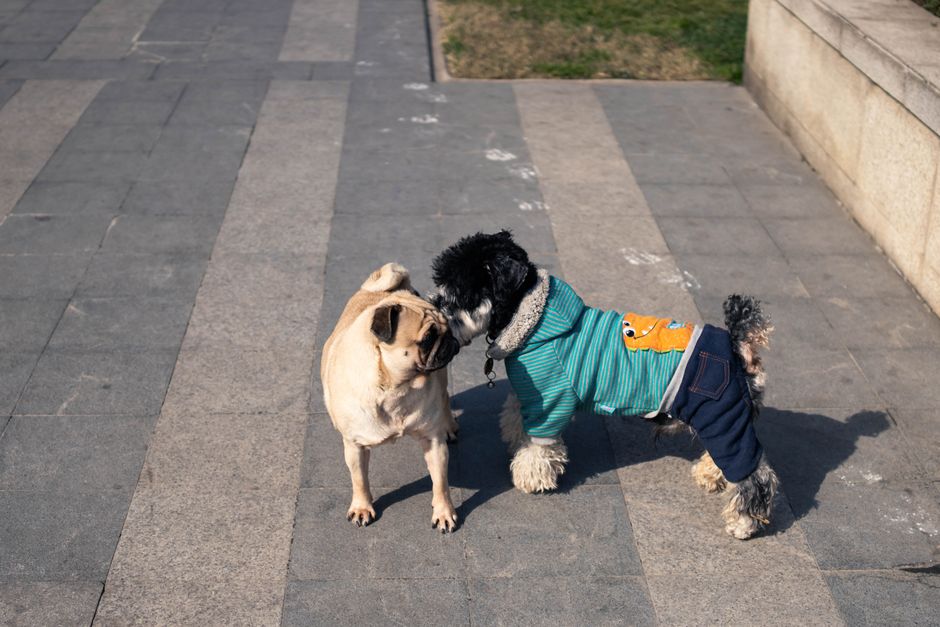
Introducing a puppy to other dogs is a staged protocol, not a single meeting. For a resident dog at home, start with neutral territory and parallel walks before the puppy ever sets paw inside. For unfamiliar dogs at parks or classes, the 16-week vaccination gate is non-negotiable — parvo exposure is the real risk.
TL;DR: Don't introduce them on day one. For the resident dog, meet on neutral territory (a quiet street or park neither dog owns) with two handlers and loose leashes — a parallel walk first, then a slow approach. Inside the home, feed and crate them in separate rooms for the first week while resource-guarding triggers de-escalate (longer for high-guarding pairs). Scent swap from days 2 to 5. Unsupervised contact only after 4 weeks of incident-free off-leash supervised time. For unfamiliar dogs at parks or classes, wait until 1 to 2 weeks after the 16-week vaccine.
What should I expect when introducing a puppy to other dogs?
Most puppy-resident-dog duos reach comfortable coexistence in 2 to 4 weeks. Confident social adults often accept a puppy within days; anxious or senior dogs may need 6 to 8 weeks. Two scenarios sit under this question: resident-dog introductions (where guarding and territory matter most), and unfamiliar-dog introductions at parks or classes (where disease exposure matters most).
A few patterns that surprise first-time owners:
- The resident dog will probably ignore the puppy for 24 to 72 hours. Not rejection — normal canine processing.
- Brief growling and lip-lifting are features, not bugs. An adult dog who growls when a puppy crowds them is teaching a boundary the puppy needs to learn.
- Day one is the worst day. Puppies are exhausted from the first night home (see the first night with a new puppy protocol); resident dogs are over-stimulated. A neutral-territory meet before the puppy enters the house lowers the trigger.
- High-guarding dogs need slower protocols. A resident dog with a history of guarding food, toys, or beds needs 2 to 4 weeks of structural separation, not the standard one. The American Kennel Club's training resources cover temperament factors.
The whole protocol in one frame:
| Stage | What happens | Timing |
|---|---|---|
| 1. Neutral-territory meet | Parallel walk, two handlers, ground neither dog owns | Day 1 (before home entry) |
| 2. Home entry, leashed | Both on loose leashes, resource items removed | Day 1 evening |
| 3. Structural separation | Crates + baby gates, scent swap, parallel feeding | Days 2 to 7 |
| 4. Brief supervised in-home | 5 to 10-min sessions, both on house leashes | Week 2 |
| 5. Off-leash supervised | Both free indoors, adult watching, resources managed | Weeks 3 to 4 |
| 6. Unsupervised | Trust earned over weeks of solid behavior | Week 4+ |
Don't skip stages. A botched front-door first meeting can poison the relationship for years; a careful neutral-territory intro produces friendly cohabitation within a month.


The neutral territory rule — the parallel-walk protocol
This is the foundation of resident-dog intros — the biggest difference between a smooth intro and a bad one.
Neutral territory means the meeting happens somewhere neither dog owns — not the resident dog's yard, not their walk route, not the puppy's new home. A quiet park, unfamiliar street, trailhead. An adult dog on their own turf treats a puppy as an intruder; on neutral ground, as a curiosity.
The parallel walk is the technique. Two handlers, one dog each, loose leashes (tension travels down the leash). Same path, 6 to 10 feet apart, same direction, handlers between the dogs. Not face-to-face. Two dogs walking the same way, sharing scent and rhythm.
The 5-step parallel-walk protocol:
Step 1: Arrive separately
Park in different spots; let each dog decompress for 2 to 3 minutes before any sight of the other.
Step 2: Start far apart
Begin with 20 to 30 feet between the dogs, both moving the same direction.
Step 3: Close the gap gradually
Over 10 to 15 minutes, narrow to 6 to 10 feet apart. Treats every 15 to 30 seconds for whichever dog looks at their handler instead of fixating.
Step 4: No face-to-face yet
Stay parallel. After 15 to 20 minutes of calm walking, you can let them briefly sniff side-to-side or rear-to-rear. Avoid head-on greetings — a stress amplifier, not a friendship builder.
Step 5: End on a calm note
20 to 30 minutes total is plenty for a first session. Both dogs leave the encounter with a positive, low-arousal association.
Two handlers is non-negotiable. Handler calm matters more than any technique applied to the dogs — the Merck Veterinary Manual's dog behavior section covers the stress-response background.
Bringing the puppy home — the first 7 days inside
Once the neutral-territory meet has gone well, the puppy enters the home and a new set of rules kicks in.
Day 1 — controlled home entry. Take the resident dog out for a 10-minute walk while a helper brings the puppy in and settles them in a separate room with their crate. Bring the resident dog back inside on a loose leash. Both stay leashed for the first hour. Remove all high-value items first — food bowls, chews, bones, favorite toys, the resident dog's bed. These come back gradually once both are settled.
Days 2 to 5 — scent swap. Rub a soft cloth along the puppy's cheeks, ears, and body, then place it in the resident dog's sleeping area near their bed. Do the reverse with a cloth from the resident dog. Swap fresh cloths every 24 hours. By day 3 or 4, most resident dogs progress from a brief sniff to ignoring the cloth.
Days 2 to 7 — structural separation. Crates in separate rooms. Feed in separate rooms (this point alone prevents most resource-guarding flare-ups). Baby gates so the dogs can see each other without contact. Run 3 to 4 short in-sight sessions per day, 5 to 10 minutes each, both leashed, treats flowing for calm orientation away from each other.
If the puppy bounces toward the resident dog, redirect with a treat or toy. If the resident dog goes still and stares, end the session. The crate-training step-by-step guide covers crate-as-management when you can't actively supervise.
Resource guarding — when the resident dog protects their stuff
Resource guarding — a dog protecting food, toys, beds, or a person — predicts most home-introduction fights. The dynamic: the new puppy, who has no social manners yet, blunders toward the resident dog's food bowl, chew, or bed. The resident dog growls, lip-lifts, or snaps.
What to remove from shared space for the first 4 weeks:
- Food bowls outside meals. Feed in crates or separate rooms; pick bowls up the moment meals end.
- All long-lasting chews. Bones, antlers, bully sticks, frozen Kongs go in crates only.
- The resident dog's bed. Move it behind a baby gate or into the crate. An invaded resting spot escalates fast.
- High-value toys. The squeaky stuffie the resident dog has had for years stays out of puppy reach.
- You, as a resource. If your resident dog has ever guarded you, pet the puppy when the resident dog is crated; pet the resident dog when the puppy is napping. Don't let both compete for your hands at once for the first month.
When the resident dog growls or lip-lifts at the puppy: don't punish it. That growl is a warning instead of a bite. Punishing the warning teaches the dog to suppress signals — the next escalation comes with no warning. Calmly call the puppy away, note the trigger, manage it for 2 weeks, then re-test.
If the resident dog moves past growling to snapping or biting, call a board-certified veterinary behaviorist.
The 16-week vaccination gate — when can a puppy meet unfamiliar dogs?
This section is about unfamiliar dogs (dog park, puppy class, a friend's dog) rather than the resident dog. The gating question is disease exposure — specifically parvovirus.
The hard rule: a puppy's parvo protection isn't reliable until 1 to 2 weeks after their final puppy DHPP shot, which most schedules put at 16 weeks. Before that, maternal antibodies are still fading and the puppy's own immunity hasn't kicked in. Parvo is shed in feces, lives in soil for months, and has a 10 to 30% fatality rate even with treatment. The puppy vaccination schedule chart covers the full timeline.
Before 16 weeks: no dog parks, no daycare with unknown vaccination status, no high-traffic dog-walking areas. After the 16-week shot, wait 1 to 2 weeks, then gradually introduce broader environments — quiet times at the dog park first.
This creates a tension first-time owners feel acutely. The critical socialisation window runs from 3 to 14 weeks, and undersocialisation drives adult reactivity. But the parvo risk is real. The resolution most modern vets use, per the PetMD puppy section:
- Take a properly run puppy class starting at 7 to 9 weeks. Reputable classes require proof of vaccination, disinfect floors, and group puppies by age.
- Avoid public dog spaces (parks, pet stores with floor traffic) until 16-week shots are done.
- Set up controlled meetings with vaccinated, healthy adult dogs you know. Five good meetings with friendly adults beat one chaotic dog park trip.
Patterns formed in the first 4 to 6 months stick for years. A puppy who learns "other dogs = calm and rewarding" by 16 weeks usually carries that into adulthood.
Reading body language — green flags vs red flags
You can't follow the protocol blind. You need to read both dogs' signals at every meeting.
Puppy green flags: Loose body, soft eyes, brief glances then back to handler, taking treats calmly, tail wagging mid-height with full-body wiggle, play-bow (front legs down, rear up), brief sniff then disengage.
Puppy red flags: Hard stare, frozen body, tail up or stiff, ears pinned forward, low stalking crouch, snapping at the leash, refusing treats, sustained barking, raised hackles, mouthing the other dog's neck with intensity rather than play.
Resident dog green flags: Loose body, tail neutral or wagging mid-height, looks at handler when called, brief sniff then moves on, soft mouth corners, sits or lies down in the puppy's presence, returns a play-bow.
Resident dog red flags: Hard stare, frozen body, tail up or stiff, raised hackles, lifted lip showing teeth, growling that escalates rather than de-escalates, body-blocking the puppy from a resource or person, mounting the puppy can't escape, snapping at the air near the puppy's face.
A single red flag means pause, decompress, try again later at the previous stage. Multiple red flags across days means back up two stages. Mounting and body-blocking are dominance displays — not always aggressive but always worth interrupting.
How long does it take for a puppy and resident dog to get along?
2 to 4 weeks for most pairs, but the range is huge.
- Days 3 to 7 — fastest. Confident social resident dog who's lived with other dogs, calm puppy.
- Weeks 2 to 4 — most common. From cautious tolerance to relaxed coexistence to genuine play.
- Months 1 to 3 — slow case. Anxious resident dog, history of guarding, or a senior with low play tolerance.
- Never fully bonded — small minority. They can still share a house safely with structural separation.
"Getting along" means sharing a room without tension, eating without resource fights, and occasional brief play.
Senior resident dogs (10+ years) deserve a note. They have lower play tolerance, slower recovery, and genuine pain (arthritis) that makes a bouncing puppy unwelcome. The acceptance bar is lower: tolerating the puppy in the same room and eating without stress is a win. Don't expect play. Enforce a puppy-free rest zone they can retreat to.
What if my resident dog growls at the new puppy?
Growling is normal. The resident dog is saying: I see you, I don't like this, give me space. Most resident-dog intros involve some growling in weeks 1 and 2.
- Don't punish the growl. Punishing teaches the dog to skip the warning next time — worse, not better.
- Don't coddle the puppy verbally during the growl. High-pitched reassurance can reinforce crowding. Stay neutral.
- End the session and separate if growling escalates to snapping or lunging. Restart tomorrow at the previous stage.
- Check the trigger. Was the puppy near food, a bone, a bed, or your lap? That trigger goes off limits for 2 weeks.
- Check stage timing. If your resident dog is still growling daily at week 3, drop back to structural separation plus parallel walks.
If the resident dog moves past growling to biting and connecting, that's a behaviorist call. A resident dog that still growls occasionally at month 3 isn't a failure — many adult dogs use growling as a "back off" signal for life.
Should I take my under-16-week puppy to the dog park?
No. This is the most common mistake new puppy owners make, with the worst consequences.
Dog parks before the 16-week round expose the puppy to parvovirus (contaminated soil months later still carries live virus), distemper, kennel cough, giardia, and leptospirosis. Dog parks don't gate-keep on vaccination or temperament. A single bad incident at week 12 can drive years of reactivity.
What to do instead during the 3 to 16-week window:
- Properly run puppy class — vaccination enforced, floors disinfected, age-matched groups.
- Vaccinated friends' dogs in private settings — your home, theirs, or a fenced backyard. Pick adults who are calm and tolerant of puppies.
- Carry your puppy in busy environments — a sling or pram lets them see streets, people, cars, other dogs without touching contaminated ground.
After the 16-week shot plus a 1 to 2-week immunity buffer, dog parks become an option — but a discriminating one. Start with off-peak times. Watch the crowd before you enter. Leave if you see resource guarding, reactivity, or rough play that doesn't pause for self-handicapping.
The ASPCA's general dog care advice covers the broader framework. Common mistakes beyond the dog park trap: front-door meetings on day one, face-to-face greetings, tight leashes, one handler managing two dogs, shared food bowls in week one, punishing the resident dog for growling. If you've already made one, back up to structural separation for a week and restart from a neutral-territory parallel walk.
When should I call the vet or a behaviorist?
Call the vet within 24 hours for the resident dog: any puppy bite that broke skin, sudden refusal to eat near the puppy, indoor urinary accidents after months of clean behavior, vomiting or diarrhea, signs of pain after play.
Call the vet for the puppy: any resident-dog bite that broke skin (wounds inject bacteria deep), vomiting more than once, refusal to eat for 24+ hours, sustained room avoidance, lethargy plus any GI symptom (parvo presents this way and is a 24-hour emergency before 16 weeks).
Consider a behaviorist or fear-free trainer for: intros stuck at the same stage for 3+ weeks, any incident where either dog drew blood, growling that escalates rather than de-escalates, and resource guarding that includes the human family. Referrals usually come through your primary vet.
This guide is general guidance, not veterinary advice. For your specific dog's nutrition, health, or behavior needs, consult your veterinarian.
Frequently asked questions
How long should I keep my puppy and resident dog completely separated at first?
Plan for one week of structural separation — separate crates in separate rooms, separate feeding zones, baby gates between living areas — even after a successful neutral-territory meet. High-guarding pairs need 2 to 4 weeks. They can see each other across the baby gate and have brief leashed sessions, but full unsupervised contact isn't the week-1 goal. Most pairs handle 5 to 10-minute supervised sessions, 3 to 4 times a day.
Will my older dog ever accept a new puppy?
Usually yes, but the timeline is longer and the bar is lower. Senior dogs (10+ years) often take 4 to 8 weeks instead of 2 to 4, and may never play with the puppy — they'll just tolerate them, which is a complete success. Add a permanent puppy-free rest zone, manage the puppy's energy so they aren't bouncing into a senior with arthritis, and accept that a senior eating, resting, and walking without stress is the win.
Can I take my 10-week-old puppy to a puppy socialization class?
Yes — modern veterinary guidance actively recommends it. A properly run puppy class (vaccination enforced, floors disinfected, small age-matched groups) delivers critical socialisation during the 3 to 14-week window when the brain is wired to learn that other dogs are normal. The infection risk in a managed class is low; the cost of skipping it (adult reactivity) is high.
My resident dog is body-blocking the puppy from me — what does that mean?
Body-blocking — when the adult dog physically positions themselves between you and the puppy — is a low-grade resource-guarding display with you as the resource. Manage attention deliberately: pet the puppy when the resident dog is crated, pet the resident dog when the puppy is napping, and don't let both compete for your hands at once.
Can I introduce my puppy to a friend's adult dog?
Yes, with three guardrails: confirm the friend's dog is current on vaccinations, confirm they're friendly with puppies specifically (some adults are great with other adults but rough with puppies), and do the first meeting on neutral ground using the parallel walk technique above. A second meeting in a private space only after the neutral-ground meet goes well.
My puppy keeps approaching the resident dog and getting growled at — should I stop the puppy?
Yes. Puppies don't read social signals well until 4 to 6 months old, and the resident dog shouldn't have to keep escalating warnings just to be left alone. Redirect the puppy before the resident dog feels they have to correct. Over weeks, the puppy learns the resident dog's body language and corrections taper off.
What if my puppy gets bitten by the resident dog?
A single incident with no broken skin is recoverable: separate immediately, restart from structural separation in a week, and identify the trigger to manage it permanently. A bite that broke skin is a vet visit and a behaviorist call. Two incidents within a month is a behaviorist call regardless of severity.
TL;DR — the introduction cheat sheet
- Neutral territory rule: first meet on ground neither dog owns. Parallel walk first — same path, 6 to 10 feet apart, same direction, loose leashes, two handlers
- Day 1 home entry = both leashed, all resource items removed; then structural separation for the first week
- Days 2 to 5 = scent swap. Week 2 = brief supervised in-home. Weeks 3 to 4 = off-leash supervised. Week 4+ = unsupervised once trust is earned
- 16-week vaccination gate: no dog parks until 1 to 2 weeks after the final puppy DHPP. Puppy class with managed safety is fine — and important — before then.
- Growling and lip-lifting are warnings, not aggression. Don't punish them. Manage the trigger
- Resource guarding from the resident dog (food, chews, beds, you) is the most common failure mode — feed and rest separately for the first month
- Most pairs reach coexistence in 2 to 4 weeks; senior or anxious dogs need 6 to 8
Don't push for friendship. Push for safe, calm cohabitation. Affection is a bonus when it comes.
Sources & further reading
- American Kennel Club — Training Resources — puppy training framework and breed temperament factors.
- ASPCA — General Dog Care — new-pet introduction guidance and multi-dog basics.
- Merck Veterinary Manual — Behavior of Dogs — canine stress response, body language, resource guarding, and aggression.
- PetMD — Puppy Care Hub — socialisation-window vs vaccine-gate guidance, class-vs-park advice, and broader new-puppy health resources.
More from Petcro's new-puppy cluster
- How to introduce a puppy to a cat — sibling protocol for resident-cat households.
- Puppy vaccination schedule chart — DHPP timeline behind the 16-week gate.
- New puppy checklist — 30-item supply list.
- First night with a new puppy — pickup-day routine.
- Puppy proofing your home — room-by-room sweep.
- Should a puppy sleep in a crate? — crate as core management tool.
- Tips on how to crate train a puppy — 7-day crate intro.
Petcro is reader-supported. We may earn an affiliate commission when you click through links to products in this guide. Our editorial picks are independent of any commercial relationship with any brand.