Bringing a New Puppy Home (the 14-Day Arrival Timeline)
Bringing a new puppy home — the 14-day arrival project (prep, pickup, first 24 hours, week-1 rhythm), plus the weeks 2–4 settling-in guide.
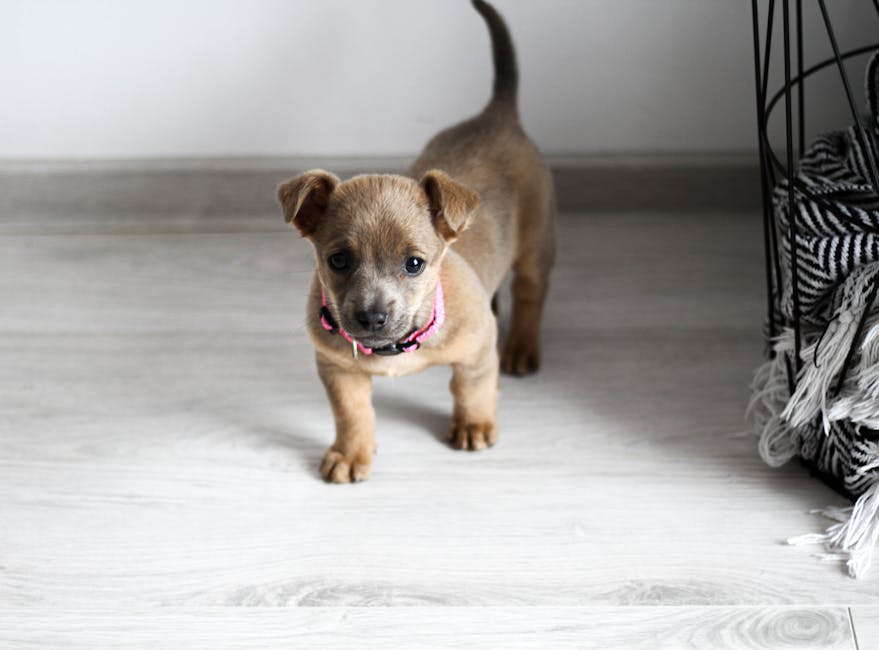
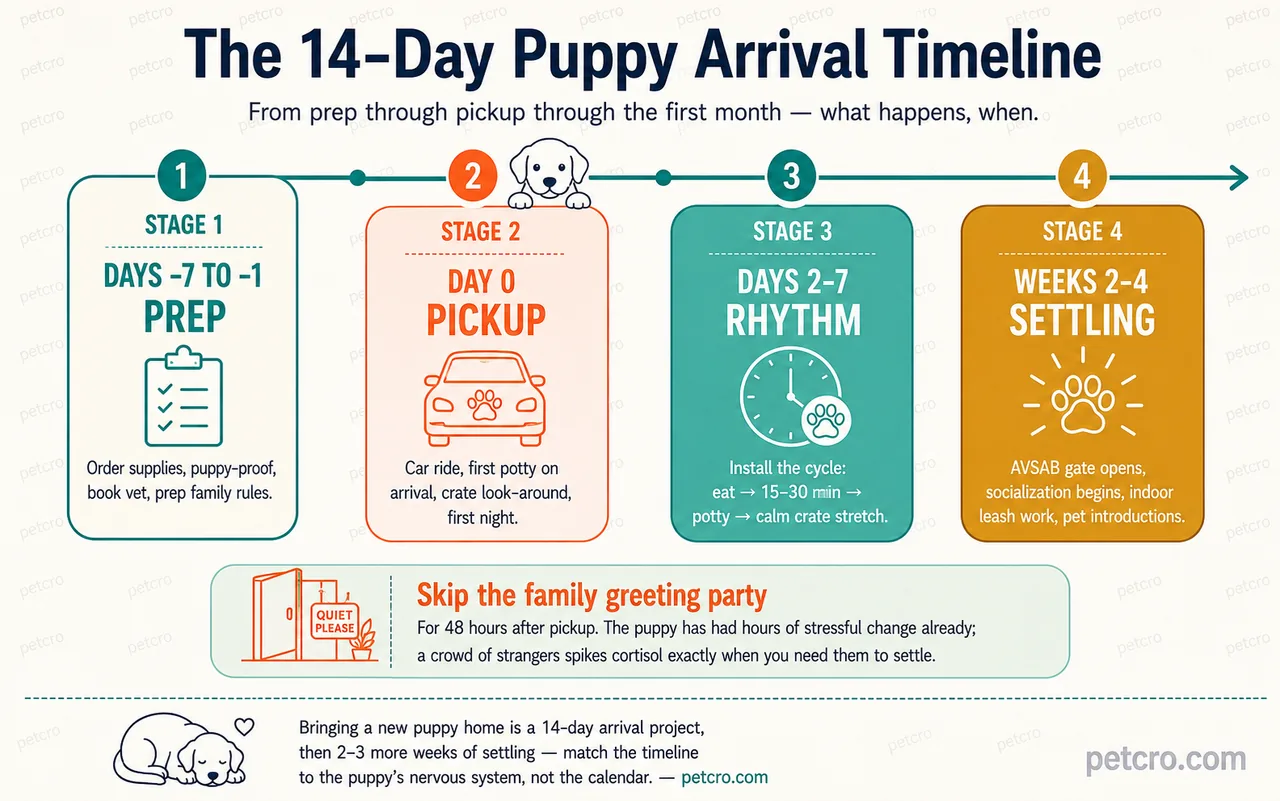
Bringing a new puppy home is a 14-day arrival project, not a single day. The 7 days before pickup are about prepping the space and supplies; the first 48 hours are the highest-stress window for both puppy and household; days 2 through 7 establish the eat-potty-crate rhythm. Weeks 2 through 4 then settle the long-term routine. Slow is fast.
TL;DR: Bringing a new puppy home is a 14-day arrival project, not a single day. The 7 days before pickup prepare the space (puppy-proofing, supplies — see the new puppy checklist); pickup day plus the first 48 hours are the highest-stress window; days 2 through 7 install the eat → 15–30 min → potty → calm crate rhythm. After the 14-day arrival window, weeks 2 through 4 add long-term routines and socialization once the AVSAB gate opens. Match the timeline to your puppy's nervous system, not the calendar — and skip the family greeting party for 48 hours.
Are you ready to bring a puppy home this week?
If you're picking up in the next 7 days, here's the readiness check:
- Time blocked: Plan for 7–10 days where one adult is home most of the day. Most puppies wake every 2–3 hours at night for the first week, and accidents happen every hour or two during the day.
- Space puppy-proofed: Cords secured, toxic plants moved, baby gates installed, hazardous foods locked away. See our puppy-proofing room-by-room guide.
- Supplies in hand: Crate, food, leash + collar + harness, bowls, ID tag, toys, enzyme cleaner. The new puppy checklist has the full 28-item list with budget tiers.
- Vet appointment booked: First wellness visit within 3–5 days of arrival. See puppy first vet visit for cost and what to expect.
- Existing pets prepped: If you have a resident cat, the cat-sanctuary setup needs to be in place before pickup day. Same for resident dogs — they should meet on neutral ground, not at your front door.
If any of these aren't done, push pickup back a week. Arriving unprepared is one of the most common causes of a rocky first month.
The 7 days before pickup — what to prep
The week before pickup is the highest-leverage time you'll get. The puppy isn't here yet; you still have your full attention and energy.
Days -7 to -4 (one week out):
- Order supplies if you haven't (the new puppy checklist lists the must-haves)
- Schedule the first vet visit for day 3–5 of arrival
- Pick the first 24 hours sleeping location — most owners put the crate next to the bed for the first 5–7 nights
Days -3 to -1 (final stretch):
- Walk through every room the puppy will access and remove or secure hazards (per the puppy-proofing guide)
- Set up the crate with bedding, a chew toy, and an old shirt that smells like you
- Pick up the puppy's current food from the breeder/shelter to avoid same-week food changes (transition slowly over 7–10 days)
- Brief everyone in the household on the rules: no greeting party, no shouting, the crate is the puppy's safe space
The day before pickup:
- Final puppy-proofing sweep
- Crate ready, bowls filled with water, designated potty spot in mind
- Phone fully charged, paperwork ready
- Sleep early — pickup day is long
The single most-skipped item: prepping family members. Children in particular need clear rules before the puppy walks through the door, not after.
Pickup day — the car ride home
The actual pickup is short. The car ride is one of the highest-stress moments — separation from littermates plus a new environment plus motion sickness, all at once.
Before you leave the breeder/shelter:
- Confirm vaccination records, microchip details, and the food they've been eating
- Take a small piece of bedding or a blanket from their littermate area (scent comfort for the ride)
- Have a towel or carrier ready in the back seat
The ride home:
- One passenger sits with the puppy if possible; otherwise a secured carrier
- Don't put a brand-new puppy in the front seat — front-passenger airbag deployment can be fatal to a small dog in a crash
- Most puppies pee in the car within 10–15 minutes — bring extra towels
- Skip the radio. Talk softly or not at all. The puppy is overwhelmed enough.
On arrival:
- First stop is the designated potty spot, not the front door. Set them down, wait. Most puppies pee within 2–5 minutes of arrival because the car ride has stimulated their bladder. Praise quietly when they go.
- Then to the crate, door open, for 10 minutes of "look around." Don't put them in and close the door immediately.
- No family greeting party for at least 48 hours. It's tempting to invite people over. Don't. The puppy has had 24+ hours of stressful change already.
First 24 hours — the 5-step arrival protocol
The first 24 hours set the pattern for the next 14 days. Get this right and the rest is incremental.
Step 1: First potty trip — the moment you arrive
Carry the puppy directly from the car to the designated potty spot. Set them down. Wait 5 minutes. They will almost certainly go. Praise quietly the moment they finish. This is the first piece of house-training data they get: outside = the right place.
Step 2: Crate look-around (door open, 10 minutes)
After the first potty, walk the puppy to the crate. Door open. Let them sniff the crate, the blanket, the area around it. Drop a treat or two inside. Don't shut the door. Don't push them in. Build the association: crate = safe, interesting space.
Step 3: First meal — 3 hours before bedtime
The first meal at home should be the same food the breeder or shelter fed. Same brand, same formula, same portion. Switching food on day one is a leading cause of first-week diarrhea. Use the 8-week-old puppy feeding schedule for portion guidance, or the feeding calculator for exact grams.
Step 4: Pre-bedtime potty + calm play
Thirty minutes before bedtime, take the puppy out for a final potty. Then 15–20 minutes of low-arousal play (chew toy, gentle handling) — not high-arousal chase or tug. The point is to take the edge off so they're sleepy but not over-stimulated when you go to lights out.
Step 5: First night — crate next to the bed
The crate goes next to your bed for the first 5–7 nights. A puppy crated next to a sleeping human cries less than a puppy crated alone in another room. See the first night with a new puppy guide for the hour-by-hour protocol — and expect to wake every 2–3 hours for an overnight potty trip.
Days 2 through 7 — finding the rhythm
The first week home is about installing the cycle that runs the next 6 months: eat → 15–30 minutes → potty → calm crate stretch.
- Meal frequency: 4 meals a day at 8 weeks, dropping to 3 around 12 weeks. Same food the breeder used for at least the first 5–7 days, then transition over 7–10 days if you're changing brands.
- Potty frequency: Every 1–2 hours during the day, after every nap, after every meal, after every play session. The general rule: bladder capacity grows roughly 1 hour per month of age during the day (8 weeks = 2 hours, 12 weeks = 3 hours, capped around 6 hours for adults). Overnight stretches are longer — up to about 8 hours at maturity.
- Sleep: 8-week-olds sleep 18–20 hours a day. Don't try to drill training during the awake windows — let them rest.
- Crate time: Multiple short sessions, not one long stretch. Crated when you sleep, crated when you can't supervise.
- Vet visit: First wellness check happens day 3–5. Bring a stool sample. See puppy first vet visit for what to expect.
Day two is usually easier than day one. The puppy has 24 hours of context now — they know which spot is the potty, where the food bowl lives, what your voice sounds like. Most owners report a noticeably shorter cry on the second night.
Weeks 2 through 4 — settling in
By the start of week 2, the puppy is usually past the worst of the adjustment. The next three weeks consolidate the routine and start the longer-arc training projects.
- Indoor leash work continues. Short collar-and-leash habituation sessions (the puppy wears the collar for 10–15 minutes at a time and lets the leash drag behind them) start in week 1 and extend into weeks 2–4 with longer indoor practice and the first treat-paced you-walking-them attempts. Outdoor walks wait for the AVSAB gate.
- AVSAB socialization gate opens. Once the puppy has had their first DHPP dose plus a 7-day waiting period (typically around 9 weeks), structured socialization can begin — arm-carry into busy environments, friend's vaccinated-dog yards, puppy classes. See the full puppy vaccination schedule chart for the DHPP timeline.
- Existing pet introductions. If you have a cat, follow the 7-stage cat introduction protocol — most pairs take 2–4 weeks to comfortable coexistence. If you have a resident dog, the neutral-territory dog introduction protocol is the canonical approach.
- Crate independence builds. The 5–7 night crate-next-to-bed window ends; the crate either stays next to the bed long-term or moves to a designated quiet space.
- Bite inhibition starts. Mouthing and play-biting are normal at 8–14 weeks; redirect to a chew toy every time.
This is also when the AVSAB critical socialization window (which closes around 12–14 weeks) is most relevant. Missing it produces dogs with lifelong fear and reactivity issues that are harder to fix than parvo prevention. The Merck Veterinary Manual's behavior section covers the trade-off in clinical detail.
What to expect from your puppy's behavior in the first month
The behavioral patterns that are normal but surprise first-time owners:
- Sleeping 18–20 hours a day. Puppies are not lazy; they're growing.
- Crying in the crate for the first 3–7 nights. Normal. Don't reward sustained crying with attention, but don't ignore distress that escalates past 10–15 minutes.
- A fear period around weeks 8–11. Puppies suddenly become wary of new things — vacuum cleaners, men in hats, garbage trucks. Pair every novel thing with treats; don't force exposure.
- Mouthing and play-biting. Wired-in behavior for 8–14 weeks. Redirect to a chew toy every time. Some trainers also yelp like a hurt sibling and walk away, but modern behaviorists are mixed on whether the yelp helps or escalates the puppy — calm withdrawal of attention works as well.
- Resource guarding emerging. Some puppies start guarding food bowls, toys, or sleeping spots between 8–12 weeks. Trade-up training (replace the guarded item with something better) is the standard fix; serious cases need a board-certified veterinary behaviorist.
- Submissive urination. A small puddle when greeting you or a visitor is a normal puppy stress response — not a house-training failure. Don't scold; ignore the puddle and clean it up later.
If any of these patterns persists past month 3, see your vet or a Fear Free certified trainer. The ASPCA's general dog care resources cover stress and behavior basics.
Common mistakes when bringing a new puppy home
The patterns that turn a calm first month into a chaotic one:
- Skipping the 48-hour quiet period. Inviting friends and family over on day one spikes cortisol exactly when you need the puppy to settle.
- Switching food on day one. Same food the breeder used for at least 5–7 days, then a 7–10 day transition. Otherwise: diarrhea, lost weight, vet bills.
- Free-feeding from day one. Scheduled meals make house-training, body condition scoring, and medication timing far easier. Free-feeding breaks all three.
- Crating in a separate room on night one. A puppy crated alone in a laundry room or kitchen cries longer and sleeps worse than one crated next to a sleeping human.
- Skipping the first vet visit. Day 3–5 is the right window; later than 7 days risks missing a congenital issue or parasite load.
- Punishing accidents. Yelling at an accident teaches the puppy you're scary, not that they should go outside. Praise the right spot; clean the wrong spot with enzyme cleaner; move on.
- Outdoor walks before the AVSAB gate. Paw-to-ground on public space before the first DHPP plus 7 days risks parvo and distemper.
- Underestimating sleep needs. A tired, over-stimulated puppy is a biting, peeing, crying puppy. Forced naps in the crate fix many first-month behavior problems on their own.
This guide is general guidance, not veterinary advice. For your specific dog's nutrition, health, or behavior needs, consult your veterinarian.
Frequently asked questions
How long does it take a puppy to adjust to a new home?
Most puppies settle into the basic routine within 7–10 days, and into the full long-term rhythm within 3–4 weeks. The first 48 hours are the highest-stress window. Day 2 is usually noticeably easier than day 1; week 2 is noticeably easier than week 1. Anxious puppies and senior-pet households take longer (4–6 weeks).
What should I do on the first day of bringing a puppy home?
In order: first potty trip on arrival, crate look-around with door open, first meal (same food the breeder used), pre-bedtime potty plus 15–20 minutes of calm play, then crate next to your bed for the first night. Skip the family greeting party — keep arrivals quiet, low-stimulation, and predictable for at least 48 hours.
Where should a new puppy sleep the first night?
Crate next to the bed for the first 5–7 nights. A puppy crated near a sleeping human cries notably less than one crated in a separate room. After the first week, the crate can stay or move to a quieter spot. See the first night with a new puppy guide for the full pickup-day-through-overnight protocol.
When should I take my new puppy to the vet?
Within 3–5 days of arrival. The first wellness visit catches congenital issues, confirms vaccination status from the breeder, and starts the DHPP schedule if needed. Bring a fresh stool sample for parasite screening. See puppy first vet visit for the typical cost and exam structure.
How long should I take off work when bringing a new puppy home?
Plan for 7–10 days of mostly-at-home time. The first week is the highest-supervision window: accidents every 1–2 hours, overnight wakings every 2–3 hours, and the introduction of crate, food, leash, and household routines. Many owners take a full week of PTO and a flexible second week.
Should I bring my new puppy home on a weekend?
A Friday or Saturday pickup gives you 2 settling days before any return to normal scheduling. If you can take the following week off, Monday is also fine. The bigger factor is timing relative to vaccinations and the AVSAB socialization window — pick up early enough that the gate opens (first DHPP plus 7 days) while you're still mostly home.
Is it normal for a new puppy to cry the first night?
Yes — crying for the first 3–7 nights is normal. The puppy is grieving the loss of their littermates and a familiar smell-scape, then adapting to a new one. Crate-next-to-bed shortens this window noticeably. Don't reward sustained crying with snuggles or food, but distress that escalates past 10–15 minutes warrants a quiet check.
TL;DR — the bringing-puppy-home cheat sheet
- Bringing a new puppy home is a 14-day arrival project — 7 days of prep, 24 hours of pickup-day routine, 1 week of rhythm. The next 2-3 weeks then settle the long-term routine.
- The first 48 hours are the highest-stress window — skip the family greeting party, keep the household quiet
- First potty trip on arrival, crate door-open look-around next, then first meal — same food the breeder used
- Crate next to the bed for the first 5–7 nights; expect to wake every 2–3 hours
- Day 2 is usually easier than day 1; week 2 is usually easier than week 1
- First vet visit 3–5 days after arrival, with a fresh stool sample
- AVSAB socialization gate opens after first DHPP + 7 days — arm-carry outings start there, not before
Slow is fast. Match the timeline to the puppy's nervous system.
Sources & further reading
- American Kennel Club — New Puppy Information — first-week guidance, equipment, vet timing.
- ASPCA — General Dog Care — puppy socialization, training basics, behavior support.
- Merck Veterinary Manual — Behavior of Dogs — citation source for the AVSAB position statement on puppy socialization and the critical socialization window.
- PetMD — Dog Behavior — common first-month puppy behavior patterns and troubleshooting.
More from Petcro's new-puppy cluster
- New puppy checklist — the 30-item supply list with budget tiers.
- Puppy proofing your home — room-by-room hazard sweep before pickup day.
- First night with a new puppy — hour-by-hour overnight protocol.
- Puppy vaccination schedule chart — DHPP timeline + AVSAB socialization gate.
- Should a puppy sleep in a crate? — crate placement, night-crying protocol, the 5–7 night next-to-bed window.
Petcro is reader-supported. We may earn an affiliate commission when you click through links to products in this guide. Our editorial picks are independent of any commercial relationship with any brand.