Dog Throwing Up Blood? The Color Decode, the Causes, and When It's an Emergency
Dog throwing up blood? Bright red and coffee-ground mean different things. The color decode, the red flags, and when it's a same-hour emergency.
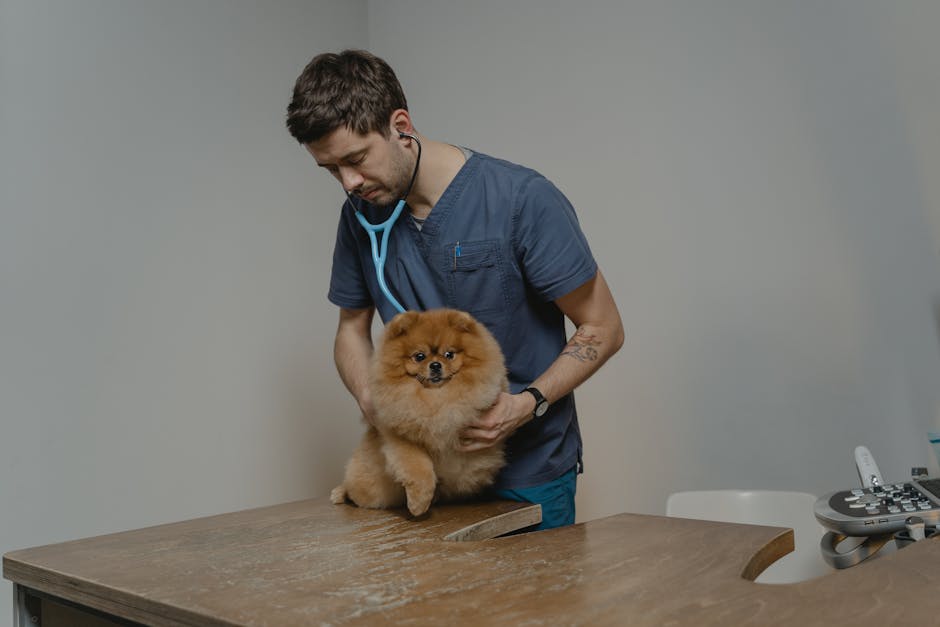
Blood in your dog's vomit always needs a vet — today at the latest, and often right now. Don't try to wait it out. You can't tell a harmless streak from a bleeding ulcer by looking, so it's what the rest of your dog is doing — gums, energy, the belly — that decides how fast you move.
TL;DR: 🚨 Blood in vomit always needs a vet — and coffee-ground vomit, a swollen belly, pale gums, weakness or collapse, black tarry stool, a suspected poison or rat bait, a recent human painkiller, or any bloody vomit in an unvaccinated puppy means drive to the nearest ER now. Anything milder is still a same-day vet call at the floor — not a wait-and-see. Never give Pepto-Bismol, aspirin, or any human medicine, and don't make your dog vomit.
Quick answer: when to worry (the 5-second triage)
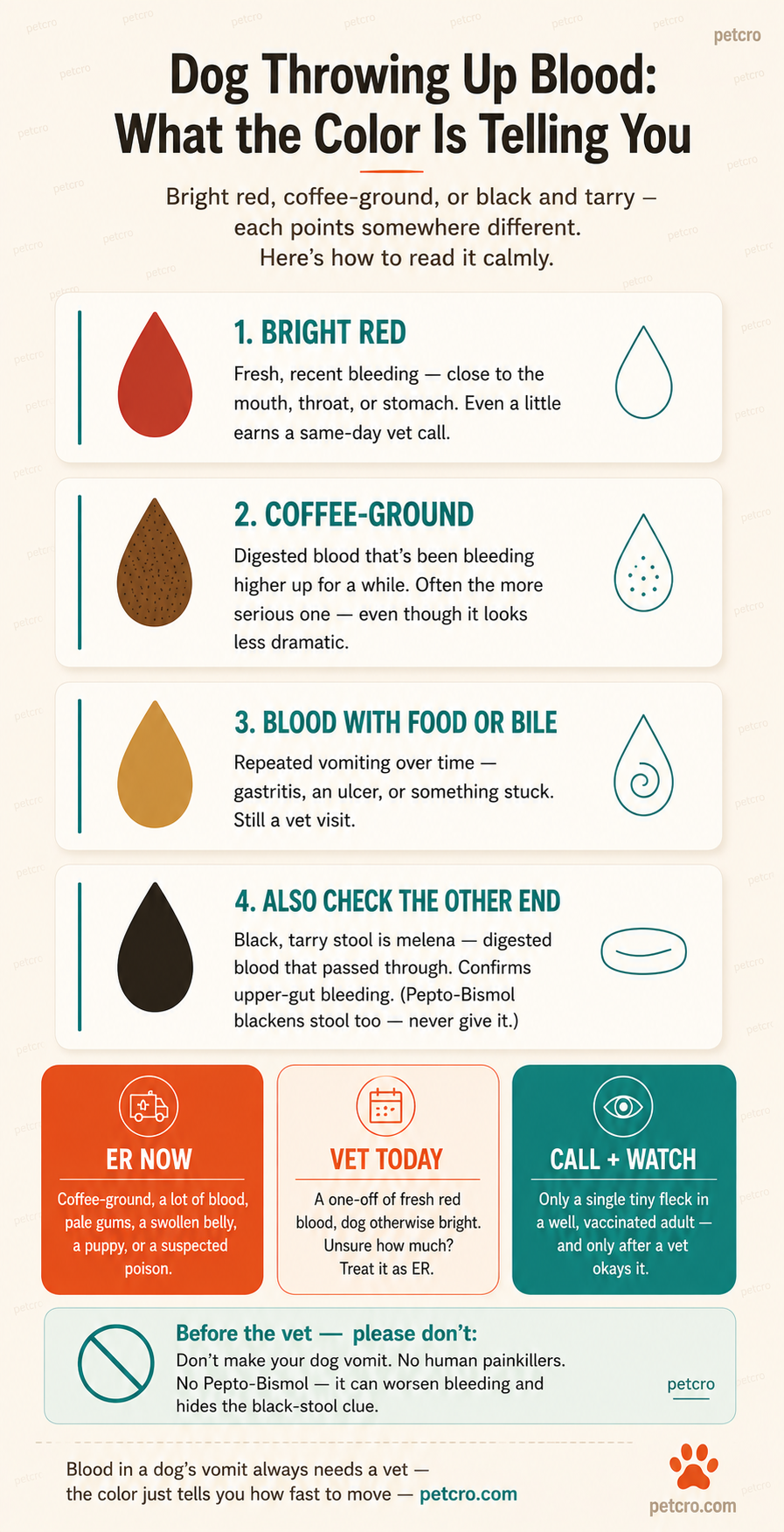
If you're standing over a bloody mess and a worried dog, start here. The single biggest mistake is deciding "it was only a little" from the look of the blood — at home, you can't tell a trivial streak from a bleeding ulcer. The dog's other signs are what matter.
| Tier | What you're seeing | What to do |
|---|---|---|
| 🔴 Emergency — now | Coffee-ground vomit, a large amount of blood, or repeated bloody vomit; pale, white, or blue gums, weakness, collapse, fast breathing; a swollen/hard belly or repeated retching with nothing coming up; black, tarry stool; a known or suspected poison or rat bait (even days ago); a recent dose of a human painkiller; raspberry-jam bloody diarrhea; recent overheating; or an unvaccinated puppy | Nearest ER vet, this hour |
| 🟠 Call the vet today | A one-off of fresh red blood in a dog that's otherwise completely bright — eating, drinking, pink gums, acting normal — with no other red-flag sign | A same-day exam (not a wait-and-see). Not sure if it was a little or a lot? Treat it as the red tier and go now |
| 🟢 Phone the vet, then watch closely | At most one tiny fleck of fresh blood after a single hard retch, in a fully vaccinated adult that's instantly back to normal — and only once a vet okays watching | Re-check gums and energy; any recurrence, pale gums, or coffee-ground = go in |
The green tier is deliberately tiny. Blood in vomit is one of the few signs where "monitor at home" is the exception, not the default — when in doubt, treat it as an emergency.
First — is it vomited, coughed, or swallowed blood?
Three different things get reported as "my dog threw up blood," and they send you down three different paths. Get this right first.
- Vomiting blood (hematemesis) — comes up with a heaving, retching motion, usually after drooling or lip-licking. The blood may be fresh red or dark coffee-ground, and is often mixed with food or yellow bile. The source is the gut: stomach, esophagus, or upper intestine. The Merck Veterinary Manual flags that vomiting "accompanied by blood… requires a more detailed examination."
- Coughing up blood (hemoptysis) — comes up during a coughing fit, and is usually bright, frothy, and air-mixed. It comes from the lungs or airways (pneumonia, a tumor, trauma — or rat poison bleeding into the chest). Owners constantly mistake a hard coughing spell for vomiting.
- Swallowed blood — from a broken or abscessed tooth, a mouth wound, or a nosebleed. The dog swallows it, then brings it back up later. Check the gums, teeth, and nostrils; a bleeding mouth or nose still needs a vet, but it changes the whole investigation.
If you can, take a phone video of the episode — whether your dog is heaving or coughing tells the vet more than the blood itself.
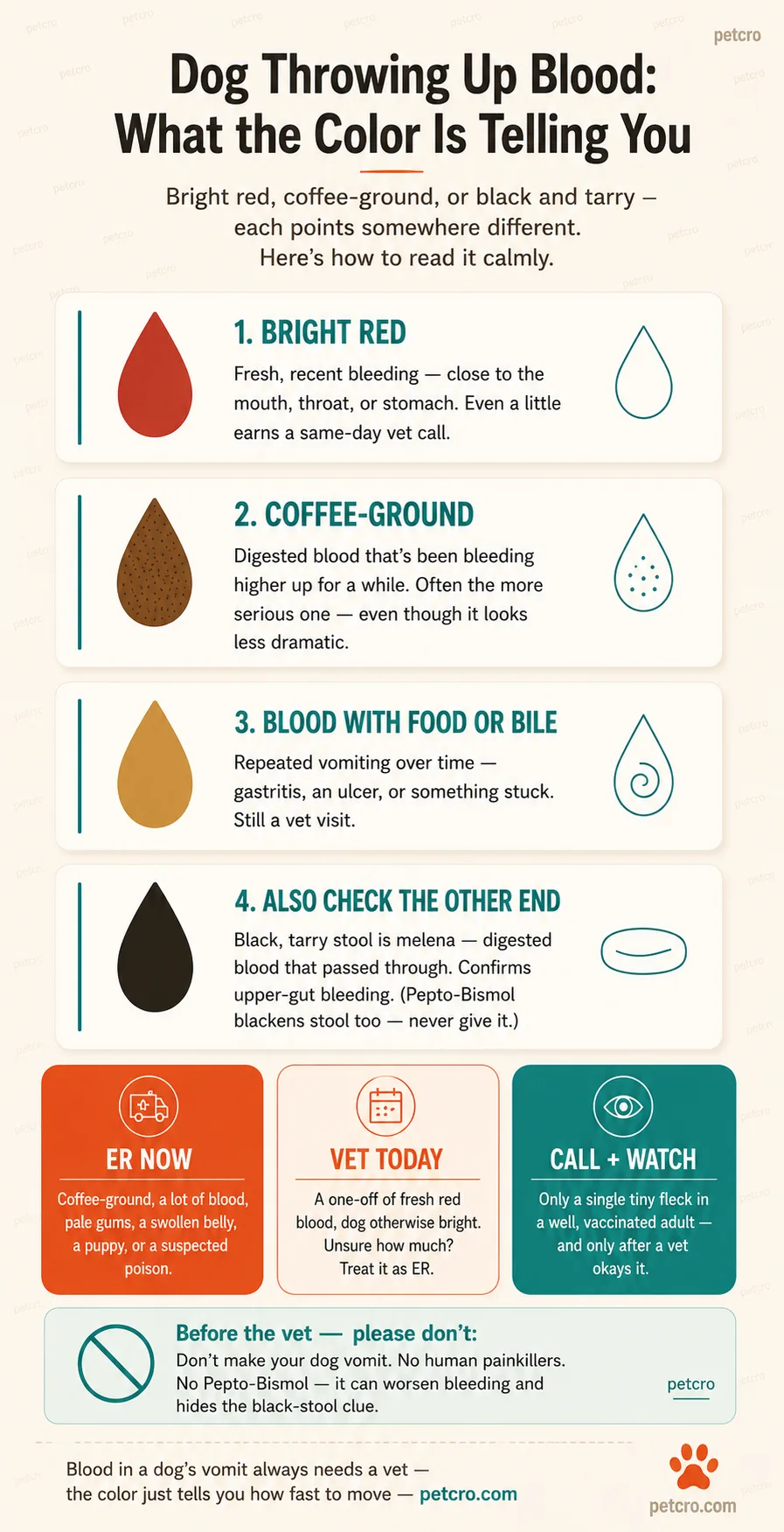
Bright red vs coffee-ground: what the color is telling you
Once you're sure it's truly being vomited, the look of the blood narrows the source. Merck notes that with stomach bleeding, "signs of hematemesis and melena are variable" — so use this to narrow, never to dismiss.
| What you see | What it usually means |
|---|---|
| Bright, fresh red blood — streaks or small clots | Recent bleeding close to the exit: mouth, esophagus, or stomach (or swallowed from the mouth/nose). A few flecks from violent retching can be minor — but any fresh blood earns a same-day call |
| Dark brown/black "coffee-ground" vomit | Digested blood — stomach acid has broken it down, so it's been bleeding higher up for a while. Classic for ulcers (often from painkillers), tumors, or kidney-disease gastritis. Often more serious than one fresh streak |
| Blood mixed with food or yellow bile | Repeated vomiting over time — points to gastritis, ulcers, an obstruction, or systemic illness. Needs a vet |
The takeaway most articles skip: coffee-ground vomit is usually the scarier one, even though fresh red blood looks more alarming.
Don't forget the other end: black, tarry stool (melena)
When a dog is bleeding in the stomach or upper intestine, that blood doesn't only come up — a lot of it goes down and shows up in the stool. Digested blood that has travelled the whole way through turns the stool black, tarry, sticky, and foul-smelling. That's called melena, and it's the companion sign to coffee-ground vomit: both mean upper-gut bleeding.
It's worth telling apart from **fresh red blood on the stool (hematochezia), which points lower down, to the colon. If you're not sure what you're looking at, our stool-health guide walks through the colors and what they signal. Either way, check both ends and tell your vet** — black stool alongside bloody vomit helps them find the bleed fast. One catch: Pepto-Bismol and iron supplements can blacken the stool on their own and hide true melena, so don't give them when there's blood.
The two most preventable causes: painkillers and rat poison
Two of the most common reasons dogs vomit blood are also the most avoidable — and both come from the house, not a disease.
Human painkillers (NSAIDs). Ibuprofen, aspirin, and naproxen are the usual offenders. These NSAIDs strip away the prostaglandins that protect the stomach lining, letting acid eat into bleeding ulcers — the classic coffee-ground vomit plus melena. Human NSAIDs are far more toxic to dogs than to people: Merck's guidance on gastrointestinal ulcers names NSAIDs as the most common cause, with the risk climbing when they're combined with a steroid. Never give a dog a human painkiller — and even with a vet-prescribed dog NSAID, tell your vet right away if there's vomiting, because those can ulcerate too.
Rat poison (anticoagulant rodenticide). Most rat and mouse baits block vitamin K, which the body needs to clot — so the dog bleeds internally, sometimes into the stomach or chest. Here's the trap that catches owners: the signs are delayed three to seven days. Your dog raids the garage, seems completely fine, and then — days later — vomits blood, gets weak, and shows pale gums or bruising. Merck is blunt that the signs "are a manifestation of coagulopathy and bleeding." If there's any chance your dog reached bait, treat it as an emergency even if they look fine, bring the package, and call your vet or ASPCA Animal Poison Control at (888) 426-4435 (a consultation fee may apply). Other toxins bleed through different routes — xylitol, for instance, can trigger liver failure — so when a poison is on the table, our toxic-foods and household-poisons reference is the fast lookup.
The fast-moving emergencies you can't miss
Beyond poisons, a handful of causes turn bloody vomit into a same-hour problem:
- Parvovirus in an unvaccinated or partly vaccinated puppy. Cornell's parvovirus guide describes signs that begin with "lethargy, followed by decreased appetite and vomiting," often with bloody diarrhea. A vomiting, lethargic, under-vaccinated puppy is a same-day emergency — see our parvo symptoms guide and puppy throwing up guide.
- Acute hemorrhagic diarrhea syndrome (AHDS/HGE). If your dog is throwing up blood and has diarrhea at the same time, this is one of the two patterns to rule out fast (parvo is the other). It's a sudden, severe bout of vomiting plus profuse bloody diarrhea often described as "raspberry jam." Merck notes AHDS "is characterized by acute vomiting and hemorrhagic diarrhea," with fluid shifts that can tip a dog into shock fast. Small and toy breeds are overrepresented.
- Bloat (GDV). Far more often than true bloody vomit, a dog with bloat retches over and over and brings up nothing, with a hard, swollen belly. petMD's bloat overview calls out "dry-heaving… without vomiting any food." It's a minutes-matter emergency in large, deep-chested breeds — our white-foam vomit guide covers the bloat test in full.
- A swallowed object. A bone shard, stick, or toy can lacerate the gut. The AKC's dog-vomiting guide lists vomiting blood among the warning signs. Cooked bones, which splinter, are a classic culprit, and a perforation is a surgical emergency.
- Heatstroke. An overheated dog that then vomits blood is critically ill — severe heatstroke can wreck the clotting system and cause bleeding throughout the body. Cool transport and an ER, now.
The slower, systemic causes
Not every bloody vomit is a roadside emergency — but these all still need a vet, and several are easy to miss because they build over time:
- Stomach ulcers from illness or stress, not just drugs — severe systemic disease can ulcerate the stomach lining on its own.
- Kidney and liver disease. Advanced kidney failure lets toxins build up and irritate the stomach (uremic gastritis), causing bloody or coffee-ground vomit; advanced liver disease can impair clotting. Look for extra thirst, more urination, weight loss, or a yellow tinge.
- Cancer (GI tumors) in older dogs. Stomach and intestinal tumors can bleed slowly, giving recurring coffee-ground vomit, melena, weight loss, and anemia. In a senior dog with repeated bloody vomit and no toxin or drug to blame, this moves up the list.
- Clotting disorders — low platelets (ITP), von Willebrand disease, and others make a dog bleed spontaneously. The tell is bleeding elsewhere too: pinpoint bruising on the gums or belly, nosebleeds, or blood in the urine.
- Pancreatitis, often after a fatty meal, with a hunched "praying" posture and intense vomiting that can streak with blood.
What NOT to do — and what to do right now
When there's blood, a few well-meant moves make things worse. Don't:
- Don't make your dog vomit. With blood already present, it can worsen the bleeding, cause more tearing, or be dangerous if there's an obstruction, a caustic toxin, or bloat.
- Don't give human painkillers — ibuprofen, aspirin, naproxen. They're a leading cause of bleeding ulcers, not a treatment.
- Don't reach for Pepto-Bismol or Kaopectate. This is the one almost everyone gets wrong: bismuth subsalicylate contains an aspirin-like salicylate that can worsen GI bleeding — and the bismuth turns the stool black, masking melena, so neither you nor your vet can tell if your dog is still bleeding inside.
- Don't force a big meal or a bowl of water before the vet weighs in, and don't wait days to "see how it goes."
Do, right now: bag or photograph a sample of the vomit (and any black stool). Gather anything they might have gotten into — rat bait, a medication bottle, a chewed bone or toy. Write down every medicine, supplement, or home remedy you gave, including Pepto. Then get to the vet — same-day at the floor, the ER if any red flag is present.
Is it your dog's age, size, or breed?
Who your dog is shifts the most likely answer:
- Unvaccinated puppies — bloody vomit plus lethargy or diarrhea is parvo until proven otherwise: same-day vet. And never fast a puppy like an adult; their tiny glucose reserves make low blood sugar a real risk.
- Toy and small breeds — overrepresented in AHDS (the "raspberry jam" syndrome), and prone to low blood sugar. Don't fast them; call the vet.
- Large, deep-chested breeds — default to bloat-first thinking when bloody vomit or retching comes with a swollen, hard belly.
- Seniors — think kidney or liver disease and GI tumors. Recurring coffee-ground vomit in an older dog earns a workup, not home monitoring.
- Any dog on an NSAID or steroid — treat bloody vomit as a possible bleeding ulcer: stop the drug and call your vet.
This guide is general guidance, not veterinary advice. For your specific dog's nutrition, health, or behavior needs, consult your veterinarian.
Frequently asked questions
Why is my dog throwing up blood?
Blood in vomit (hematemesis) means bleeding somewhere in the upper gut — mouth, esophagus, stomach, or upper intestine. Common causes include stomach ulcers (often from human painkillers), rat poison, a swallowed object, parvo in puppies, and organ disease in seniors. Because you can't tell the trivial causes from the dangerous ones by looking, blood in vomit always earns at least a same-day vet call.
My dog threw up a little blood but is acting fine — is it an emergency?
Maybe not a roadside one, but it's still a same-day vet visit. A single small streak of fresh blood in a bright, eating dog with pink gums can be minor — but an early ulcer or bleed looks exactly the same at the start. Phone your vet, and head straight to an ER if you see coffee-ground vomit, pale gums, weakness, a swollen belly, or black stool.
What does coffee-ground vomit mean in dogs?
Coffee-ground vomit is digested blood — stomach acid has broken it down into dark, grainy specks. It means bleeding higher up that's been going on for a while, commonly from an ulcer, a tumor, or kidney-disease gastritis. It's often more serious than a single streak of fresh red blood, even though it looks less dramatic. Treat it as an emergency.
Can I give my dog Pepto-Bismol for vomiting blood?
No — not without your vet's say-so. Pepto-Bismol contains an aspirin-like salicylate that can worsen stomach bleeding, and its bismuth turns the stool black, which masks melena — the very sign your vet uses to tell whether your dog is still bleeding inside. If you've already given some, don't panic — but tell your vet exactly how much and when, so they can read the black stool correctly.
Could rat poison make my dog vomit blood, even if it was days ago?
Yes. Anticoagulant rat baits stop the blood from clotting, and the bleeding often doesn't show up until three to seven days after the dog ate it — so your dog can seem fine, then suddenly vomit blood, weaken, or bruise. If there's any chance of exposure, treat it as an emergency now, bring the package, and call your vet or ASPCA Animal Poison Control at (888) 426-4435.
My dog is throwing up blood and not eating — is that worse?
Yes. Refusing food alongside bloody vomit raises the concern — it leans toward an obstruction, an ulcer, pancreatitis, parvo in a puppy, or organ disease rather than a one-off irritation. Treat it as a same-day vet visit at the floor, and an ER trip if you also see pale gums, a swollen belly, weakness, or coffee-ground vomit.
How do I know if my dog is vomiting blood or coughing it up?
Watch the motion. Vomiting comes with heaving and retching and the blood is often dark or mixed with food and bile. Coughing up blood comes during a coughing fit, and the blood is usually bright, frothy, and air-mixed — it comes from the lungs, not the stomach. The two point to completely different problems, so a phone video of the episode genuinely helps your vet.
TL;DR — the dog-vomiting-blood cheat sheet
- Blood in vomit is emergency-leaning: a same-day vet visit is the floor, and coffee-ground vomit, pale gums, a swollen belly, or any bloody vomit in an unvaccinated puppy means the ER right now.
- Bright red = fresh bleeding near the exit; dark coffee-ground = digested blood from higher up (often an ulcer) and usually the more serious of the two.
- Check the other end too: black, tarry stool (melena) is digested blood and confirms upper-gut bleeding.
- The two most preventable causes are owner-side: human painkillers (ibuprofen, aspirin) and rat poison — whose bleeding can appear three to seven days later.
- Never give Pepto-Bismol or human meds: the salicylate can worsen bleeding, and the bismuth blackens the stool, hiding melena from your vet.
- Don't induce vomiting; bag a sample, bring any suspect packaging or medication, and tell the vet everything you gave.
Sources & further reading
- Merck Veterinary Manual — Vomiting in Dogs — the owner-facing overview, including the red flag that vomiting with blood needs a detailed exam.
- Merck Veterinary Manual — Gastrointestinal Ulcers in Small Animals — ulcers (including drug-induced) as the classic source of coffee-ground vomit and melena.
- Merck Veterinary Manual — Anticoagulant Rodenticide Poisoning — rat-bait coagulopathy and the delayed-bleeding pattern.
- Merck Veterinary Manual — Acute Hemorrhagic Diarrhea Syndrome in Dogs — the sudden vomiting-plus-bloody-diarrhea emergency.
- AKC — Dog Vomiting: Causes, Diagnosis, and Treatment — vomiting blood among the warning signs, and swallowed-object risk.
- Cornell Riney Canine Health Center — Parvovirus — the parvo pattern behind bloody vomiting in puppies.
- petMD — Bloat (GDV) in Dogs — the unproductive-retching emergency that mimics "throwing up blood."
- ASPCA — Animal Poison Control — (888) 426-4435, the call to make if a toxin or rat bait is suspected.
More from Petcro
- Dog Throwing Up White Foam — the sibling guide for foam (not blood), and the bloat test.
- Parvo Symptoms in Puppies — when bloody vomiting in a puppy is a life-threatening emergency.
- Puppy Throwing Up — the puppy-specific vomiting guide.
- Stool-Health Guide — how to read black, tarry, or bloody stool.
- Toxic Foods & Household Poisons Reference — what's dangerous, and what to do if your dog got into it.
Petcro is reader-supported. We may earn an affiliate commission when you click through links to products in this guide. Our editorial picks are independent of any commercial relationship with any veterinary product or service.