Bloody Diarrhea in Dogs: Causes and When It's an Emergency
Bloody diarrhea in dogs is often serious: the causes (AHDS, parvo, parasites), the red flags that mean ER now, and what to do — and not do — at home.

Bloody diarrhea in dogs is more urgent than ordinary loose stool and often needs prompt veterinary care. Blood plus watery stool can mean acute hemorrhagic diarrhea syndrome, parvovirus, parasites, or a toxin — several of which move fast. A dog with vomiting, weak gums, or collapse needs the ER now; even a bright dog should see a vet promptly.
TL;DR: Treat blood plus liquid diarrhea as a higher-urgency problem than plain diarrhea. Vomiting, weakness, pale gums, collapse, or a painful/bloated belly — or an unvaccinated puppy — means the ER right now, because acute hemorrhagic diarrhea syndrome (AHDS/HGE) and parvo can crash a dog within hours. Even a bright, alert adult with bloody diarrhea should be seen by a vet promptly. Do not reach for human anti-diarrheals, do not fast a puppy, and do not "wait it out."
Is bloody diarrhea in dogs an emergency?
Often, yes — and it deserves a faster response than ordinary diarrhea. Blood in liquid stool tells you the lining of the gut is inflamed, ulcerated, or losing fluid fast, and some of the causes (a parvo puppy, a dog sliding toward shock from AHDS) can deteriorate within hours. The blood itself isn't the only danger; the fluid loss behind it is.
So the question isn't "should I worry?" — with blood and diarrhea, you should. The real question is how fast: same-hour ER, same-day vet, or a prompt-but-scheduled visit. The red-flag tiers below sort that out.
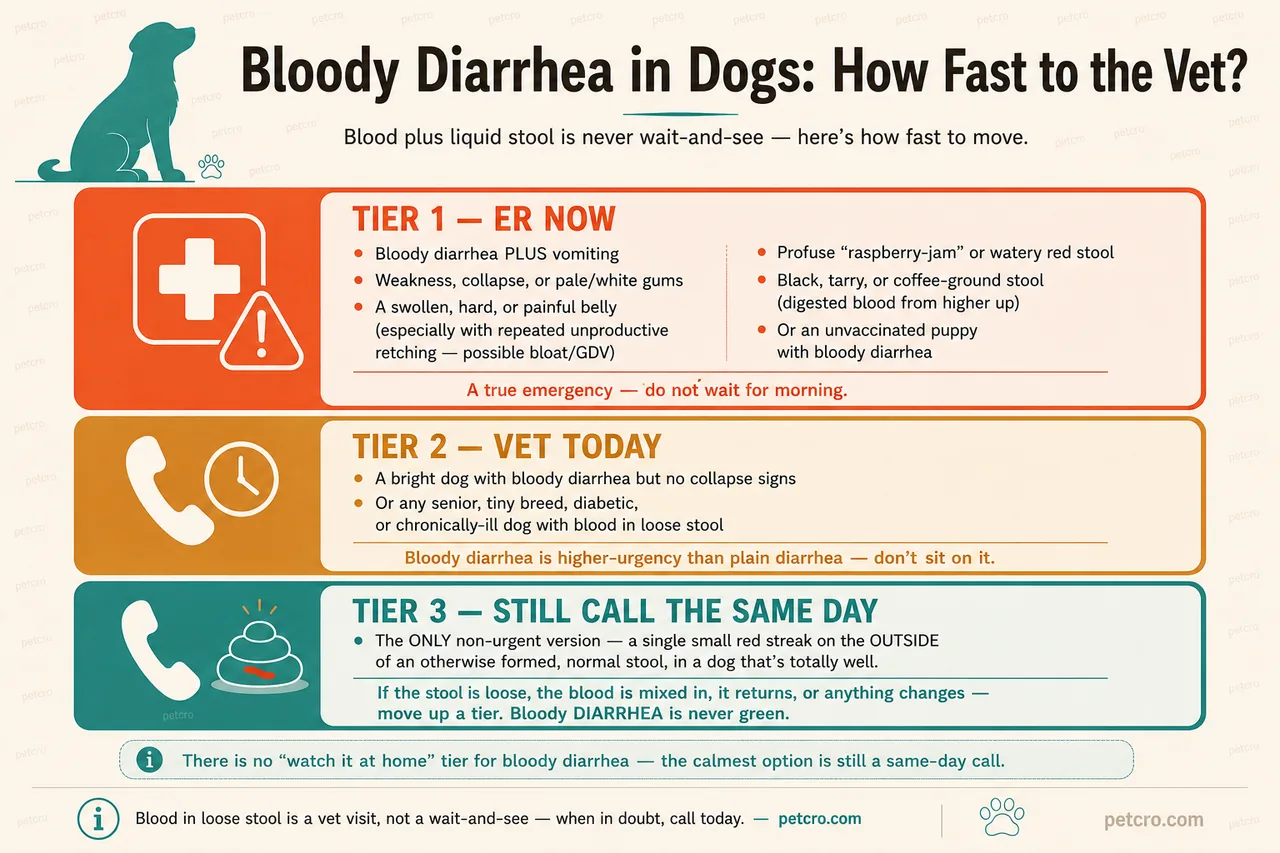
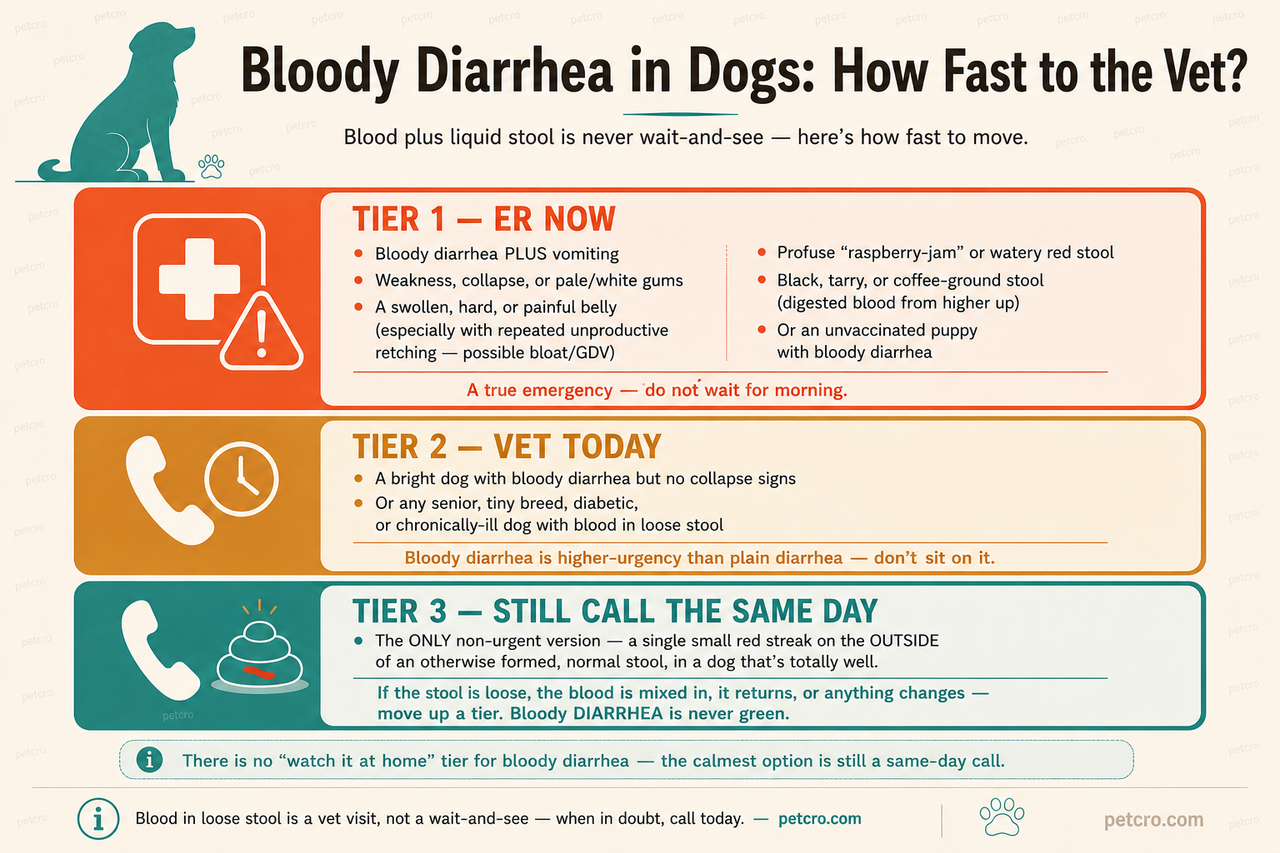
| If you see this | Do this |
|---|---|
| 🔴 Bloody diarrhea plus vomiting; weakness, collapse, or pale/white gums; a swollen, hard, or painful belly (especially with repeated unproductive retching); profuse "raspberry-jam" or watery red stool; black, tarry, or coffee-ground stool (digested blood from higher up the tract); or an unvaccinated puppy with bloody diarrhea | ER now — this is a true emergency; do not wait for morning |
| 🟠 A bright dog with bloody diarrhea but no collapse signs; or any senior, tiny breed, diabetic, or chronically-ill dog with blood in loose stool | Vet today — bloody diarrhea is higher-urgency than plain diarrhea, so don't sit on it |
| 🟢 (NOT diarrhea) A single small red streak on the outside of an otherwise formed, normal stool, dog totally well — this is the only non-urgent version | Call your vet the same day to describe it. If the stool is loose or liquid, the blood is mixed through it, blood returns, or anything else changes, this is no longer green — move up a tier. Bloody diarrhea (blood plus liquid stool) is never green |
If you're not sure which tier you're in, treat it as the more urgent one. For the upper-GI side of bleeding — vomiting blood rather than passing it — see our dog throwing up blood guide, and use the stool-health guide to describe what you're seeing to the vet.
What causes bloody diarrhea in dogs?
Several different problems land here, and they range from "uncomfortable but treatable" to "life-threatening within hours." The Merck Veterinary Manual and AKC cover the major culprits:
- Acute hemorrhagic diarrhea syndrome (AHDS/HGE) — the classic "raspberry-jam" stool, with sudden, dramatic fluid loss into the gut.
- Parvovirus — a true emergency in unvaccinated or under-vaccinated puppies.
- Intestinal parasites — hookworm, whipworm, and giardia can all bloody the stool.
- Dietary indiscretion ("garbage gut") and stress colitis — common, often milder, but still worth a vet's eyes when there's blood.
- Toxins and foreign material — some poisons and swallowed objects damage the gut lining.
None of these are safe to self-diagnose from the couch, because their treatments are completely different. The point of knowing the list is to take the problem seriously, not to pick a cause yourself.
Acute hemorrhagic diarrhea syndrome (AHDS / HGE)
This is the one owners often haven't heard of and vets take very seriously. Acute hemorrhagic diarrhea syndrome — historically called hemorrhagic gastroenteritis in dogs (HGE) — produces a sudden, profuse, bright-red, jelly-like diarrhea. It most often hits previously healthy small or toy-breed adults, but any dog of any size can develop it — so raspberry-jam stool is a go-to-the-vet sign regardless of breed.
The danger is the fluid shift: the inflamed gut leaks large volumes of fluid out of the bloodstream and into the intestine, so the dog can become severely dehydrated and slide toward shock surprisingly fast. Bloodwork in AHDS classically shows a high packed cell volume (concentrated blood) from that fluid loss, which helps confirm the diagnosis and guides treatment. The cornerstone of treatment is aggressive IV fluid therapy to replace what's being lost, which is why this is a hospital problem, not a home one. Dogs that get to a hospital quickly generally do well; the ones who deteriorate are usually the ones who waited. If your dog has raspberry-jam diarrhea, go in now.
Parvovirus: bloody diarrhea in puppies is an emergency
In an unvaccinated or partly-vaccinated puppy, bloody diarrhea is parvo until proven otherwise. Canine parvovirus attacks the rapidly dividing cells lining the gut, producing foul-smelling, often bloody diarrhea alongside vomiting, lethargy, and loss of appetite — and it can be fatal without intensive supportive care.
This is not a wait-and-see situation. A puppy with bloody diarrhea needs a vet the same hour, where a quick in-clinic parvo snap test can confirm it and hospitalization can begin. Do not fast a sick puppy and do not try to manage it at home — puppies have tiny fluid reserves and crash quickly. Our puppy diarrhea guide walks through the parvo picture and the puppy-specific red flags in more depth.
Parasites, garbage gut, toxins, and foreign objects
Not every case is a five-alarm fire, but every one still earns a vet visit when there's blood. Intestinal parasites — hookworm, whipworm, and giardia in particular — are a common, very treatable cause of bloody or mucousy diarrhea, diagnosed with a simple fecal test and cleared with the right dewormer.
Dietary indiscretion ("garbage gut," counter-surfing, a raided trash can) and stress colitis (boarding, travel, a new home) often produce loose stool streaked with fresh blood and mucus from an irritated colon — usually milder, but blood still means a vet should weigh in. Toxins and swallowed foreign objects are the scarier end: some poisons and obstructions damage the gut and cause bleeding. If a toxin is even possible, call the ASPCA Animal Poison Control at (888) 426-4435 and your vet immediately, and keep our toxic-foods reference handy for the fast lookup.
What does the vet do for bloody diarrhea?
Knowing the likely workup makes the visit less frightening and helps you say "yes, let's do it" without hesitation. Depending on the picture, your vet may:
- Assess hydration and circulation — gum color, heart rate, skin tent, and a belly exam to gauge how sick the dog is right now.
- Run a parvo snap test for any at-risk puppy — a fast in-clinic answer.
- Check a fecal sample for parasites like hookworm, whipworm, and giardia.
- Run bloodwork to assess dehydration, protein loss, and organ function.
- Image the belly with X-rays or ultrasound if an obstruction, foreign body, or mass is on the table.
- Start IV fluids — the central treatment for AHDS, parvo, and any dehydrated patient — plus anti-nausea medication and other supportive care.
The exact path depends on your dog's signs, age, and vaccine status. The unifying theme is that fluids and a real diagnosis — not a guess — are what turn most of these cases around.
What should I NOT do at home?
This is where well-meaning owners get into trouble, so it's worth being blunt:
- Don't give human anti-diarrheals or pain relievers. With loperamide (Imodium), slowing the gut can trap an infection or toxin inside an already-inflamed, bleeding gut — a bad idea in any dog. It is additionally dangerous in herding breeds (Collies, Australian Shepherds, Shelties and relatives) that may carry the MDR1 gene mutation. Aspirin and bismuth subsalicylate (Pepto-Bismol, Kaopectate) can worsen GI bleeding and even turn the stool black, hiding the very bleeding you're trying to track. None of these belong in a bloody-diarrhea case unless your vet specifically directs it.
- Don't fast for the blood. Fasting is not a home fix for bloody diarrhea — the step is a vet call, not a food rest. And never fast a sick puppy: puppies have no reserves and can drop into dangerously low blood sugar fast.
- Don't try to make your dog vomit on your own. With a possible obstruction or certain toxins, inducing vomiting can cause aspiration or further injury — let the vet or ASPCA Poison Control decide.
- Don't "wait it out." Bloody diarrhea is precisely the symptom that earns a phone call rather than another 24 hours of watching, because AHDS and parvo move quickly.
- Don't withhold water, and don't attempt a home bland diet instead of a vet visit when there's blood. A bland diet for dogs with diarrhea and a gentle recovery food have a role in recovery once your vet says the danger has passed — not as a substitute for being seen.
When in doubt, call. A quick phone triage with a clinic is almost always cheaper — and safer — than waiting out a complication.
How do you prevent bloody diarrhea in dogs?
You can't prevent every case, but you can stack the odds in your dog's favor:
- Vaccinate on schedule. Keeping puppies' parvovirus shots current is the single biggest lever against the deadliest cause on this list.
- Stay on parasite control. Routine deworming and year-round prevention, with periodic fecal checks, keep hookworm, whipworm, and giardia from setting up shop.
- Avoid "garbage gut." Secure the trash, skip rich table scraps and bones, and keep your dog off whatever they find on walks.
- Change food slowly. Transition diets over 5–7 days or more, since sudden switches irritate the gut.
- Lock away toxins. Keep human medications, chemicals, and toxic foods well out of reach.
None of this makes a vet visit optional once blood appears — if your dog has bloody diarrhea, prevention is in the rear-view mirror and a vet call is the next step — but consistent prevention means you'll be making far fewer of those calls.
This guide is general guidance, not veterinary advice. For your specific dog's nutrition, health, or behavior needs, consult your veterinarian.
Frequently asked questions
Is bloody diarrhea in dogs always an emergency?
Treat it as higher-urgency than ordinary diarrhea. Bloody diarrhea with vomiting, weakness, pale gums, collapse, or a painful belly — or in an unvaccinated puppy — is a true emergency needing the ER now. Even a bright, alert adult with bloody liquid stool should see a vet promptly rather than waiting it out, since causes like AHDS and parvo can worsen within hours.
What is the "raspberry jam" stool in dogs?
"Raspberry jam" describes the bright-red, jelly-like diarrhea classic to acute hemorrhagic diarrhea syndrome (AHDS), once called hemorrhagic gastroenteritis (HGE). The inflamed gut leaks large amounts of fluid and blood, so the dog can dehydrate and head toward shock quickly. It most often hits previously healthy small or toy-breed adults, but any dog of any size can develop it, so it needs urgent IV fluids regardless of breed — go to the vet immediately.
Can I give my dog Imodium for bloody diarrhea?
No — not without explicit guidance from your vet. Loperamide (Imodium) and other human anti-diarrheals can be unsafe for some dogs, and slowing the gut can trap an infection or toxin inside, making things worse. Bloody diarrhea needs a diagnosis, not a symptom mask. Call your vet before giving any over-the-counter medication to a dog with blood in its stool.
My puppy has bloody diarrhea — what should I do?
Go to a vet the same hour. In an unvaccinated or partly-vaccinated puppy, bloody diarrhea is parvovirus until proven otherwise, and parvo can be fatal without intensive care. Do not fast the puppy, do not try home remedies, and do not wait. A quick in-clinic parvo snap test can confirm it and hospitalization can begin right away.
How do vets treat bloody diarrhea in dogs?
It depends on the cause, but IV fluids are central — they replace the fluid lost into an inflamed gut and prevent shock in AHDS, parvo, and dehydrated dogs. Vets also run a parvo snap test for at-risk puppies, check a fecal sample for parasites, run bloodwork, and image the belly if an obstruction or foreign object is suspected, plus anti-nausea support.
Is bloody diarrhea in dogs different from bloody stool?
Yes. Bloody stool can appear in any consistency and the color matters — bright red points lower in the tract, while black, tarry stool means digested blood from higher up and is a red flag in its own right, not something milder than fresh blood. Our guide on bloody stool in dogs breaks down how to read bright-red versus black, tarry (melena) blood. Bloody diarrhea specifically pairs blood with liquid stool, which raises the urgency because of the rapid fluid loss and emergency causes like AHDS and parvo. Either color, with or without diarrhea, warrants a prompt vet visit.
TL;DR — the bloody-diarrhea-in-dogs cheat sheet
- Bloody diarrhea with vomiting, weakness, pale gums, collapse, or a painful belly — or in an unvaccinated puppy — is an ER-now emergency.
- Even a bright adult with bloody liquid stool should see a vet promptly; this is higher-urgency than plain diarrhea.
- "Raspberry jam" stool suggests AHDS/HGE, where rapid fluid loss can cause shock and IV fluids are the fix.
- A puppy with bloody diarrhea is parvo until proven otherwise — same-hour vet and a snap test.
- Don't give human anti-diarrheals, don't fast a puppy, and don't wait it out.
- Prevent with current vaccines, year-round parasite control, slow diet changes, and locked-away trash and toxins.
When blood and diarrhea show up together, the safe default is always a phone call to your vet — sooner, not later.
Sources & further reading
- Merck Veterinary Manual — Disorders of the Stomach and Intestines in Dogs — causes of bloody diarrhea, AHDS/HGE, and the danger signs that need a vet.
- AKC — Dog Diarrhea: Causes, Treatment, and Prevention — stool clues, red flags, and when blood means an emergency.
- petMD — Diarrhea in Dogs — overview of causes, dehydration risk, and when to see a vet.
- ASPCA — Animal Poison Control — (888) 426-4435, if a toxin or swallowed item might be behind the bleeding.
If your dog has a known chronic condition or is on medication, mention it when you call — it can change how urgently the bleeding needs to be seen.
More from Petcro's dog GI cluster
- Puppy Diarrhea: Causes, Red Flags & the 48-Hour Rule — the puppy-specific guide, including when bloody diarrhea means parvo.
- Dog Throwing Up Blood — the upper-GI side of bleeding, when vomiting blood is the emergency.
- Bland Diet for Dogs with Diarrhea — the gentle recovery diet for after your vet clears the danger.
- Dog Food for Diarrhea — what to feed during recovery and which foods help a sensitive gut.
- Stool-Health Guide — read your dog's stool color and consistency to describe it accurately to the vet.
Petcro is reader-supported. We may earn an affiliate commission when you click through links to products in this guide. Our editorial picks are independent of any commercial relationship with any pet-care brand.