Bloody Stool in Dogs: Red vs Black, and What It Means
Bloody stool in dogs decoded: bright-red (lower-GI) vs black, tarry melena (upper-GI), the red flags that mean urgent, and what to bring to the vet.

Bloody stool in dogs comes in two patterns. Bright-red streaks or coating (hematochezia) mean fresh blood from the lower gut — colon or rectum. Black, tarry, sticky stool (melena) is digested blood from the upper gut — stomach or small intestine. Melena is easy to miss and should always be treated as urgent; bright-red blood needs a same-day vet call.
TL;DR: Decode the color first. Bright red blood is fresh, from the lower GI (colon/rectum). Causes range from mild (colitis, stress) to treatable-but-serious (parasites, significant bleeding) — so call your vet the same day, and treat a large volume, clots, or "raspberry jam" diarrhea as a go-now emergency. Black and tarry (melena) is digested blood from the upper GI (stomach/small intestine) — ulcers, toxins, NSAIDs, swallowed blood — and is always urgent. Any large volume of fresh blood, clots, or a flat, pale, or painful dog is an emergency. When in doubt on a blood symptom, err toward calling. Bring a photo and a fresh sample to the vet.
Red or black? The decode that tells you where the blood is from
Blood in a dog's stool isn't one thing — it's two, and they come from opposite ends of the gut. Getting the color right is the single most useful thing you can do before you call your vet, because it points to the likely source and how worried to be. Veterinary references like the Merck Veterinary Manual describe these as two distinct patterns — fresh (hematochezia) and digested (melena) blood — and the AKC covers the same red flags.
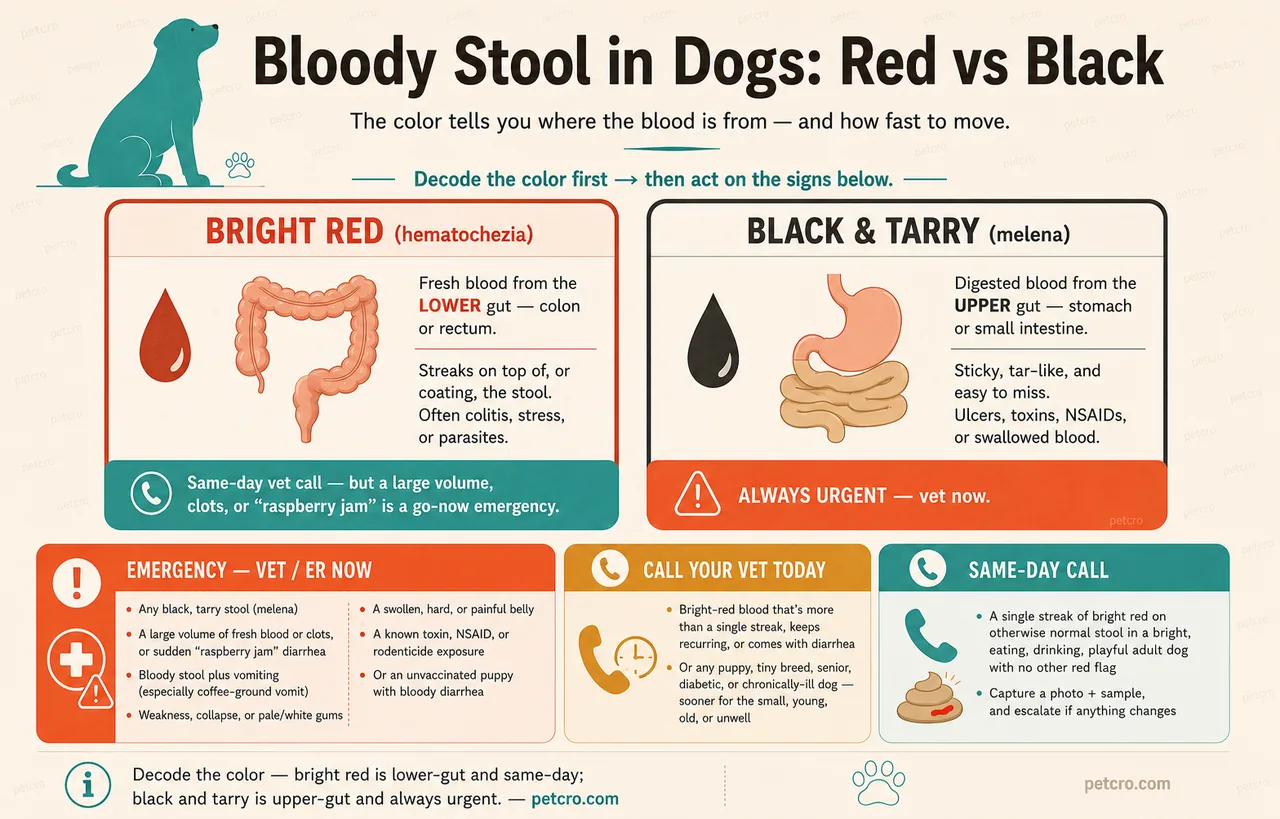
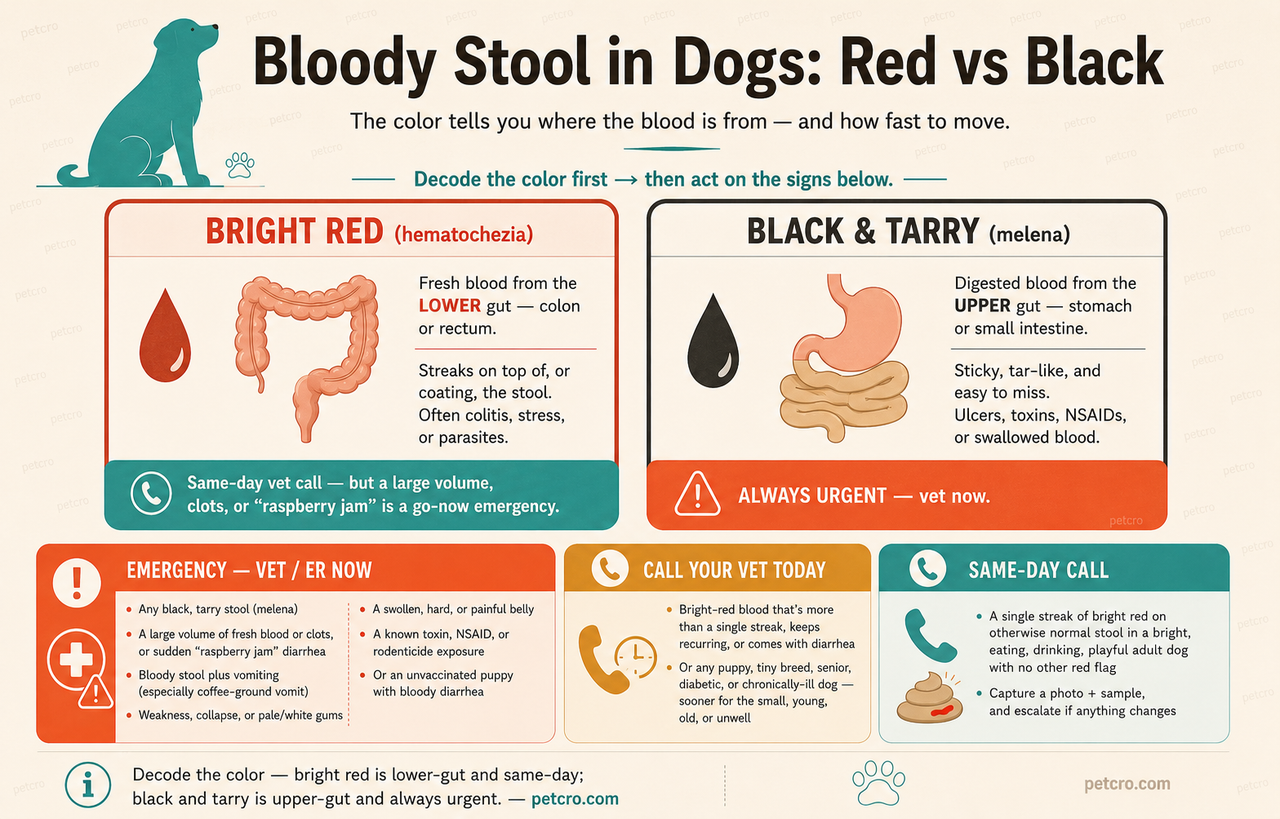
| Pattern | What it looks like | Where it's from | Common causes |
|---|---|---|---|
| Hematochezia (fresh blood) | Bright or dark red, streaked on the surface, coating the stool, or in drips — stool can be formed or loose | Lower GI — colon, rectum, anus | Colitis, parasites (whipworm, hookworm), dietary indiscretion, stress, polyps, anal-gland issues |
| Melena (digested blood) | Black, tarry, sticky, shiny — like coffee grounds or tar, often easy to miss | Upper GI — stomach, small intestine | Ulcers, NSAID or toxin exposure, swallowed blood (nosebleed, mouth wound), systemic/clotting disease |
The key insight: blood changes color as it's digested. Fresh blood from the colon hasn't been broken down, so it stays red. Blood from the stomach or upper intestine gets digested on its way through, turning the stool black and tarry by the time it comes out. That's why melena looks so different — and why it's so often missed.
What bright red blood in a dog's stool usually means
Finding blood in dog stool is alarming, but bright-red blood (hematochezia) is the more common and usually less alarming pattern. Because it's fresh and from the lower gut, it tends to show up as streaks on the surface of an otherwise normal-looking stool, a red coating, or a few drips at the end — and it can appear in formed stool, not just diarrhea. Frequent causes include:
- Colitis — inflammation of the colon, often from stress, a diet change, or a passing bug. This is the classic "a little fresh blood and mucus on soft stool" picture.
- Parasites — whipworms and hookworms irritate the lower gut and are a top cause, especially in puppies and dogs with outdoor exposure.
- Dietary indiscretion — garbage, rich scraps, or a sudden food switch inflaming the colon.
- Anal-gland or rectal issues — a few drops of bright red right at the anus can come from glands or a small tear rather than the gut itself.
- Polyps or growths in the lower bowel, more often in older dogs.
One bright-red picture is a true emergency, though: sudden, large-volume, bright-red "raspberry jam" diarrhea, often with vomiting and rapid lethargy (sometimes called acute hemorrhagic diarrhea syndrome, or AHDS/HGE). It can tip a dog into shock within hours, especially small or young dogs, so it is a go-now situation, not a watch-and-wait one. When the blood comes mixed into liquid stool rather than streaked on a formed one, our bloody diarrhea in dogs guide covers that pattern and its emergencies in depth.
Even a single streak of bright red in a bright, eating, playful dog earns a same-day vet call — because the identical color can come from parasites or other problems that need treatment, and you cannot tell which from the streak alone. Go now, not tomorrow, if the bleeding increases, recurs, turns black, or your dog becomes flat, off food, or pale.
What black, tarry stool (melena) means — and why it's worse
Melena is the pattern owners miss, because it doesn't look like blood. It looks like black tar or dark coffee grounds, sometimes shiny, sometimes just an unusually dark, sticky stool. The reason it matters: that black color means the blood has been digested, which means it came from high up — the stomach or small intestine — and bled enough, and long enough, to be broken down on the way out.
Per the Merck Veterinary Manual, causes of upper-GI bleeding include stomach or intestinal ulcers, NSAID exposure (even human painkillers like ibuprofen, given even once at the wrong dose, can ulcerate a dog's gut and cause bleeding, because dogs are far more sensitive than people), toxin exposure, swallowed blood from a nosebleed or mouth injury, and systemic problems like clotting disorders or organ disease. Several of these are serious, and the bleeding itself can be significant even when the dog doesn't look dramatically ill yet.
The practical rule: any genuinely black, tarry stool is urgent. Melena in dogs almost always points to upper-GI bleeding that has been going on long enough to be digested — which is why it is always urgent, even when the dog doesn't look dramatically ill yet — and it's connected to the same upper-GI territory as vomiting blood, which our dog throwing up blood guide covers in detail. If you see black stool and coffee-ground vomit, treat it as an emergency.
How do I tell melena from just dark stool?
Not every dark stool is melena — and telling them apart is worth a moment. Diet can darken stool harmlessly: a raw or organ-rich meal, iron supplements, bismuth (Pepto-style) products, or activated charcoal can all turn stool very dark without any bleeding. True melena has a specific character: it's black through and through, tarry, sticky, and often shiny, with a distinctive smell, rather than just deep brown.
When in doubt, treat any black, tarry stool as melena and call — do not rely on home checks to rule it out. (A paper-towel smear may show a rust-tinged halo with digested blood, but a clean, uniformly dark smear does not rule bleeding out — true melena can fail to leave an obvious halo.) A photo and a fresh sample let your vet confirm it properly. Our stool-health guide walks through reading color and consistency clue by clue.
Bloody stool in dogs: when is it an emergency?
This is the part that actually changes what you do tonight. Whether you call it bloody stool or bloody poop, use these tiers, drawn from how the AKC and petMD frame the urgency:
| If you see this | Do this |
|---|---|
| 🔴 Any black, tarry stool (melena); a large volume of fresh blood, clots, or sudden "raspberry jam" diarrhea (possible AHDS); bloody stool plus vomiting (especially coffee-ground vomit); weakness, collapse, pale or white gums; a swollen, hard, or painful belly; a known toxin, NSAID, or rodenticide exposure; an unvaccinated or incompletely vaccinated puppy with bloody diarrhea | Emergency — vet or ER now |
| 🟠 Bright-red blood that's more than a single streak, keeps recurring, or comes with ongoing diarrhea; a puppy, tiny breed, senior, diabetic, or chronically-ill dog; any dog that's also off food, drinking less, or just "not right" | Call your vet today — sooner for the small, young, old, or unwell |
| 🟢 A single streak of bright red on otherwise normal-to-soft stool in a bright, eating, drinking, playful adult dog with no other red-flag sign | Same-day call (not an after-hours emergency). Capture a photo and sample, and escalate immediately if anything else changes |
Bloody diarrhea in an unvaccinated or incompletely vaccinated puppy is parvo until proven otherwise — a puppy mid-series, with only one shot, still counts. Call the clinic ahead so they can isolate your puppy, and keep it away from other dogs, because parvo is highly contagious; see our puppy diarrhea guide for that specific emergency. And anything you suspect your dog ate that it shouldn't have belongs on the toxic-foods and household-poisons reference before you wait and watch.
What the vet does, and what to bring
Walking in prepared makes the visit faster and the diagnosis better. The blood pattern you noticed at home is genuinely useful clinical information — so capture it before it's gone.
- Take a photo of the stool (and any vomit) in good light — color reads differently in person and on camera, so a clear shot helps.
- Bag a fresh sample — sealed, as fresh as possible (ideally same-day) and kept cool (away from food). It's the fastest route to a parasite or infection answer — but never delay an emergency visit to collect or chill one. For melena or large-volume cases, just go and bring whatever is on hand.
- Write down the timeline — when it started, how many episodes, what's in the bowl, any new treats, scavenging, or access to medications or toxins.
At the clinic, expect a physical exam and, depending on the picture, a fecal test (for parasites and bacteria), bloodwork (to check for anemia from blood loss, organ disease, or clotting issues), and sometimes imaging (X-ray or ultrasound) to look for an obstruction, mass, or upper-GI source. For suspected melena, they'll often look harder upstream — at the stomach and small intestine — than for a simple red streak.
What you can do at home for a mild, single streak
These steps are a short bridge for the mildest single-streak case after you have contacted your vet and they've agreed home monitoring is appropriate — not a reason to skip or delay the call. So, only if your dog has cleared the red-flag check above (bright, eating, drinking, one small streak of fresh red, no melena, no vomiting) and you've reached your vet:
- Offer a bland diet — a couple of days of boiled skinless chicken and plain white rice is easy to digest and eases the gut while it settles; our bland-diet guide has the exact ratios and timing.
- Keep fresh water down — blood loss plus loose stool means dehydration risk; don't restrict water.
- Stop the extras — no rich treats, table scraps, new chews, or anything that could be irritating the gut while it settles. For an ongoing sensitive gut, our dog food for diarrhea guide covers gentler options.
- Do not give human painkillers — ibuprofen, aspirin, and similar NSAIDs can cause upper-GI bleeding and melena. Never give them without a vet's say-so.
Home care is a short bridge for the mildest cases, not a substitute for the vet. If the blood continues past a day, recurs, turns black, increases, or your dog's energy or appetite drops, stop watching and go.
This guide is general guidance, not veterinary advice. For your specific dog's nutrition, health, or behavior needs, consult your veterinarian.
Frequently asked questions
Is bright red blood in dog stool an emergency?
Often it's less urgent than black stool, but it still warrants a same-day vet call. A single streak of fresh red on otherwise normal stool in a bright, eating dog is sometimes mild colitis or an anal-gland issue. But a large volume, clots, sudden "raspberry jam" diarrhea, recurring blood, or any dog that's flat, pale, or vomiting is an emergency. When unsure, call.
What does black, tarry dog stool mean?
Black, tarry, sticky stool is melena — digested blood from the upper GI tract (stomach or small intestine). It signals bleeding high up, from ulcers, NSAID or toxin exposure, swallowed blood, or systemic disease. Because the blood is digested, it's easy to miss as "just dark stool," but true melena is always urgent. Get your dog to a vet promptly.
Can bloody stool in dogs appear in formed, solid poop?
Yes. Bloody stool isn't limited to diarrhea. Fresh red blood (hematochezia) often streaks or coats a perfectly formed stool from the lower gut. Melena can also show up as a dark, formed-but-tarry stool. The consistency tells you about gut motility; the color tells you where the blood is from. Both matter, so describe both to your vet.
My dog has a little blood in his stool but acts totally fine — do I still need a vet?
Yes — make a same-day call. A bright, playful dog with one small streak of fresh red is the least worrying scenario, but the same streak can come from parasites or other treatable causes you can't identify by sight. Capture a photo and sample, and escalate immediately if the blood recurs, turns black, increases, or anything else changes.
What causes blood in a dog's stool?
It depends on the pattern. Bright-red blood usually comes from the lower gut: colitis, parasites (whipworm, hookworm), stress, dietary indiscretion, anal-gland problems, or polyps. Black, tarry melena comes from the upper gut: ulcers, NSAID or toxin exposure, swallowed blood, or clotting and systemic disease. Pinpointing the color helps your vet narrow the cause quickly.
What should I bring to the vet for bloody stool?
Two things make the biggest difference: a clear, well-lit photo of the stool (and any vomit), and a fresh, refrigerated sample (as fresh as possible, ideally same-day) for parasite and infection testing. Also bring a timeline — when it started, how many episodes, recent diet or treat changes, scavenging, and any access to medications or toxins.
TL;DR — the bloody stool in dogs cheat sheet
- Black, tarry stool (melena) is digested upper-GI blood and is always urgent — it's the pattern owners miss most.
- Bright-red blood (hematochezia) is fresh lower-GI blood — make a same-day vet call, and go now if it's more than a streak.
- Blood can appear in formed or loose stool — the color, not the consistency, tells you the source.
- Large volume of fresh blood, clots, "raspberry jam" diarrhea (possible AHDS), or a flat, pale, or painful dog is an emergency, full stop.
- Never give human NSAIDs like ibuprofen — even a single dose can cause upper-GI bleeding and melena in dogs.
- Bring a photo and a fresh sample; an unvaccinated or incompletely vaccinated puppy with bloody diarrhea is parvo until proven otherwise.
Decode the color first, check for red flags, then call — black stool tonight, red streak the same day.
Sources & further reading
- Merck Veterinary Manual — Disorders of the Stomach and Intestines in Dogs — upper- vs lower-GI bleeding, melena, and the causes behind each.
- AKC — Dog Diarrhea: Causes, Treatment, and Prevention — stool clues, blood patterns, and the red flags that need a vet.
- petMD — Diarrhea in Dogs — overview, dehydration risk, and when bloody stool is an emergency.
- Cornell University College of Veterinary Medicine — veterinary guidance on canine digestive and systemic health.
Activated charcoal, bismuth products, iron supplements, and raw or organ-rich meals can darken stool harmlessly — but if you can't be sure it's diet, treat black stool as melena and call your vet.
More from Petcro's GI cluster
- Stool-Health Guide — decode your dog's stool color and consistency clue by clue.
- Dog Throwing Up Blood — the upper-GI connection, and why melena and bloody vomit go together.
- Puppy Diarrhea: Causes, Red Flags & the 48-Hour Rule — when bloody diarrhea in a puppy means parvo.
- Bland Diet for Dogs with Diarrhea — the boiled-chicken-and-rice rest for a mild, single-streak case.
- Toxic Foods & Household Poisons Reference — what's dangerous, and what to do if your dog got into it.
Petcro is reader-supported. We may earn an affiliate commission when you click through links to products in this guide. Our editorial picks are independent of any commercial relationship with any pet-food brand.