Dog Diarrhea: Causes, Colors, and When to Worry
Dog diarrhea: how to tell a mild upset from a real problem, what the color means, what to do at home, and the red flags that mean call your vet now.
Dog diarrhea is one of the most common reasons dogs see a vet — usually a short-lived upset from a diet change, stress, or scavenging that clears in a day or two. But blood, vomiting, a listless dog, or a young puppy changes the picture fast. Here's how to tell mild from serious, and what to do.
TL;DR: Most dog diarrhea is mild and self-limiting — a bright, hydrated adult dog with soft-to-loose stool can often be managed at home with a short gut rest, a bland diet, and plenty of water. But treat it as a vet visit if you see blood, vomiting alongside it, weakness, a painful belly, signs of dehydration, a suspected toxin, or an unvaccinated puppy — or if it hasn't improved within 24–48 hours. The color and the company the diarrhea keeps matter far more than the diarrhea alone.
Is my dog's diarrhea an emergency?
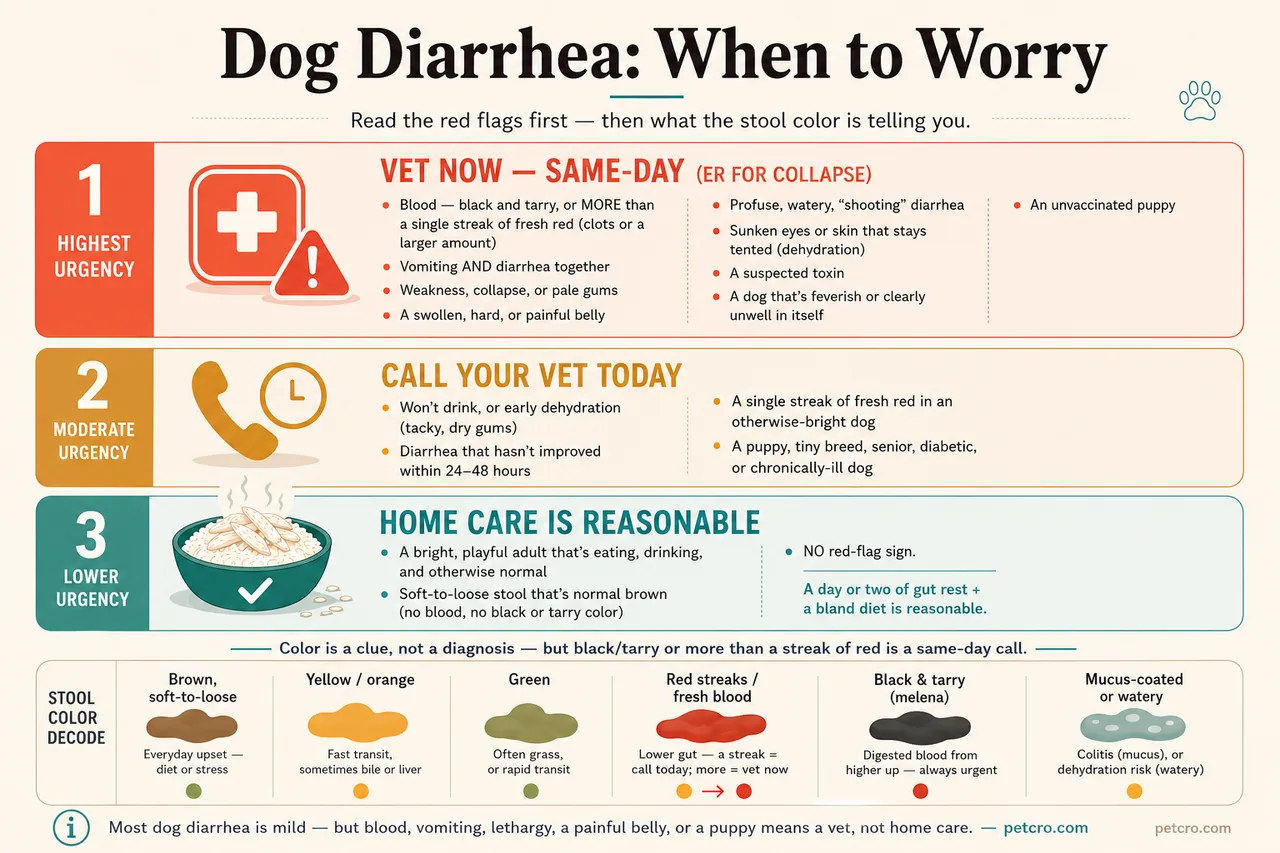
Start here, because it's the only question that changes what you do next. Diarrhea itself is a symptom, not a diagnosis — what matters is the other signs riding alongside it. The Merck Veterinary Manual treats diarrhea with the red-flag signs below as a reason for prompt veterinary care, not home management.
| If you see this | Do this |
|---|---|
| 🔴 Blood — black and tarry, or more than a single streak of fresh red (clots or a larger amount); vomiting and diarrhea together; weakness, collapse, or pale gums; a swollen, hard, or painful belly; profuse, watery, "shooting" diarrhea; sunken eyes or skin that stays tented (dehydration); a suspected toxin; a dog that's feverish or clearly unwell in itself; an unvaccinated puppy | Vet now — same-day, ER for collapse, pale gums, or a hard belly |
| 🟠 Won't drink, or early dehydration (tacky, dry gums); diarrhea that hasn't improved within 24–48 hours; a single streak of fresh red in an otherwise-bright dog; a puppy, tiny breed, senior, diabetic, or chronically-ill dog | Call your vet today |
| 🟢 A bright, playful adult that's eating, drinking, and otherwise normal, with soft-to-loose stool that's normal brown (no blood, no black or tarry color) and no red-flag sign | A day or two of home care is reasonable — read on |
Two combinations deserve extra weight: bloody diarrhea is far more likely to be serious (and in an unvaccinated puppy it's parvo until proven otherwise), and **diarrhea with vomiting — especially vomiting blood — dehydrates a dog quickly. If either is in play, skip the home-care steps and call your vet; and if the diarrhea is actively getting worse** rather than plateauing, don't wait out the window — call the same day.
What causes diarrhea in dogs?
The vast majority of cases trace back to a handful of everyday triggers:
- Dietary indiscretion — the classic "garbage gut": trash, table scraps, a rich treat, or something scavenged on a walk.
- A sudden food change — switching foods too fast is one of the most common causes of loose stool. (Always transition gradually over 5–7 days.)
- Stress or excitement — boarding, travel, a new home, or a thunderstorm can all loosen a dog's stool ("stress colitis").
- Infections and parasites — viruses (including parvovirus), bacteria, and parasites such as giardia, hookworm, and whipworm.
- Toxins — many human foods and household items cause diarrhea and worse. Rodenticide (rat bait) in particular can cause internal bleeding while a dog still seems bright, so a possible exposure is an emergency. Our toxic-foods reference is the fast lookup, and ASPCA Animal Poison Control — (888) 426-4435 — is the call to make if you suspect exposure.
- Chronic conditions — food sensitivities, inflammatory bowel disease, pancreatitis, or organ disease behind diarrhea that keeps coming back.
A single, mild bout in an otherwise-well dog is usually one of the top two. Diarrhea that's severe, bloody, or recurring is where the more serious causes live — and where a vet's diagnostics earn their keep.
What the color and consistency tell you
Color is a useful clue, not a diagnosis — but a few colors are worth acting on. Our stool-health guide walks through the full range; here's the short version:
- Brown, soft-to-loose — the everyday upset. Usually diet or stress; often settles with home care.
- Yellow or orange — often just fast transit (food moving through quickly), sometimes a bile or liver issue. If your dog is also throwing up yellow bile on an empty stomach, that guide covers it.
- Black and tarry (melena) — digested blood from higher up the gut. This is always urgent — call your vet the same day (sooner if there's a lot of it or your dog changes; ER if weak, pale-gummed, or collapsing); see bloody stool in dogs for how to tell it apart from just-dark stool.
- Red streaks or fresh blood — blood from the lower gut. A single streak in a well dog may be minor colitis but still warrants a call to your vet today; more than a single streak — larger amounts, clots, or a flat dog — is a same-day, vet-now matter. Bloody diarrhea in dogs breaks down when to move fast.
- Green — often just grass, but can reflect rapid transit.
- Slimy or mucus-coated — usually large-intestine irritation (colitis); common and often mild on its own.
- Watery — loses fluid fast, so dehydration is the main risk. Profuse, frequent, or "shooting" watery diarrhea, or a dog that seems flat, is a vet-now, same-day matter (the red row above). Even a mild watery bout should turn the corner within 24–48 hours — if it doesn't, call your vet.
If the color is black/tarry or there's more than a streak of red, that's a same-day vet call, not a wait-and-see.
What to do at home in the first 24–48 hours
For a bright, hydrated adult dog with no red flags, a simple home approach is reasonable — and the safest dog diarrhea home remedy is also the plainest:
- A brief gut rest, then a bland diet. Rather than a long fast, offer small, frequent portions of a plain, easy-to-digest meal — the classic being boiled skinless chicken and plain white rice. Our full bland diet for dogs with diarrhea guide has the exact ratio, timing, and how to transition back.
- Keep water available. Dehydration is the real risk with diarrhea — make sure your dog is drinking.
- Consider a little fiber or a probiotic. A spoon of plain canned pumpkin (sized to your dog) or a dog-specific probiotic can help firm things up.
- Feed the right food afterward. If loose stool is a recurring theme, a gentler diet may help — our dog food for diarrhea guide covers what to look for.
Just as important, what not to do: don't give human medications on your own — NSAID pain relievers like ibuprofen, naproxen, and aspirin are dangerous to dogs even at small over-the-counter doses; acetaminophen (Tylenol) is unsafe to give without veterinary guidance, given its narrow margin and risk of liver damage; and anti-diarrheals like loperamide (Imodium) can be dangerous, especially for herding breeds (Collies, Australian Shepherds, Shelties and their crosses) that carry the MDR1 gene mutation. (The AKC covers safe home care and when to skip it.) And don't "wait it out" if any red flag appears. When in doubt, the safest move is a quick call to your vet.
How long should dog diarrhea last — and when to see a vet?
A simple, uncomplicated bout in a well dog often improves within 24–48 hours of gut rest and a bland diet. Call the same day if the diarrhea is actively getting worse rather than plateauing. Otherwise, book a vet visit if:
- it hasn't improved within 24–48 hours;
- it keeps coming back or has become a chronic, weeks-long pattern;
- any red flag from the table above appears — blood, vomiting, lethargy, a painful belly, or dehydration.
Recurring or chronic diarrhea is worth a proper work-up (fecal tests, bloodwork, sometimes a diet trial), because that's where food sensitivities, parasites, and inflammatory disease hide.
Puppies, seniors, and higher-risk dogs
The 24–48 hour "watch at home" window shrinks — or disappears — for some dogs. Puppies dehydrate fast and are vulnerable to parvovirus, so a puppy with diarrhea (especially with blood or vomiting) is a same-day vet matter; our puppy diarrhea guide covers the specifics. Seniors, tiny breeds, and dogs with diabetes or another ongoing illness also have smaller reserves and a lower threshold for calling the vet. When the dog in front of you is very young, very old, very small, or already unwell, lean toward calling sooner rather than waiting.
Preventing the next bout
You can't prevent every upset, but you can cut the common ones:
- Change foods slowly — mix the new food in over 5–7 days or more.
- Keep the diet consistent — go easy on rich treats, table scraps, and sudden new chews.
- Stay on top of parasite control and vaccines — especially for puppies and dogs that socialize or board.
- Manage access to the bin and toxins — most "garbage gut" is preventable.
This guide is general guidance, not veterinary advice. For your specific dog's nutrition, health, or behavior needs, consult your veterinarian.
Frequently asked questions
When should I worry about my dog's diarrhea?
Worry — and call your vet — if the diarrhea comes with blood (red or black/tarry), vomiting, weakness or pale gums, a swollen or painful belly, or signs of dehydration, or if your dog is an unvaccinated puppy. Also call if it hasn't improved within 24–48 hours, keeps returning, or your dog is very young, old, tiny, or already unwell. A single soft-to-loose bout in a bright, playful dog is usually far less concerning.
What can I give a dog for diarrhea?
For a mild bout in an otherwise-well adult dog, the safest first step is a short gut rest followed by a bland diet — boiled skinless chicken and plain white rice — plus fresh water and, optionally, a little plain pumpkin or a dog-specific probiotic. Do not give human anti-diarrheal or pain medications without your vet's say-so; several are toxic to dogs. If there's blood, vomiting, or lethargy, skip home remedies and call your vet.
What should I feed a dog with diarrhea?
Start with a plain, highly digestible bland diet in small, frequent meals for a couple of days, then transition back to normal food gradually. If loose stool is a recurring problem, a gentle, low-fat, limited-ingredient food may suit your dog better — our guides on the bland diet and dog food for diarrhea walk through both.
How long does dog diarrhea usually last?
A simple, uncomplicated bout often improves within 24–48 hours of gut rest and a bland diet. If it's actively getting worse rather than settling, call the same day — don't wait out the window. Otherwise, if it hasn't clearly turned the corner in that time, keeps recurring, or is paired with any red flag, it's time for a vet visit rather than more waiting.
What causes sudden diarrhea in dogs?
The most common triggers for a sudden bout are dietary indiscretion (scavenging, trash, a rich treat), a too-fast food change, and stress. Infections, parasites, toxins, and chronic conditions cause the more serious or persistent cases — which is why sudden diarrhea with blood, vomiting, or lethargy warrants a prompt vet visit.
Is dog diarrhea ever an emergency?
Yes. Profuse or heavily bloody diarrhea (more than a single streak of red, or black and tarry stool), diarrhea with repeated vomiting, a weak, collapsed, or pale-gummed dog, a swollen or painful belly, a suspected toxin, or an unvaccinated puppy are all emergencies — go now. Everything else exists on a spectrum from "watch at home" to "call today," which the triage table above lays out.
TL;DR — the dog diarrhea cheat sheet
- Most dog diarrhea is mild and self-limiting — but blood, vomiting, lethargy, a painful belly, dehydration, or a puppy means a vet, not home care.
- The color and the company it keeps matter more than the diarrhea itself — black/tarry, or more than a streak of fresh red, is urgent.
- Home care for a well adult dog: a short gut rest, a bland diet of chicken and rice, fresh water, and optional pumpkin or a probiotic.
- Never give human anti-diarrheal or pain meds without your vet — several are toxic to dogs.
- See a vet if it hasn't improved within 24–48 hours, keeps recurring, or any red flag appears.
- Puppies, seniors, tiny breeds, and unwell dogs get a lower threshold — call sooner.
If a sensible day or two of home care hasn't turned things around, that's a conversation with your vet — not another day of watching.
Sources & further reading
- Merck Veterinary Manual — Disorders of the Stomach and Intestines in Dogs — causes, danger signs, and when diarrhea needs veterinary care.
- AKC — Dog Diarrhea: Causes, Treatment, and Prevention — stool clues, home care, and the red flags that need a vet.
- petMD — Diarrhea in Dogs — overview, dehydration risk, and treatment basics.
- Cornell Riney Canine Health Center — Diarrhea — a vet-school reference on causes and management.
- ASPCA — Animal Poison Control — (888) 426-4435, if a toxin or a swallowed item is on the table.
More from Petcro
- Bloody Diarrhea in Dogs — when blood in loose stool is an emergency (and when it isn't).
- Bloody Stool in Dogs: Red vs Black — decoding fresh red blood vs black, tarry melena.
- Bland Diet for Dogs With Diarrhea — the chicken-and-rice recipe, step by step.
- Dog Food for Diarrhea — what to feed and buy for a touchy gut.
- Dog Throwing Up Yellow — when yellow bile is behind the upset.
- Puppy Diarrhea — the puppy-specific guide, including parvo.
Petcro is reader-supported. We may earn an affiliate commission when you click through links to products in this guide. Our editorial picks are independent of any commercial relationship with the brands we mention.