Dog Yellow Poop: What It Means and When to Worry
Dog yellow poop often means food moved through too fast — but it can also point to diet, bile, parasites, or illness. How to decode it and when to worry.
Dog yellow poop most often means food moved through the gut too fast to turn fully brown — usually from a diet change, a bland meal, or a passing upset. It's frequently harmless and short-lived, but persistent yellow stool, yellow mucus, blood, or a sick dog needs a vet.
TL;DR: Yellow poop usually means stool moved through too fast to turn brown — most often from a diet change, a bland (chicken-and-rice) meal, or a short bout of loose stool. In a bright, well dog it often clears in a day or two. Treat it as a vet visit if it lasts more than a day or two, comes with mucus, blood, or vomiting, looks pale and greasy with weight loss, or shows up in a puppy or an unwell dog.
What does yellow dog poop mean?
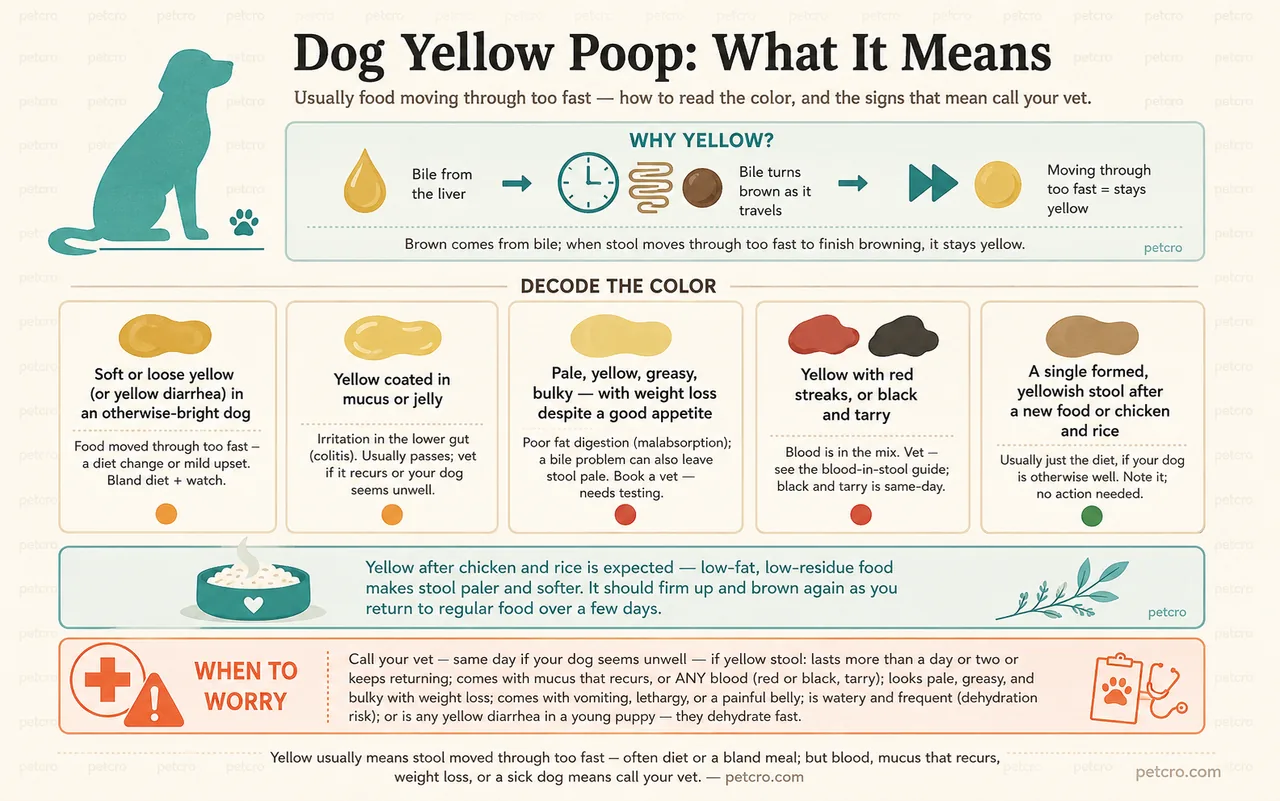
Normal dog stool is brown because bile carries a pigment (bilirubin) that gut bacteria convert into a brown pigment (stercobilin) as it travels. When stool moves through too fast, or something upstream changes, that process doesn't finish, and it comes out yellow, orange, or green instead. So yellow dog stool is usually a speed and diet signal, not a rare disease — petMD walks through how stool color and consistency map to what's happening in the gut.
The texture and what comes with it tell you how seriously to take it:
| What you're seeing | What it usually means | What to do |
|---|---|---|
| Soft or loose yellow stool (or yellow diarrhea) in a dog who's otherwise bright | Food moved through too fast — a diet change, a bland meal, or a mild upset | Often settles in a day or two; feed a bland diet and watch |
| Yellow stool coated in mucus or jelly | Irritation in the lower gut (colitis) | Usually passes; see a vet if it keeps returning or your dog seems unwell |
| Pale, yellow, greasy, bulky stool with weight loss despite a good appetite | Poor fat digestion (malabsorption); a bile problem can also leave stool pale | Book a vet — this pattern needs testing |
| Yellow stool with red streaks, or black and tarry | Blood is in the mix | Vet — see our blood-in-stool guide |
| A single yellowish, formed stool after a new food or chicken and rice | Usually just the diet, if your dog is otherwise well | Note it; no action needed |
Our stool-health guide lets you match color and consistency at a glance. (Yellow that comes up as vomit rather than out as stool is a separate issue — usually bile on an empty stomach; see dog throwing up yellow.)
Common causes of yellow dog poop
Most yellow stool comes from something ordinary, and it clears on its own:
- Food moving through too fast. The most common reason. Loose stool doesn't stay in the gut long enough for bile to turn brown, so it stays yellow.
- A diet change or a new food. Switching foods, a new treat, or table scraps can shift stool color for a day or two while the gut adjusts. Our guide to dog food for diarrhea covers changing food gently.
- A bland (chicken-and-rice) diet. Low-fat, low-residue meals naturally make stool paler and softer — often yellow — while your dog is on them. That's expected, not alarming (more on this below).
- Yellow or orange foods. Sweet potato, carrots, and some dyed treats or kibbles can tint stool.
- A short bout of gut upset. A mild, self-limiting tummy upset can briefly turn stool yellow before it settles back to brown.
In all of these, the giveaway is that your dog stays bright, eating, drinking, and acting normal, and the stool firms up and browns again within a day or two.
When yellow poop is more serious
Some causes don't clear on their own and need a vet:
- Poor fat digestion (malabsorption). When the pancreas doesn't make enough digestive enzymes — a condition called exocrine pancreatic insufficiency — fat passes undigested. The classic sign is pale, yellow-to-gray, greasy, bulky stool in a dog that's losing weight despite a big appetite — one of the malabsorption patterns the Merck Veterinary Manual describes. It needs testing and treatment.
- Liver, gallbladder, or bile problems. Because bile is what browns the stool, a problem with bile flow can leave it pale, clay-colored, or yellow.
- Parasites. Giardia and other parasites can cause soft, greasy, foul, sometimes yellowish stool — common in puppies and dogs from shelters or kennels.
- Infections and other illness. Bacterial or viral infections, including parvo in unvaccinated puppies, can cause yellow diarrhea, usually alongside other signs of a sick dog.
What separates these from the harmless causes is that the yellow doesn't clear up, or it comes with other signs — weight loss, a greasy look, mucus or blood, vomiting, or a dog that's simply off.
Yellow poop with mucus, blood, or diarrhea
The extras that show up with yellow stool change what it's telling you:
- Yellow with mucus or jelly. A slimy yellow coating usually points to irritation in the large intestine (colitis). A one-off is rarely a worry, but yellow mucus that keeps appearing — or comes with blood — is a reason to call your vet.
- Yellow diarrhea. Yellow and loose together is the classic fast-transit picture. Manage a mild case with a bland diet and monitor, but get a vet involved if it lasts more than a day or two, turns watery and frequent (a dehydration risk), or your dog seems unwell. The AKC lists the same diarrhea red flags worth acting on.
- Yellow with red or black. Any fresh red streaks or black, tarry material means blood is in the mix — decode it with our bloody stool guide, and treat black, tarry stool as a same-day vet matter. Yellow, loose stool streaked with blood is covered in bloody diarrhea in dogs.
Yellow poop after chicken and rice (and other diet changes)
One of the most common times owners notice yellow poop is right after starting a bland diet. Boiled chicken and white rice are low in fat and low in residue, so they naturally produce softer, paler, sometimes bright yellow dog poop. And because you usually reach for chicken and rice when the gut is already upset, fast transit adds to the effect.
On its own — in a dog who's perking up — this is normal. What you want to see is the stool gradually firming up and returning to brown as you reintroduce regular food over a few days. If it stays yellow and loose beyond that, or your dog isn't improving, check in with your vet. Our bland diet guide walks through the timing and portions.
When should I see the vet?
Yellow stool in a bright, playful dog that firms up within a day or two is usually nothing to panic about. Call your vet — the same day if your dog seems unwell — if you see any of these:
- Yellow stool or yellow diarrhea lasting more than a day or two, or that keeps coming back
- Mucus or jelly that recurs, or any blood — red streaks or black, tarry stool
- Pale, greasy, bulky stool with weight loss despite a normal or big appetite
- Vomiting, lethargy, appetite loss, or a painful belly alongside the yellow stool
- Watery, frequent diarrhea (a dehydration risk), especially in a puppy, senior, or small dog
- Any yellow diarrhea in a young puppy — they dehydrate and crash quickly
Bring a photo or a fresh sample if you can, and note any recent food changes or new treats.
This guide is general guidance, not veterinary advice. For your specific dog's nutrition, health, or behavior needs, consult your veterinarian.
Frequently asked questions
What does yellow dog poop mean?
Yellow dog poop usually means stool moved through the gut too fast to turn brown, because bile hadn't finished being broken down. The common triggers are a diet change, a bland (chicken-and-rice) meal, or a short bout of loose stool. In a bright, well dog it typically clears within a day or two. Persistent yellow stool, or yellow with mucus or blood, is a reason to see your vet.
Is yellow dog poop an emergency?
Usually not on its own. A single yellow or soft-yellow stool in a dog who's eating, drinking, and acting normal is rarely urgent. It becomes a same-day vet matter if it comes with repeated vomiting, blood, a painful belly, weakness, or watery diarrhea — and any yellow diarrhea in a young puppy warrants a same-day call on its own, since puppies dehydrate fast.
Why is my dog's poop yellow after chicken and rice?
Boiled chicken and white rice are low in fat and residue, so they naturally make stool paler, softer, and sometimes yellow while your dog is eating them. Because you usually start chicken and rice when the gut is already unsettled, fast transit adds to it. It should firm up and brown again as you reintroduce normal food. If it doesn't, call your vet.
What does yellow poop with mucus mean in dogs?
Yellow stool coated in mucus or jelly usually points to irritation in the large intestine (colitis). A single mucusy stool in an otherwise-well dog is rarely a worry and often settles on its own. But yellow mucus that keeps appearing, comes with blood, or arrives alongside a dog that seems unwell warrants a veterinary check to find the cause.
Why does my dog have yellow diarrhea?
Yellow diarrhea in dogs is the classic fast-transit picture: loose stool leaves the gut before bile turns it brown. It's often triggered by a diet change, a bland meal, or a mild upset, and a mild case may settle with a bland diet and rest. See your vet if it lasts more than a day or two, is watery and frequent, contains blood, or your dog is lethargic or a young puppy.
When should I worry about my dog's yellow poop?
Worry when yellow stool lasts more than a day or two or keeps returning, comes with mucus, blood, vomiting, or a painful belly, looks pale and greasy while your dog loses weight, or appears in a puppy who can dehydrate fast. A bright dog with one or two yellow stools after a diet change is usually fine to watch; anything more deserves a call.
TL;DR — the dog yellow poop cheat sheet
- Yellow usually means stool moved through too fast to turn brown — often a diet change, a bland meal, or mild diarrhea.
- After chicken and rice, paler or yellow stool is expected and should firm up as normal food returns.
- See a vet if yellow stool lasts more than a day or two, or comes with mucus, blood, vomiting, or weight loss.
- Pale, greasy, bulky yellow stool with weight loss points to poor fat digestion — get it tested.
- Yellow mucus is usually colitis; recurring mucus or any blood is a vet matter.
- Puppies with yellow diarrhea need a vet sooner — they dehydrate fast.
In a bright dog it's usually just fast transit — but when it lingers or the rest of your dog is off, let your vet take a look.
Sources & further reading
- petMD — What Should My Dog's Poop Look Like? — how normal brown stool forms from bile and what color changes like yellow can signal.
- Merck Veterinary Manual — Disorders of the Stomach and Intestines in Dogs — the digestive conditions behind color and consistency changes.
- AKC — Dog Diarrhea: Causes, Treatment, and Prevention — stool clues and the red flags that need veterinary care.
- Cornell Riney Canine Health Center — Diarrhea — a vet-school reference on causes and management.
More from Petcro
- Stool-Health Guide — read your dog's stool color and consistency at a glance.
- Bland Diet for Dogs With Diarrhea — the chicken-and-rice reset and how to time it.
- Dog Food for Diarrhea — changing food gently when the gut is unsettled.
- Dog Throwing Up Yellow — yellow bile the other way, from an empty stomach.
- Bloody Stool in Dogs: Red vs Black — decoding blood when it shows up with color changes.
Petcro is reader-supported. We may earn an affiliate commission when you click through links to products in this guide. Our editorial picks are independent of any commercial relationship with the brands we mention.