Dog Nausea: Signs, Causes, and How to Help
Dog nausea shows in signs you can spot — drooling, lip-licking, grass-eating. Learn the causes, safe at-home relief, and the red flags that mean see a vet.

Dog nausea is that queasy, about-to-be-sick feeling — and because dogs can't tell you, it shows up as drooling, lip-licking, repeated swallowing, grass-eating, or turning away from food. Most mild cases settle at home, but nausea with repeated vomiting, pain, or a known toxin is a same-day vet visit.
TL;DR: Nausea is the feeling that comes before (and around) vomiting — watch for drooling, lip-licking, gulping, grass-eating, and food refusal. Harmless causes like an empty stomach, car sickness, or a minor tummy upset usually ease with rest, small sips of water, and a bland meal. But treat it as urgent if your dog vomits repeatedly, seems painful or bloated, has pale gums, or could have swallowed a toxin or object. When in doubt, call your vet.
What are the signs of nausea in dogs?
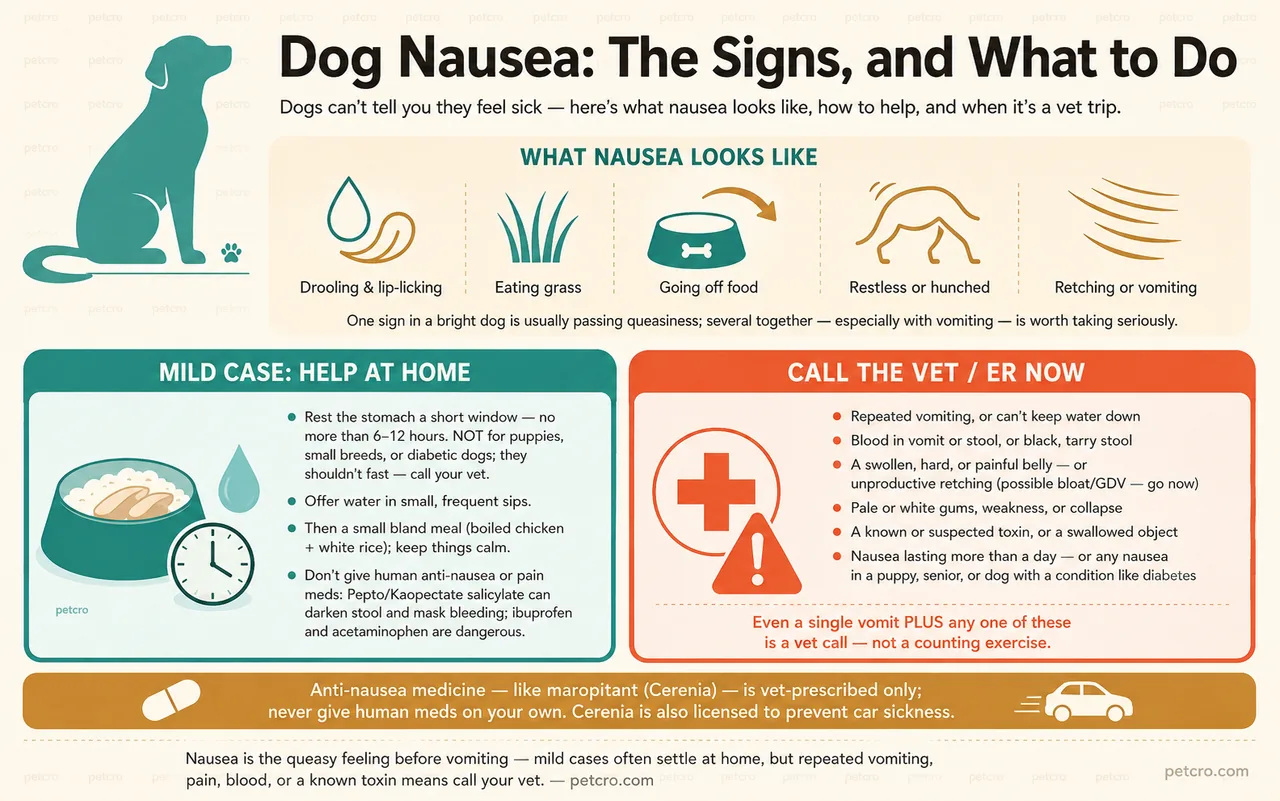
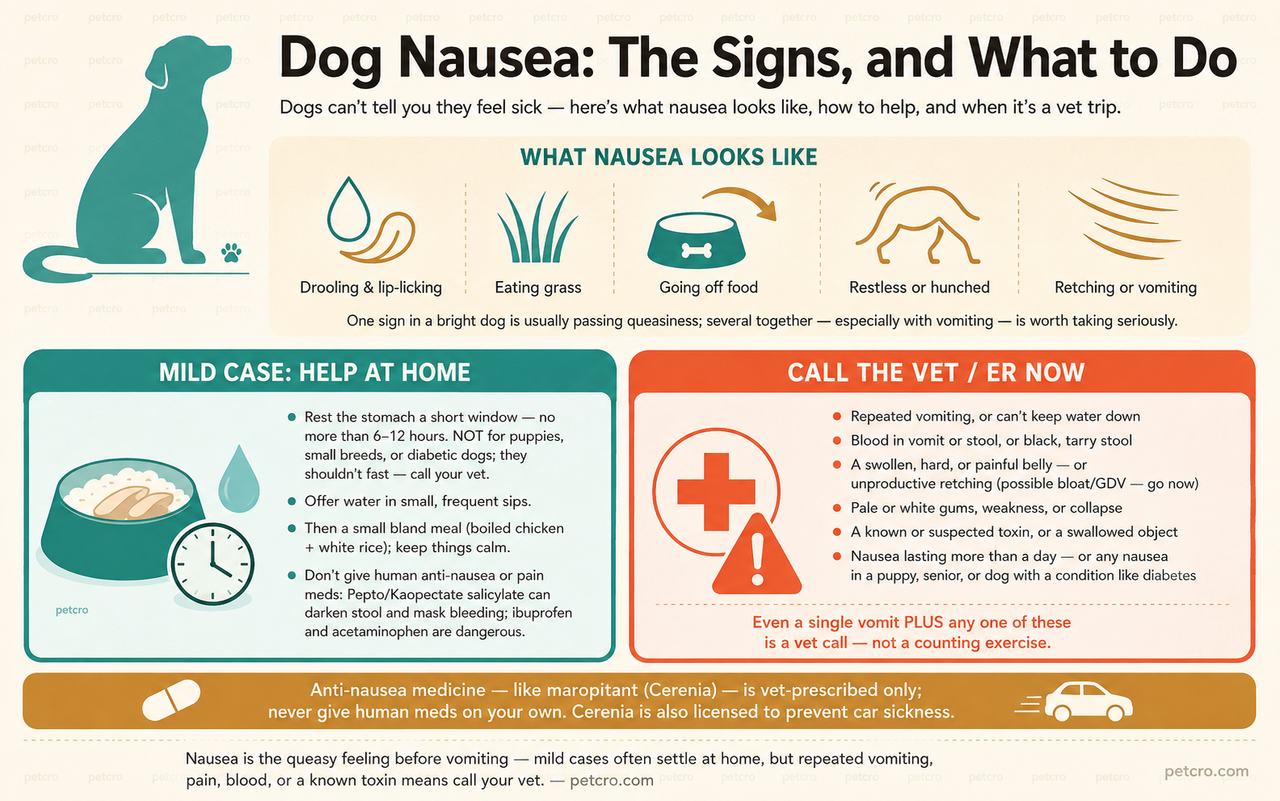
Dogs can't say they feel sick, so nausea shows up in their behavior. The most common signs of nausea in dogs are:
- Drooling and lip-licking — a sudden increase in saliva, licking the lips or the air, and repeated swallowing or gulping.
- Eating grass — many dogs graze when their stomach feels off, though grass-eating on its own isn't proof of nausea.
- Going off food — sniffing a favorite meal and walking away, or hesitating before eating.
- A change in demeanor — pacing and restlessness in some dogs; in others, going quiet, hunched, and withdrawn.
- Retching, gagging, or vomiting — the clearest sign, and often the end point of the ones above.
One or two of these in a dog who's otherwise bright usually means a passing bit of queasiness. Several together — especially with repeated vomiting — are worth taking seriously. petMD notes that drooling and lip-smacking are among the earliest clues, often before anything comes up.
If the nausea does tip into vomiting, what comes up is a clue in itself: white foam often points to an empty, acidy stomach, while yellow bile is common first thing in the morning — but repeated vomiting of either, or a dog who seems unwell, is still a reason to call your vet.
What causes nausea in dogs?
Nausea is a symptom, not a diagnosis — it rides along with dozens of conditions, from trivial to serious. The usual culprits split into two groups.
Usually harmless and self-limiting:
- An empty stomach. A long gap between meals can leave acid and bile sloshing in an empty stomach — the classic "morning nausea," where a dog brings up yellow foam before breakfast. Vets call the pattern bilious vomiting syndrome, and an earlier or later small meal often eases it — though if it keeps happening, have your vet confirm the cause.
- Eating too fast, too much, or something rich. A fatty table scrap or a raid on the trash can upset the stomach for a few hours — though a rich, fatty meal followed by pain, repeated vomiting, or a hunched posture can point to pancreatitis (below), not a passing upset.
- Motion or car sickness — very common, especially in puppies whose balance organs are still developing.
- A mild, passing tummy upset.
Needs a vet — and can be serious:
- Toxins and poisons. Xylitol, chocolate, grapes and raisins, rat bait, and many human medications all cause nausea (see our toxic foods and household poisons reference); some are emergencies even before vomiting starts.
- Pancreatitis — often after a fatty meal, painful, and needs treatment.
- Kidney or liver disease — a common cause of ongoing nausea in older dogs.
- A GI obstruction. A swallowed toy, sock, bone, or corn cob can block the gut; unproductive retching and a painful belly are red flags.
- Infections (like parvo in unvaccinated puppies), medication side effects, and other underlying illness.
Because the harmless and serious causes can look alike at the start, the rest of your dog — energy level, gum color, whether water stays down — tells you more than any single sign.
How to help a nauseous dog at home
If your dog is bright, alert, and only mildly queasy — no repeated vomiting, no pain, no known toxin — a few simple home remedies often settle things:
- Rest the stomach briefly. Pick up food for a short window — no more than 6 to 12 hours — to let the gut calm down. Skip this for puppies, small breeds, or diabetic dogs, who can drop their blood sugar dangerously if they don't eat — call your vet instead. When in doubt about any dog, skip the fast and check with your vet.
- Offer water in small amounts. Let your dog sip little and often rather than gulp a full bowl, which can trigger more vomiting.
- Reintroduce food gently. Once the queasiness passes, start with a small, bland meal — plain boiled chicken and white rice — then build back to normal over a day or two.
- Keep things calm. A quiet spot and no roughhousing help a queasy dog settle.
What not to do: don't reach for human anti-nausea or antacid medicines. Pepto-Bismol and Kaopectate contain a salicylate (aspirin-like) compound that can harm some dogs and darken the stool, which can hide the black, tarry stool (melena) that signals internal bleeding. Human pain relievers like ibuprofen and acetaminophen are outright dangerous. Give nothing from your own cabinet without your vet's say-so.
Anti-nausea medication for dogs: what a vet can prescribe
When nausea is more than mild — or keeps coming back — vets have safe, effective treatment options that work far better than anything over the counter. The most common is maropitant (brand name Cerenia), a prescription anti-nausea and anti-vomiting drug that's also licensed to prevent motion sickness in dogs. Others, such as ondansetron, are used in specific cases.
These are prescription-only, and the right choice and dose depend on your dog's weight, the cause, and their overall health — so they come from your vet, not a guess at home. If your dog is nauseous enough to need medication, that's the visit to book. The Merck Veterinary Manual is clear that treatment should target the underlying cause, not just mask the symptom.
Car sickness and nausea in dogs
Motion sickness is one of the most common causes of nausea in dogs, and puppies get it most — the balance organs in a young dog's inner ear are still maturing, so many grow out of it. The signs show up on the road: drooling, lip-licking, whining, yawning, and sometimes vomiting. A few things help, per the AKC:
- Face them forward and keep the car cool and well-ventilated.
- Travel on a near-empty stomach — don't feed a big meal right before a trip.
- Start with short, positive trips to build tolerance.
- For dogs it really affects, ask your vet about maropitant (Cerenia), which is licensed for canine motion sickness.
Skip the human motion-sickness pills unless your vet specifically recommends one — the dosing and safety are different in dogs.
When should I take my dog to the vet for nausea?
Mild, short-lived queasiness in a bright dog is usually fine to manage at home. Call your vet the same day — or head to an emergency clinic — if you see any of these:
- Repeated vomiting, or a dog who can't keep water down
- Blood in the vomit or stool, or black, tarry stool (see vomiting blood)
- A swollen, hard, or painful belly, or unproductive retching — trying to vomit with nothing coming up can signal bloat (GDV), a true emergency
- Pale or white gums, weakness, collapse, or a racing heart
- A known or suspected toxin, or a swallowed object
- Nausea that lasts more than a day, keeps returning, or comes with diarrhea — especially bloody diarrhea
- Any nausea in a puppy, senior dog, or dog with a condition like diabetes — these dogs have less margin, so call sooner
Bring a photo, note what your dog may have eaten and when, and if diarrhea is part of the picture, our stool-health guide can help you describe what you're seeing.
This guide is general guidance, not veterinary advice. For your specific dog's nutrition, health, or behavior needs, consult your veterinarian.
Frequently asked questions
What are the signs of nausea in a dog?
The most reliable signs are drooling and excessive lip-licking, repeated swallowing or gulping, eating grass, and turning away from food. Some dogs pace or seem restless; others go quiet and hunched. Retching, gagging, or vomiting is the clearest sign. A single sign in a bright dog is usually minor; several together are worth a closer look.
How can I settle my dog's nausea at home?
For a mild case in an otherwise-well adult dog, rest the stomach by picking up food for a few hours (never for puppies, small breeds, or diabetic dogs), offer small and frequent sips of water, then reintroduce a small bland meal like boiled chicken and rice. Keep things calm. If it doesn't ease within a day, call your vet.
What can I give a dog for nausea?
Don't give human anti-nausea or antacid medicines — Pepto-Bismol and Kaopectate contain salicylate that isn't safe for every dog. The safe, effective option is a prescription anti-nausea drug from your vet, most often maropitant (Cerenia). It's dosed to your dog's weight and cause, so it should come from the clinic, not your medicine cabinet.
Why does my dog get nauseous in the morning?
A long overnight gap can leave bile and acid in an empty stomach, causing "morning nausea" — often a dog bringing up yellow foam before breakfast. This pattern is called bilious vomiting syndrome, and it's usually eased by a small snack before bed or an earlier breakfast. If it happens often or your dog seems unwell, have your vet confirm the cause.
Can I give my dog medicine for car sickness?
Yes, but only from your vet. Maropitant (Cerenia) is licensed to prevent motion sickness in dogs and is the usual choice. Human motion-sickness pills aren't safe to give on your own — dosing and drug safety differ in dogs. Alongside medication, face your dog forward, keep the car cool, travel on a near-empty stomach, and build up with short trips.
When is dog nausea an emergency?
Treat it as urgent if your dog vomits repeatedly or can't keep water down, has blood in the vomit or stool, shows a swollen or painful belly, retches without producing anything (a possible bloat sign), has pale gums or seems weak, or may have swallowed a toxin or object. Puppies, seniors, and dogs with health conditions need a vet sooner.
TL;DR — the dog nausea cheat sheet
- Nausea shows as drooling, lip-licking, gulping, grass-eating, and food refusal — dogs can't tell you, so watch behavior.
- Common harmless causes: an empty stomach, car sickness, eating too fast, or a minor upset.
- Repeated vomiting, a painful or swollen belly, pale gums, blood, or a known toxin means a same-day vet visit or ER.
- At home (mild cases only): brief food rest, small sips of water, then a small bland meal.
- Never give human anti-nausea or pain medicines without your vet's OK.
- Vets can prescribe maropitant (Cerenia) — far safer and more effective than anything over the counter.
- Puppies, seniors, and dogs with conditions like diabetes need a vet sooner.
When you can't tell harmless queasiness from something serious, a quick call to your vet is always the safe move.
Sources & further reading
- petMD — Nausea in Dogs — the signs of nausea and the range of causes behind it.
- Merck Veterinary Manual — Vomiting in Dogs — a clinical reference on nausea, vomiting, and treatment.
- AKC — Car Sickness in Dogs — why motion sickness happens and how to manage it.
- University of Illinois College of Veterinary Medicine — Bilious Vomiting Syndrome — empty-stomach, morning nausea explained.
- Cornell Riney Canine Health Center — Vomiting — a vet-school guide to when vomiting needs care.
More from Petcro
- Dog Throwing Up White Foam — empty-stomach, acidy vomiting that often follows nausea.
- Dog Throwing Up Yellow — bile and the morning-nausea pattern, decoded.
- Dog Throwing Up Blood — when vomiting turns into an emergency.
- Bland Diet for Dogs With Diarrhea — gentle feeding while a queasy gut recovers.
- Toxic Foods & Household Poisons Reference — the poisons that commonly cause nausea and vomiting.
Petcro is reader-supported. We may earn an affiliate commission when you click through links to products in this guide. Our editorial picks are independent of any commercial relationship with the brands we mention.