Dog Not Eating: Causes, Timeline & When to See a Vet
Dog not eating? Decode picky vs sick, how long is too long, the red flags that mean call the vet now, and safe ways to get your dog eating again.
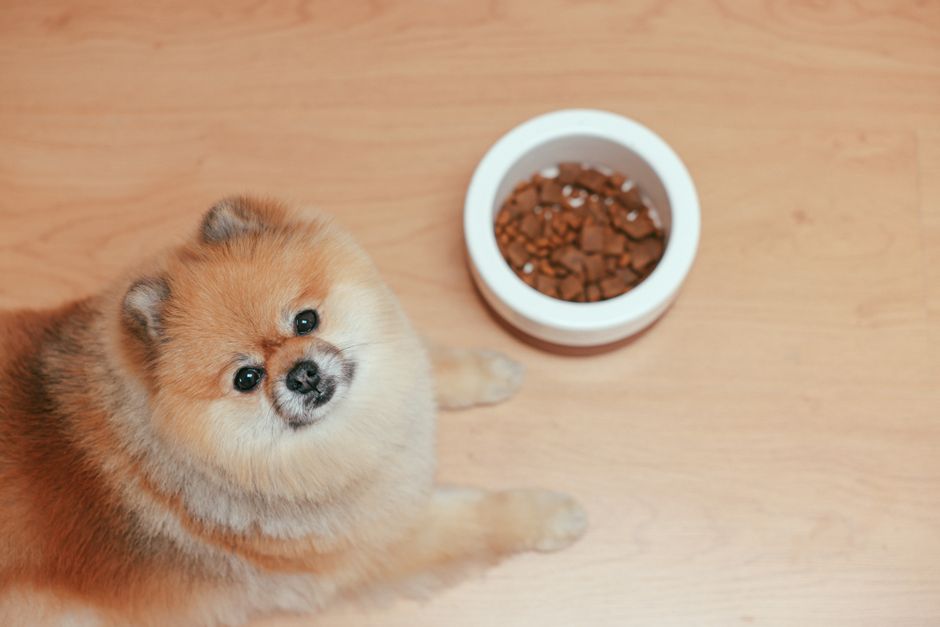
A dog not eating is a common sign that something's off — the cause runs from trivial to serious. A picky mood, hot weather, or too many treats can blunt appetite in a well dog; pain, nausea, infection, or organ disease can too. Refusing all food, or skipping meals with vomiting or lethargy, means call your vet.
TL;DR: Appetite loss is a symptom, not a diagnosis — so read the whole dog, not just the bowl. A bright, playful adult who skips a meal or turns picky can usually be watched for 24–48 hours with a few gentle nudges. But eating nothing at all, or not eating plus vomiting, diarrhea, lethargy, pale gums, or a painful belly, is a vet call — and for a puppy, toy breed, senior, pregnant, or diabetic dog, the clock is hours, not days. Never force-feed, never withhold water, and never give human medicines to spark appetite.
Why is my dog not eating? The short answer
Appetite is one of the first things to drop when a dog feels unwell, so "not eating" is less a problem in itself than a message that something has changed. The trick is figuring out whether that something is trivial or serious — and the surrounding signs, not the empty bowl, are what tell you.
Broadly, the reasons a dog stops eating fall into three buckets:
- Behavioral or environmental — pickiness, too many treats, a new food they dislike, hot weather, stress, or a change in routine or surroundings. The dog is otherwise well.
- Feeling unwell — nausea, pain (including dental and joint pain), fever, infection, or an upset gut. Appetite is usually one of several signs.
- Serious medical — a swallowed object blocking the gut, pancreatitis, organ disease, a toxin, or another condition that needs prompt care. Often paired with vomiting, lethargy, or belly pain.
The AKC notes that the single most likely reason a dog goes off food is simply feeling sick — often a passing bug that resolves in a day or two. Your job isn't to diagnose it; it's to sort the "watch and tempt" cases from the "call the vet" cases, which the rest of this guide walks through.
Partial vs complete: how "not eating" actually looks
"My dog won't eat" can mean two very different things, and the difference matters. Vets separate them because they carry different levels of concern:
- Partial appetite loss (hyporexia) — eating less than usual, picking at meals, refusing kibble but taking treats or toppers, or slowing down over days. Often milder, but if it drags on it still needs a look.
- Complete appetite loss (anorexia) — refusing everything, including favorites and hand-fed food. This is more concerning, especially if it comes on suddenly or lasts more than a day.
A dog who ignores dinner but happily mugs you for chicken is telling you something different from a dog who turns away from their most-loved treat. The first is often behavioral or a mild off-day; the second — a true, whole-food refusal — is far more likely to be illness. Note which one you're seeing, and for how long, because that's the first thing your vet will ask.
Why is my dog not eating but acting normal?
This is the reassuring end of the spectrum — and often a genuinely minor one. A dog who skips a meal or two but is bright, playful, drinking, peeing and pooping normally, and has no other symptoms is usually dealing with something benign:
- Pickiness or "holding out" — free-feeding, table scraps, or a rotating menu can teach a dog to wait for something better.
- Too many treats — a day of extra chews or human-food handouts can simply leave a dog full at dinnertime.
- Heat or exercise — dogs often eat less in hot weather or right after hard activity.
- A new food, a stale bag, or a disliked flavor — a recent switch or an off-smelling bag can put a dog off a meal.
- Mild stress or routine change — a houseguest, travel, a new pet, or a schedule shift can briefly dull appetite.
- A recent vaccination or minor bug — a day of reduced appetite after a vaccine or a passing upset is common and usually self-limits.
Even here, "acting normal" has a shelf life. A truly well dog eating nothing at all for more than a day still deserves a call, because early illness can look deceptively normal at first. And "acting normal" must be honest: no hiding, no lip-licking or drooling (early nausea signs), no lethargy. If the only thing wrong is a skipped meal in a genuinely bright, playful dog, a short watch-and-tempt is reasonable — but keep the timeline and red flags below in mind.
Common reasons a dog stops eating
When appetite loss is about feeling unwell, the causes span nearly every system. You don't need to identify which one — that's the vet's job — but knowing the range helps you take it seriously.
| Category | Examples | Typical clues alongside it |
|---|---|---|
| Gut upset | Gastroenteritis, a passing infection, dietary indiscretion, parasites | Vomiting, diarrhea, gurgling belly, nausea |
| Nausea | Many causes — from motion or a mild bug to organ disease | Drooling, lip-licking, swallowing, vomiting yellow bile |
| Pain | Dental disease or a broken tooth, arthritis, an injury, abdominal pain | Reluctance to chew, dropping food, stiffness, guarding the belly |
| Fever or infection | Viral or bacterial illness, an abscess, tick-borne disease | Lethargy, warm ears, shivering, hiding |
| Serious internal disease | Kidney or liver disease, pancreatitis, cancer, hormonal disease | Weight loss, increased or decreased drinking, vomiting, weakness |
| Obstruction | A swallowed toy, bone, sock, or corn cob blocking the gut | Repeated vomiting, straining, a painful or bloated belly — an emergency |
| Toxins & medication | A swallowed poison, or side effects of antibiotics, painkillers, or chemo | Sudden refusal, drooling, vomiting, other toxicity signs |
Two of these deserve special mention. Dental pain is badly underrated — a dog may want to eat but can't chew comfortably, so watch for dropping food, chewing on one side, or bad breath. And pancreatitis — inflammation of the pancreas, often after a fatty meal — pairs appetite loss with vomiting and belly pain and needs veterinary care; the AKC's pancreatitis overview covers its signs. When appetite loss comes with an upset gut, our guides on dog diarrhea and nausea in dogs map out what's usually behind that combination.
How long can a dog go without eating before it's a problem?
There's no single number, because it depends entirely on the dog and the surrounding signs. A healthy adult dog can physically cope with a short fast better than a person might expect — but appetite loss is a symptom, so the real question isn't "how long can they survive," it's "how long before this needs a professional look." Use the dog in front of you, not the clock alone:
| Situation | When to act |
|---|---|
| Bright, playful adult eating a bit less or being picky | Watch 24–48 hours; call if not back to normal by then |
| Adult refusing all food (complete anorexia) | Call your vet within 24 hours — sooner with any other sign |
| Not eating with a single, mild vomit or soft stool, dog otherwise stable | Call your vet the same day |
| Not eating with repeated vomiting or diarrhea, or blood in either | Go now — treat as an emergency (see the table below) |
| Not eating and not drinking | Call today — dehydration climbs faster than hunger |
| Puppy, toy or small breed, senior, pregnant, diabetic, or chronically ill off food | Call the same day — hours, not days (a puppy that's also weak, wobbly, or vomiting is a go-now emergency) |
| Any red-flag sign (see below) | Emergency — go now |
Water changes the math. A dog can go without food far longer than without water, so a dog who's not eating but drinking water normally and is otherwise well has a little more slack than one who's refusing both — dehydration is the faster-moving danger. One exception: a dog drinking noticeably more than usual while off food isn't reassuring at all — excess thirst with a poor appetite can point to kidney disease, diabetes, or a hormonal disorder, and deserves a prompt vet visit. Either way, "wait and see" has a firm ceiling: 24–48 hours for a truly well adult, and much less for anyone small, young, old, pregnant, or unwell. A dog who is not eating and lethargic has already crossed out of watch-and-wait.
Dog not eating: when is it an emergency?
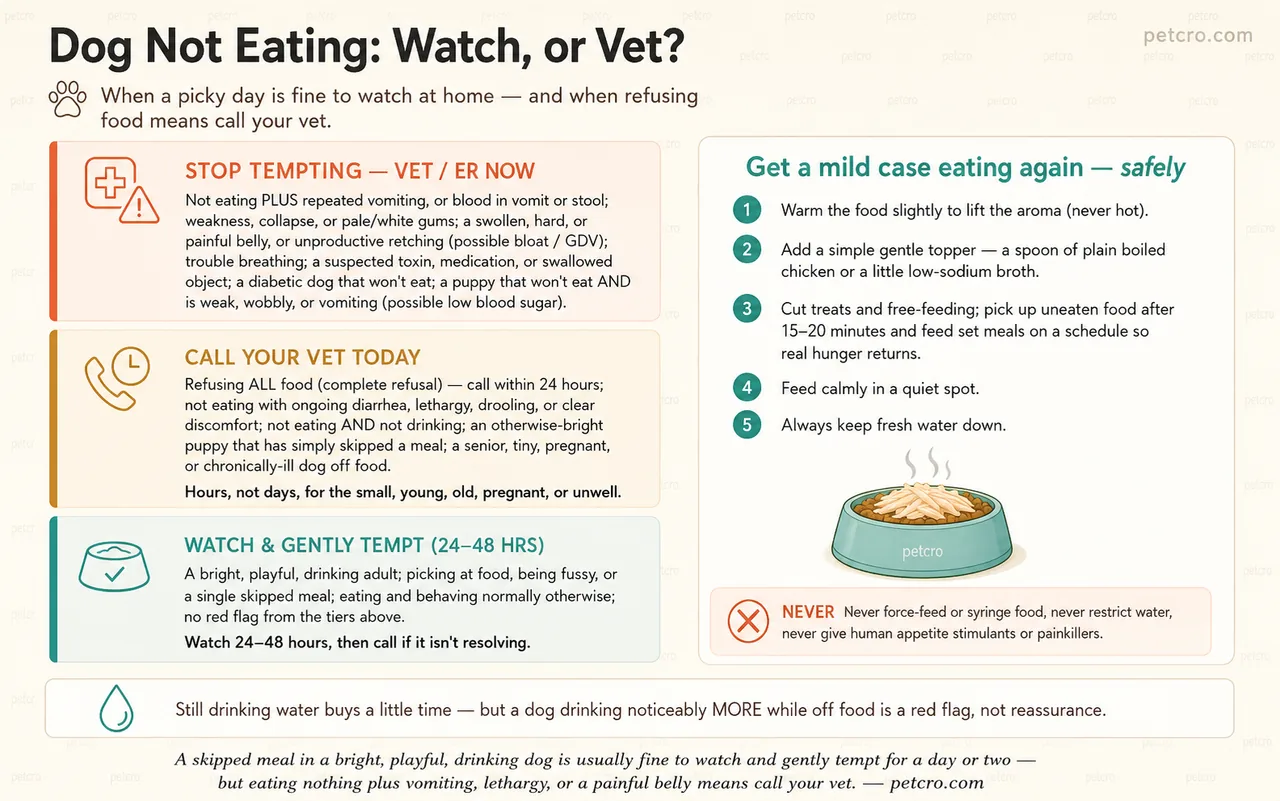
Some combinations mean skip the home steps and get help now. Treat any of these as urgent — same-day for the amber tier, immediate for the red:
| If you see this | Do this |
|---|---|
| 🔴 Not eating plus repeated vomiting, blood in vomit or stool, collapse, weakness, or pale/white gums; a swollen, hard, or painful belly, or unproductive retching (trying to vomit with nothing coming up — possible bloat); trouble breathing; a known toxin, medication, or foreign-object swallow; a diabetic dog who won't eat; a puppy who won't eat and is weak, wobbly, or vomiting (possible low blood sugar) | Emergency vet or ER now |
| 🟠 Complete food refusal (call within 24 hours, sooner with any other sign); not eating with ongoing diarrhea, lethargy, drooling, or clear discomfort; an otherwise-bright puppy that has simply skipped a meal; a senior, tiny, pregnant, or chronically-ill dog off food; not eating and not drinking | Call your vet today — sooner for the small, young, old, pregnant, or unwell |
| 🟢 A single skipped meal or a picky day in a bright, playful, drinking adult with no other sign | Watch and gently tempt for 24–48 hours, then call if it isn't resolving |
Unproductive retching with a swollen belly is a true emergency — this can be bloat (gastric dilatation-volvulus), which is rapidly life-threatening, especially in deep-chested breeds. Don't wait it out. Likewise, a diabetic dog on insulin who won't eat is urgent: giving a normal insulin dose to a dog that hasn't eaten can drop blood sugar dangerously, so call your vet before the next injection rather than guessing. Anything you suspect your dog swallowed belongs on our toxic foods and household poisons reference, and if vomiting is part of the picture, our dog throwing up blood guide covers the emergency end of that spectrum.
Special cases: puppies, seniors, and diabetic dogs
The 24–48 hour "watch" window is for healthy adults only. Several dogs get a much shorter fuse:
- Puppies. Small puppies have little energy reserve and can develop low blood sugar (hypoglycemia) fast — weakness, wobbliness, even collapse — so an otherwise-bright puppy who skips a meal is a same-day concern, not a wait-and-see — and a puppy who won't eat and is weak, wobbly, or vomiting is an emergency. See our guides on puppy vomiting and the puppy-specific angle in puppy diarrhea.
- Seniors. Older dogs are more likely to have dental disease, organ changes, or pain driving appetite loss, and less reserve to ride it out. Don't extend the watch window for a senior — call sooner.
- Diabetic dogs. As above, this is the one where the food and the medication are linked. A diabetic dog who won't eat needs a vet conversation before the next insulin dose — never give a full dose to a dog that hasn't eaten without guidance.
- Pregnant or nursing dogs, and any dog with a known chronic illness. All get a lower threshold — their margins are thinner and dehydration comes faster.
For any of these, "he'll eat when he's hungry" is the wrong instinct. Reach out early.
How to get a dog to eat again (safely)
If — and only if — your dog has cleared the red-flag check above (bright, drinking, no vomiting, no lethargy, no belly pain) and is the picky-or-mild-off-day type, a few gentle nudges often restore appetite. If in doubt, or if your dog is in any special-case group, call the vet first rather than trying these.
- Warm the food slightly. A few seconds of warmth lifts the aroma, which is most of what drives a dog's appetite. Stir and check it's only warm, never hot.
- Add a simple, gentle topper. A spoon of plain boiled chicken, a little low-sodium broth, or a bland-diet mix-in can make a meal appealing. Our bland diet for dogs recipe is easy on a touchy gut, and our dog food for a sensitive stomach guide covers gentler everyday options.
- Cut the treats and free-feeding. A dog full of chews and scraps has no reason to eat dinner. Pick up uneaten food after 15–20 minutes, offer set meals on a schedule, and let real hunger return. Our feeding calculator sets the right daily amount so treats aren't quietly replacing meals.
- Lower the stress. Feed in a quiet spot, try hand-feeding a few pieces, and keep mealtimes calm — some dogs eat far better without an audience or a competing pet.
- Keep fresh water down at all times. Never restrict water to encourage eating; dehydration is the bigger risk.
A few things to avoid: don't force-feed or syringe food into a reluctant dog (it risks aspiration and stress), don't leave wet food out to spoil, don't add anything on the toxic list like onion, garlic, or grapes to tempt them, and never give human appetite stimulants or painkillers. If these gentle steps haven't worked within a day — or your dog slides into any red-flag sign — stop tempting and call your vet. Tracking stool changes on our stool-health guide can help you spot whether the gut is settling or getting worse.
This guide is general guidance, not veterinary advice. For your specific dog's nutrition, health, or behavior needs, consult your veterinarian.
Frequently asked questions
Why is my dog not eating but drinking water?
A dog that's still drinking normally but off food is often dealing with mild nausea, a passing gut upset, dental discomfort, stress, or plain pickiness — and the maintained water intake is a mildly reassuring sign. This only holds if thirst is normal, though: a dog drinking noticeably more than usual while off food should see the vet, since excess thirst with a poor appetite can signal kidney disease, diabetes, or a hormonal disorder. And if the refusal lasts more than 24 hours or comes with vomiting, diarrhea, drooling, or lethargy, call rather than waiting.
How long can a dog go without eating?
A healthy adult can physically manage a short fast, but because appetite loss is a symptom, the practical limit is far shorter than survival: watch a bright, well adult for 24–48 hours, then call. Refusing all food, or not eating with other signs, warrants a call within 24 hours. Puppies, toy breeds, seniors, pregnant, and diabetic dogs need a vet within hours, not days.
My dog won't eat but is acting normal — should I worry?
A single skipped meal or a picky day in a bright, playful, drinking dog with no other symptoms is usually minor — pickiness, heat, stress, treats, or a disliked food. Watch and gently tempt for 24–48 hours. But eating nothing at all for more than a day, even while seeming fine, still earns a call, since early illness can look deceptively normal at first.
My dog is not eating and seems lethargic — is that an emergency?
Not eating combined with lethargy is a meaningful red flag and shouldn't be watched at home. Together they suggest your dog feels genuinely unwell rather than just picky. Call your vet the same day, and treat it as an emergency if you also see repeated vomiting, pale gums, collapse, a painful or swollen belly, or a known toxin exposure. When in doubt, call.
How do I get my dog to eat again?
For a mild, otherwise-well dog, warm the food to boost its smell, add a gentle topper like plain boiled chicken or a little low-sodium broth, cut back on treats so real hunger returns, and feed calmly on a set schedule. Keep fresh water available and never force-feed. If appetite doesn't recover within a day, or other signs appear, see your vet.
Can stress make a dog stop eating?
Yes. A move, travel, a new pet or person, boarding, loud events, or a change in routine can all briefly suppress a dog's appetite. Stress-related refusal usually passes as the dog settles and is not paired with vomiting, diarrhea, or lethargy. If a stressed dog still won't eat after a day or two, or shows any illness signs, have your vet rule out a medical cause.
TL;DR — the dog-not-eating cheat sheet
- Appetite loss is a symptom — read the whole dog: a bright, playful adult can be watched 24–48 hours, but eating nothing plus vomiting, lethargy, or belly pain is a vet call.
- Complete refusal (anorexia) is more concerning than picking at food (partial); note which you see and for how long.
- A dog not eating but drinking water and otherwise well has more slack than one refusing both — dehydration moves faster than hunger.
- Puppies, toy breeds, seniors, pregnant, and diabetic dogs get hours, not days — and a diabetic who won't eat needs a vet before the next insulin dose.
- Unproductive retching with a swollen belly can be bloat — a go-now emergency.
- Tempt a mild case by warming food, adding a gentle topper, and cutting treats — but never force-feed, restrict water, or give human medicines.
Sort picky from sick first: watch-and-tempt a bright adult for a day or two, but call the vet the moment other signs appear — or right away for the very young, old, or unwell.
Sources & further reading
- AKC — Why Won't My Dog Eat? — the common reasons behind appetite loss and when it points to illness.
- petMD — Why Is My Dog Not Eating? — causes, home steps, and the signs that mean a vet visit.
- Merck Veterinary Manual — Disorders of the Stomach and Intestines in Dogs — the gut conditions that commonly blunt appetite, and their danger signs.
- AKC — Pancreatitis in Dogs — a painful cause of appetite loss and vomiting that needs prompt care.
- AKC — Warning Signs of Dehydration in Dogs — why a dog off both food and water is the more urgent case.
- ASPCA — Animal Poison Control — (888) 426-4435, if a swallowed toxin might be behind the refusal.
If appetite loss keeps returning or comes with weight loss, increased drinking, or vomiting, that's a pattern worth a full vet workup — not another feeding trick.
More from Petcro's GI cluster
- Nausea in Dogs: Signs & What to Do — the drooling-and-lip-licking picture that often precedes a dog going off food.
- Dog Diarrhea: Causes, Red Flags & Care — the broad GI overview when appetite loss comes with an upset gut.
- Dog Throwing Up Yellow (Bile) — vomiting bile on an empty stomach, and how it ties to not eating.
- Bland Diet for Dogs — the easy-to-digest chicken-and-rice rest that helps tempt a touchy gut.
- Feeding Calculator — the right daily amount, so treats aren't quietly crowding out meals.
Petcro is reader-supported. We may earn an affiliate commission when you click through links to products in this guide. Our editorial picks are independent of any commercial relationship with any pet-food brand.