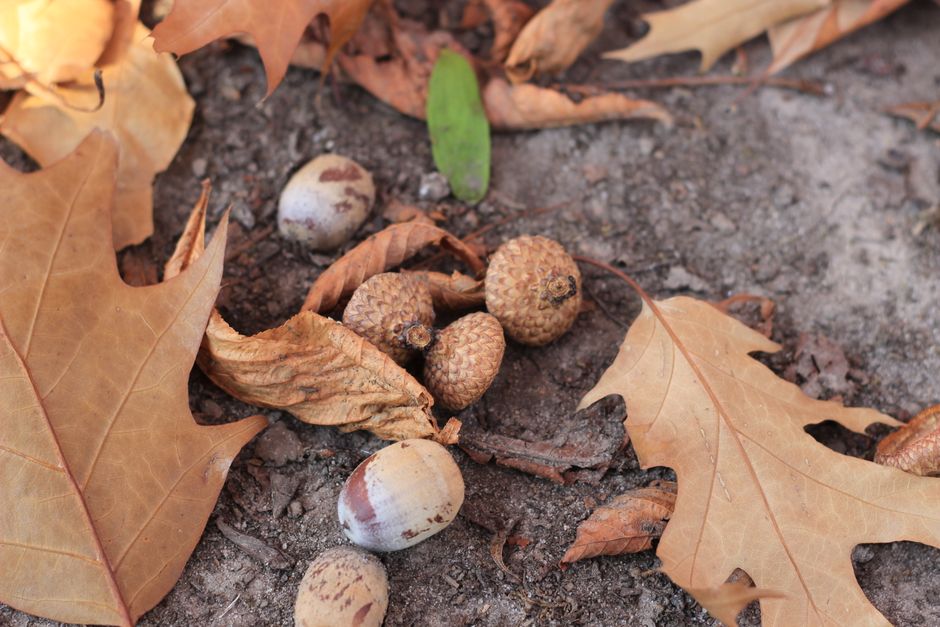
Can dogs eat acorns?
UnsafeNo — acorns are toxic to dogs. They contain tannins that irritate the gut and, in larger amounts, can damage the liver and kidneys. The hard nuts are also a choking and intestinal-blockage risk. Keep dogs away from oak trees and fallen acorns, especially in autumn.
Acorns are an autumn hazard many owners overlook on walks. A dog that chews or swallows them can get more than a stomach ache — the tannins are genuinely toxic, and the whole nuts can block the gut.
Watch out for
- Tannins — acorns and young oak leaves contain tannic acid, which irritates the gut and, in quantity, can harm the liver and kidneys.
- GI upset — vomiting, diarrhea, drooling, and loss of appetite are common early signs.
- Blockage — whole acorns can lodge in the gut and cause an obstruction, especially in small dogs.
- Choking — the hard nuts and caps are a choking hazard.
- Repeated exposure — dogs that regularly scavenge acorns are at higher risk of organ damage over time.
Frequently asked
My dog ate an acorn — what should I do?
Don't wait for symptoms — call your vet or the ASPCA Animal Poison Control ((888) 426-4435) with your dog's size and how many acorns were eaten. Watch for vomiting, diarrhea, drooling, lethargy, or signs of a blockage like a painful belly or straining, and seek care promptly.
Why are acorns poisonous to dogs?
Acorns contain tannins (tannic acid), which irritate the digestive tract and, in larger or repeated amounts, can damage the liver and kidneys. The hard nuts also pose a choking and intestinal-blockage risk on top of the toxicity.
How many acorns are dangerous for a dog?
There's no safe number — toxicity depends on the dog's size and how many were eaten, and even one can cause a blockage in a small dog. Treat any acorn ingestion as a reason to call your vet rather than guessing.
What are the symptoms of acorn poisoning?
Early signs include vomiting, diarrhea, drooling, and loss of appetite. More serious cases can involve lethargy, abdominal pain, and signs of liver or kidney trouble. Any of these after eating acorns means contact your vet straight away.
How do I stop my dog eating acorns on walks?
Keep your dog on a leash near oak trees in autumn, teach a reliable "leave it" cue, and steer clear of areas thick with fallen acorns. Clear them from your garden if you have oaks nearby.
Primary sources
This guide draws on the following authorities. Specific clinical decisions for your pet should always be made with your vet.
More food guides
Check our toxic-food tool for quick answers, or ask CRO about your specific dog.
This guide is educational and based on US veterinary sources. Individual dogs react differently — introduce any new food slowly, and speak to your vet if your dog has medical conditions like pancreatitis, diabetes, or allergies.