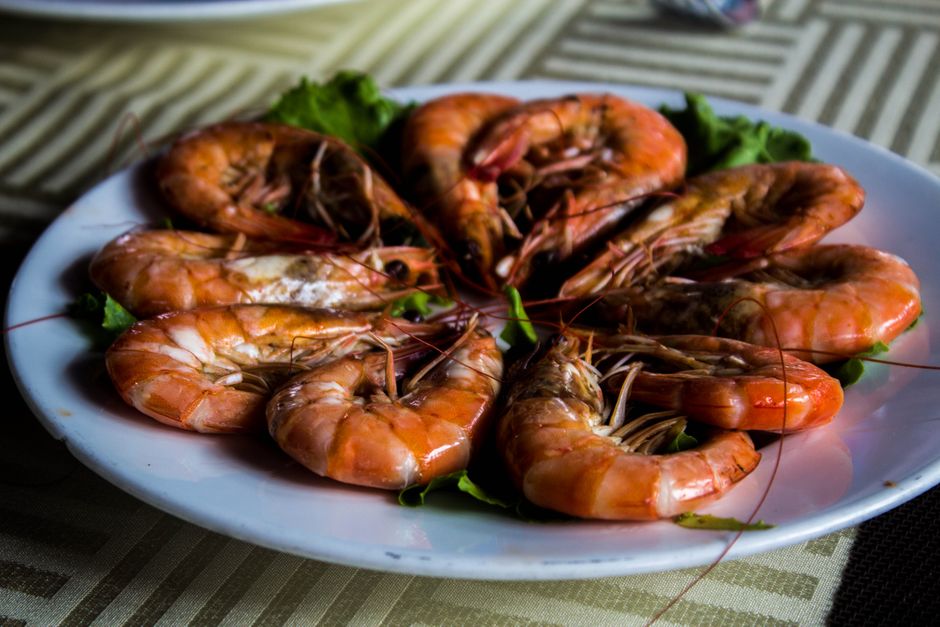
Can dogs eat shrimp?
Safe with careYes — in moderation, and only if it's cooked, peeled, deveined, and plain. Raw shrimp risks bacteria and parasites, the shells and tails are a choking and obstruction hazard, and breaded or fried shrimp is off the table.
Plain cooked shrimp is a low-fat, high-protein treat most dogs love. The catch is all in the preparation — raw shrimp, shells, and the seasoning on restaurant shrimp are where the real risks are.
Benefits
- High in protein and low in fat and calories — a lean treat.
- Provides vitamin B12 and niacin, which support metabolism.
- Contains phosphorus for healthy bones.
- Rich in antioxidants (including astaxanthin, which gives shrimp its pink color).
How much to give
How to prepare
- Cook thoroughly — steam or boil. Raw shrimp can carry Salmonella, Vibrio, and parasites.
- Remove the shell, tail, legs, and head completely — they're a choking and gut-obstruction risk.
- Devein it (remove the dark digestive tract along the back).
- Plain only — no butter, oil, garlic, onion, salt, or Cajun-style seasoning.
- Cut into bite-sized pieces for small dogs and gulpers.
Watch out for
- Raw shrimp — bacteria (Salmonella, Vibrio) and parasites; cook it through.
- Shells and tails — hard, sharp, and a real choking/obstruction hazard.
- Breaded or fried shrimp — the oil, batter, and seasoning cause GI upset and pancreatitis risk.
- Sodium — restaurant and pre-seasoned shrimp is far too salty for dogs.
- Shellfish allergy — uncommon but possible; introduce a small amount and watch for itching or GI upset.
- Cholesterol — shrimp is high in cholesterol, another reason to keep it occasional.
If a rich treat upsets their stomach
Too much of a fatty or unfamiliar food can leave a dog with a loose or queasy tummy for a day or two. These are the vet-shelf digestive supports owners keep on hand — helpful for a mild upset, but not a substitute for a vet visit if your dog is repeatedly sick, lethargic, or in pain.
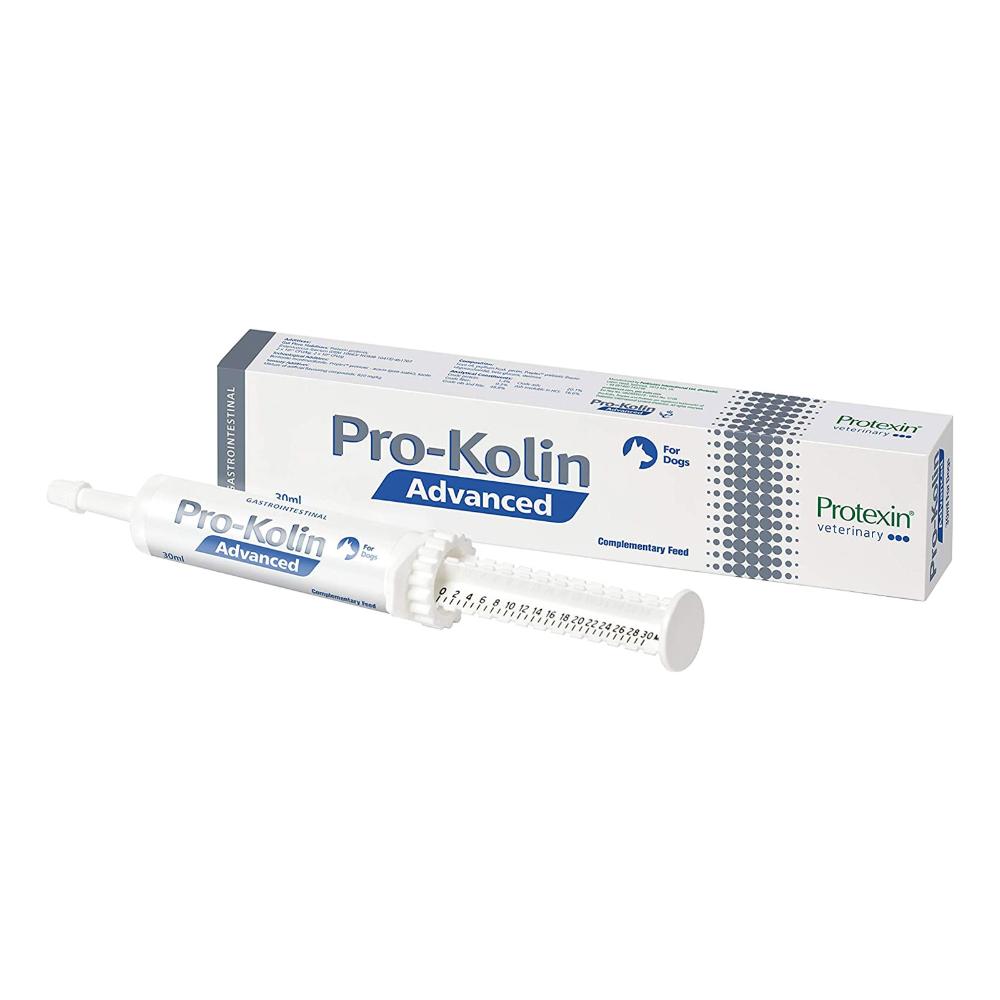


Petcro may earn a small commission from these links, at no extra cost to you. We only list products we'd be comfortable recommending.
Frequently asked
Can dogs eat cooked shrimp?
Yes — plain cooked shrimp (steamed or boiled), peeled and deveined, is safe in moderation. Skip any butter, oil, garlic, or seasoning, which are the parts that cause problems.
Can dogs eat raw shrimp?
No. Raw shrimp can carry Salmonella, Vibrio, and parasites that cause vomiting and diarrhea. Always cook shrimp fully before sharing.
Can dogs eat shrimp tails or shells?
No. Shells, tails, and legs are hard and sharp — a choking hazard and a risk of intestinal blockage. Remove them all before giving shrimp to your dog.
Can dogs eat fried or breaded shrimp?
No. The oil, batter, and seasoning in fried or breaded shrimp can trigger GI upset and, with the fat load, pancreatitis. Only plain cooked shrimp is appropriate.
How much shrimp can a dog eat?
Treat it as an occasional treat, not a meal — one to a few small cooked shrimp depending on your dog's size, no more than once or twice a week. Treats should stay under 10% of daily calories.
Are some dogs allergic to shrimp?
Shellfish allergies are uncommon in dogs but possible. The first time, offer a small piece and watch for 24 hours for itching, swelling, or stomach upset before giving more.
Primary sources
This guide draws on the following authorities. Specific clinical decisions for your pet should always be made with your vet.
- AKC — Can Dogs Eat Shrimp? · American Kennel Club
- AVMA — Household hazards · AVMA
- Merck Veterinary Manual — Toxicology (clinician textbook) · Merck
More food guides
Check our toxic-food tool for quick answers, or ask CRO about your specific dog.
This guide is educational and based on US veterinary sources. Individual dogs react differently — introduce any new food slowly, and speak to your vet if your dog has medical conditions like pancreatitis, diabetes, or allergies.