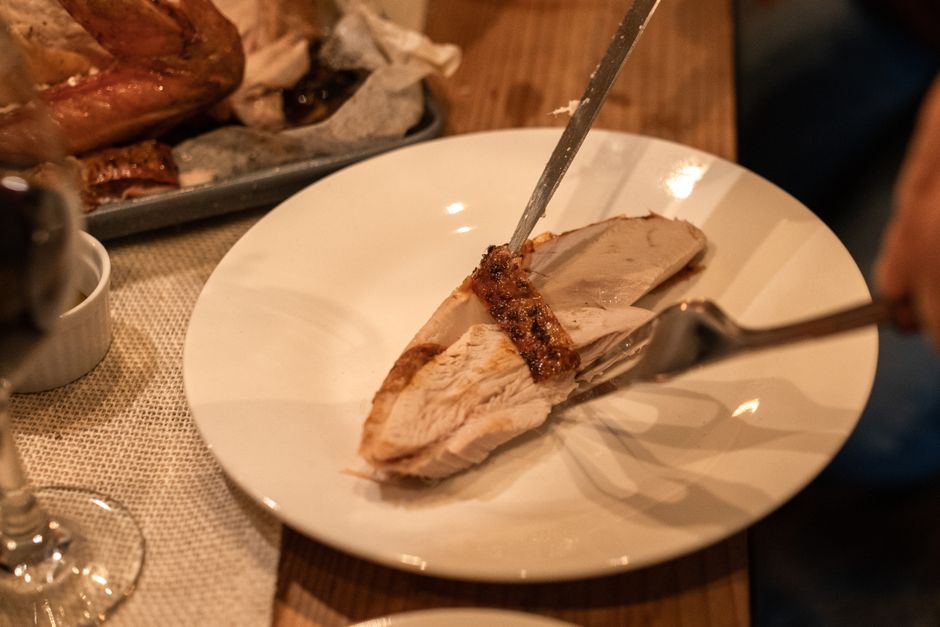
Can dogs eat turkey?
Safe with careYes — plain, fully cooked, skinless, boneless turkey is safe for dogs and is even used in many dog foods. The dangers at the holiday table are the extras: skin, bones, fatty gravy, and seasonings like garlic and onion, which are toxic to dogs.
Turkey itself is a lean, dog-friendly protein. Nearly every turkey-related vet visit comes down to the trimmings — the bones, the fatty skin, and the seasoned leftovers, not the meat.
Benefits
- Lean source of protein and amino acids.
- Provides B vitamins, phosphorus, and selenium.
- A common, well-tolerated protein in commercial dog food.
How much to give
How to prepare
- Cook it through and serve plain — no salt, garlic, onion, or herbs.
- Remove the skin — it's fatty and often seasoned.
- Take all meat off the bone; never give turkey bones.
- Skip gravy, stuffing, and holiday leftovers entirely.
Watch out for
- Turkey bones — cooked bones splinter and can choke a dog or pierce the gut.
- Skin and fat — too rich; a pancreatitis trigger, especially in prone breeds.
- Seasonings — garlic and onion (common in gravy and stuffing) are toxic to dogs.
- Salt — seasoned and processed turkey is high in sodium.
If a rich treat upsets their stomach
Too much of a fatty or unfamiliar food can leave a dog with a loose or queasy tummy for a day or two. These are the vet-shelf digestive supports owners keep on hand — helpful for a mild upset, but not a substitute for a vet visit if your dog is repeatedly sick, lethargic, or in pain.
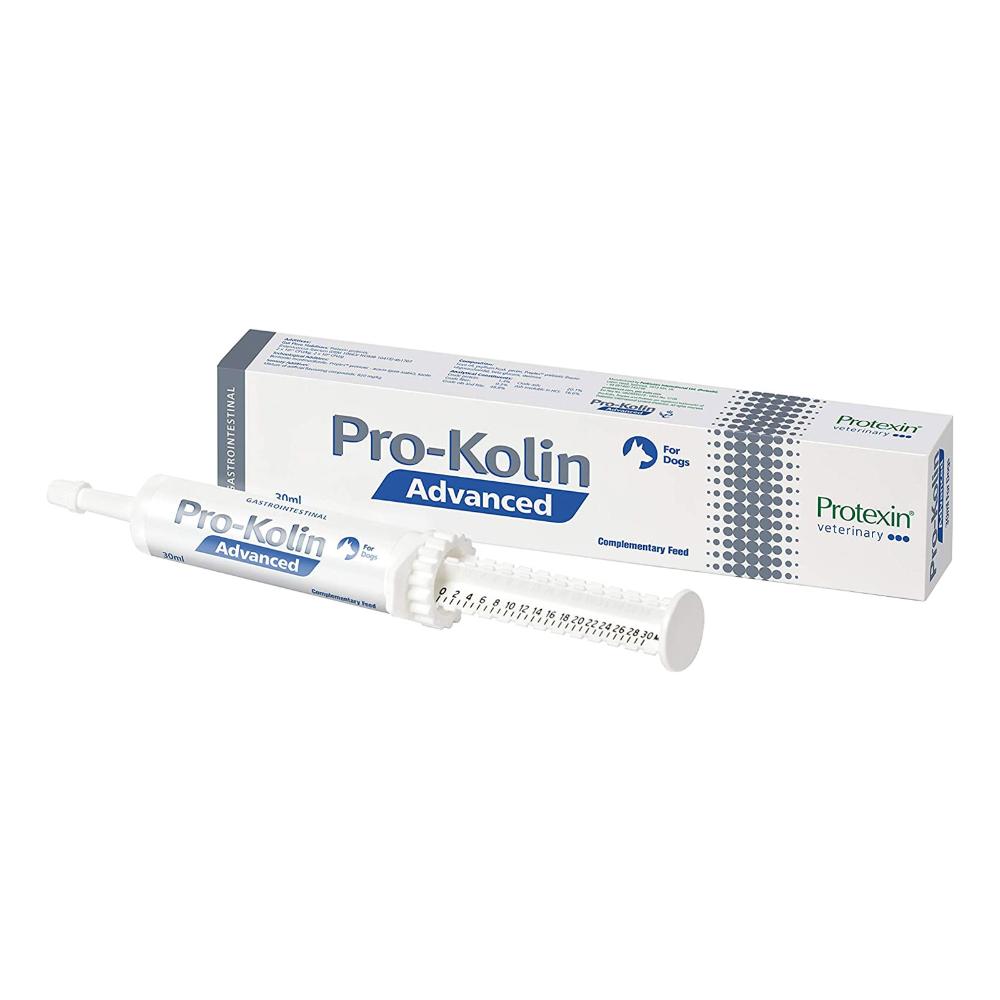


Petcro may earn a small commission from these links, at no extra cost to you. We only list products we'd be comfortable recommending.
Frequently asked
Can dogs eat turkey bones?
No. Cooked turkey bones splinter into sharp pieces that can choke a dog or perforate the digestive tract. Always take the meat off the bone and never give bones as a treat.
Can dogs eat turkey skin?
It's best avoided. Turkey skin is fatty and usually seasoned, and that combination can trigger pancreatitis and stomach upset. Stick to plain, skinless meat.
Can dogs eat Thanksgiving or Christmas turkey?
Only plain, unseasoned, skinless, boneless meat — and even then in small amounts. Keep dogs away from the gravy, stuffing, and seasoned leftovers, which often contain garlic and onion that are toxic to dogs.
Can dogs eat deli turkey or turkey lunch meat?
It's best avoided. Processed turkey slices are high in salt and preservatives. A small piece won't poison a dog, but plain home-cooked turkey is a much better choice.
How much turkey can a dog eat?
Treat plain cooked turkey as an occasional treat — a few small pieces depending on size, kept under 10% of daily calories. It's a lean protein, but it's still an extra on top of a complete diet.
Primary sources
This guide draws on the following authorities. Specific clinical decisions for your pet should always be made with your vet.
- AKC — Can Dogs Eat Turkey? · American Kennel Club
- Merck Veterinary Manual — Toxicology (clinician textbook) · Merck
More food guides
Check our toxic-food tool for quick answers, or ask CRO about your specific dog.
This guide is educational and based on US veterinary sources. Individual dogs react differently — introduce any new food slowly, and speak to your vet if your dog has medical conditions like pancreatitis, diabetes, or allergies.