Can dogs eat tomatoes?
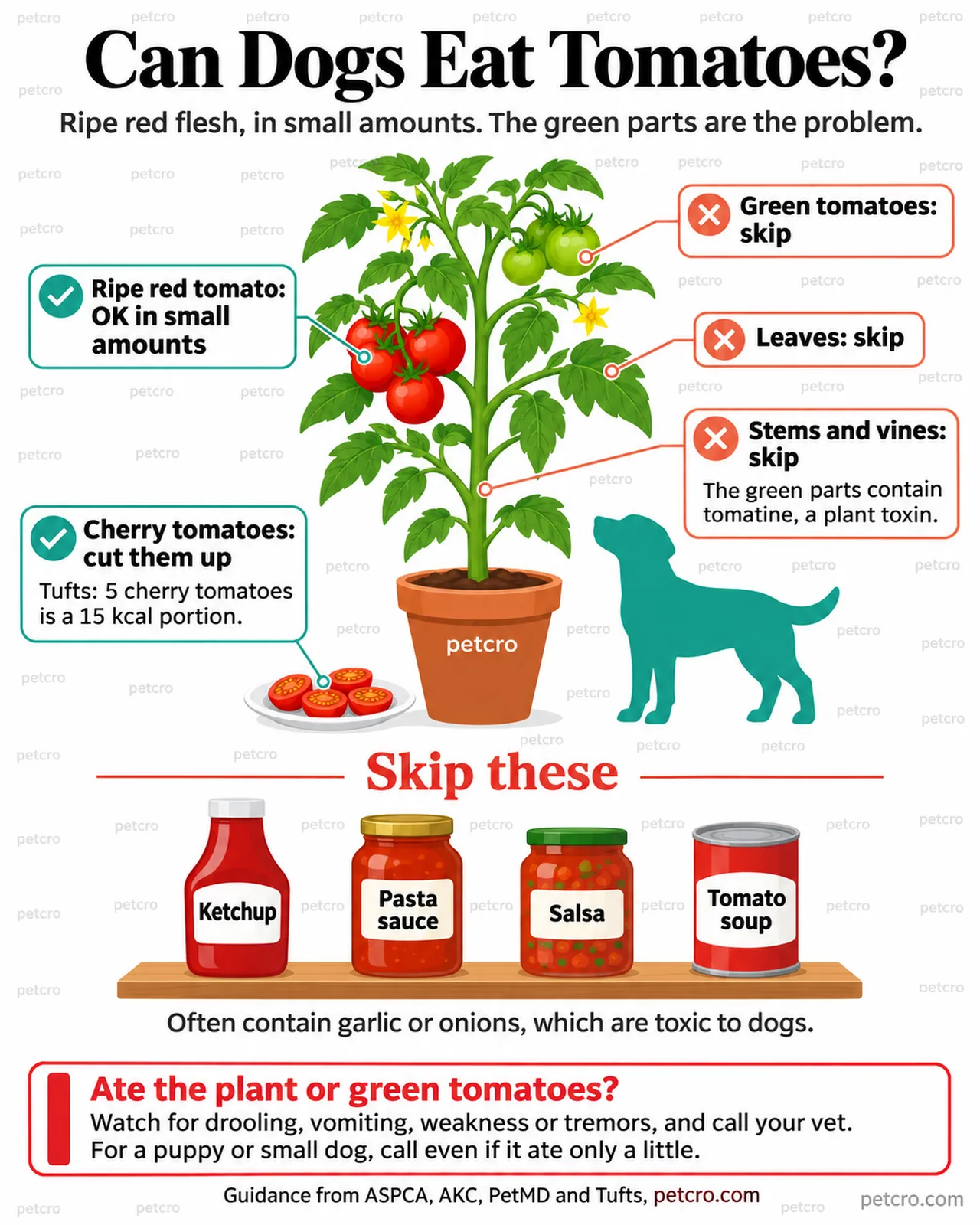
Safe with careYes, in small amounts. Ripe red tomato flesh is considered non-toxic to dogs. The green parts are the problem: leaves, stems, vines and unripe green tomatoes contain plant toxins that can make dogs sick. Skip ketchup, pasta sauce, salsa and tomato soup, which often contain garlic or onions.
Most tomato advice stops at "ripe is fine, green is bad". This page sorts the common tomato foods and plant parts into fine or skip, shows which source names which toxin, and says what to do if your dog got into the tomato plants.
Sauce or salsa with onion or garlic? Onion and garlic poisoning guideKetchup with xylitol? Xylitol poisoning guideASPCA Poison Control (888) 426-4435
How much tomato can a dog have?
USDA lists ripe red tomato at 18 kcal per 100 g. A cherry tomato (17 g) is about 3 kcal, and a medium tomato (123 g, about 2 3/5 inches across) is about 22 kcal.
Tufts recommends that treats and table food make up less than 10% of a dog's daily calories. Its own treat list gives 5 cherry tomatoes (85 g) as one 15 kcal portion. The table shows how much of the daily allowance that portion uses.
Calories are only one limit. AKC says too much tomato can upset a dog's stomach because of the acidity, so give only small amounts as an occasional treat and start with a bite-sized portion.
| Dog | Daily calories (Tufts example) | Treat allowance (10%) | Share used by 5 cherry tomatoes (15 kcal) |
|---|---|---|---|
| 10 lb dog | 300 kcal | 30 kcal | Half |
| 25 lb dog, less active | 400 kcal | 40 kcal | A little over a third |
| 25 lb dog, fairly active | 600 kcal | 60 kcal | A quarter |
| 75 lb dog | 1,400 kcal | 140 kcal | About a tenth |
Tomato values: USDA FoodData Central (Tomatoes, red, ripe, raw). Daily calories are Tufts examples, not targets: Merck notes any animal may need as much as 30% more or less than another of the same weight, so ask your vet for your dog's figure.
How much to give
How to prepare
- Use only fully ripe, red tomatoes. AKC says unripe or green tomatoes should always be avoided.
- Remove every green part. PetMD says the stems and leaves have the most tomatine.
- Wash it, then dice it. PetMD says to wash tomatoes to remove dirt and pesticides and cut them into bite-size pieces to avoid choking.
- Serve it plain, with no salt, oil, garlic, onion or other seasoning.
Watch out for
- Green tomatoes and the plant. ASPCA lists the tomato plant as toxic to dogs, with signs that include drooling, severe stomach upset, weakness, dilated pupils and a slow heart rate.
- Sauces, salsa and soup. Garlic and onions can cause gastrointestinal irritation and red blood cell damage, which can lead to anemia.
- Choking. PetMD says cherry tomatoes or larger chunks can pose a choking risk, especially for small dogs.
- Acidity. AKC says sharing too much tomato can upset a dog's stomach because of the acidity.
Which tomato foods and plant parts are fine, and which to skip
| Food or part | Verdict | Why |
|---|---|---|
| Ripe red tomato flesh | Fine as a treat | Ripe fruit is non-toxic, according to ASPCA. It is about 18 kcal per 100 g. Cut away the stem and any green parts first. |
| Cherry and grape tomatoes | Fine, cut up | PetMD says dogs can eat grape tomatoes as long as they're ripe, washed, served plain, and cut into smaller pieces to prevent choking. |
| Green, unripe tomatoes | Skip | Green tomatoes contain higher levels of tomatine than ripe ones. AKC says a small amount may not cause serious harm, but larger quantities can lead to vomiting, weakness or tremors. |
| Leaves, stems and vines | Skip | Pet Poison Helpline says toxic plant alkaloids are found in all parts of the tomato plant. ASPCA lists the plant as toxic to dogs. |
| Ketchup | Skip | PetMD says ketchup often contains sugar, salt, and sometimes xylitol. One tablespoon (17 g) has about 154 mg of sodium and 3.6 g of sugars. |
| Pasta sauce, pizza sauce and salsa | Skip | PetMD says tomato-based foods like soup, salsa and sauce often contain garlic or onions, which are toxic to dogs. |
| Tomato soup | Skip | PetMD says tomato soup can contain onions, garlic, or spices that are unsafe. |
| Canned tomatoes | Plain only | Read the label. AKC says tomato-based products often contain garlic, onions, salt, or sugar. |
Solanine or tomatine? What is in the green parts
Sources name the compound differently. ASPCA's plant database lists solanine as the toxic principle of the tomato plant. PetMD names tomatine, and AKC names both, calling tomatine a cousin of solanine.
They agree on where it sits. AKC says these toxins are found mostly in the green parts of the plant. PetMD says tomatine levels drop significantly as tomatoes ripen.
Pet Poison Helpline adds that ripe tomatoes have the least amount of these compounds.
Serious poisoning is unusual. AKC calls tomatine poisoning rare in dogs and says it usually isn't fatal, and most dogs that have had it fully recover. AKC also says it can cause serious symptoms if large amounts are eaten, and that a smaller amount can poison a puppy or a small breed.
My dog ate a tomato plant or green tomatoes: what to do
Take away anything left, and note roughly how much your dog ate and when.
Watch for signs. Pet Poison Helpline says animals that eat large amounts of green tomatoes, leaves or stems may develop vomiting, diarrhea, weakness, lethargy, stumbling or disorientation. ASPCA's list of signs also includes drooling, loss of appetite, depression, dilated pupils and a slow heart rate. AKC adds tremors or seizures, abdominal pain and an irregular heartbeat.
Call for advice. AKC says to call your veterinarian for guidance if you think your dog has eaten a large amount of tomatoes or the tomato plant itself. If you're concerned about tomatine poisoning, AKC says to get your dog checked out as soon as possible. For a puppy or a small dog, call even if it ate only a little, since AKC notes that a smaller amount can cause poisoning in them.
You can also call ASPCA Animal Poison Control at (888) 426-4435. ASPCA notes that a consultation fee may apply.
At the clinic, AKC says a vet may do blood work or an ECG, and may induce vomiting or monitor your dog.
Growing tomatoes with a dog
AKC suggests fencing off a home garden so your dog can't reach the plants or be tempted to sample the produce.
If you grow tomatoes inside, AKC says to keep them out of reach, not on the table or counter, and where they can't be easily knocked over.
After gardening, pick up pulled plants, trimmed leaves and fallen green fruit.
Tomatoes for dogs with kidney disease or a sensitive stomach
Sensitive stomachs. PetMD says high-acid foods may irritate the stomach lining in dogs with sensitive digestive systems. It adds that dogs with chronic gastroenteritis or kidney disease may be more sensitive.
Kidney disease. A medium tomato carries about 292 mg of potassium. Merck says blood potassium in dogs with chronic kidney disease can be low, normal or mildly increased, depending on nutrition, other conditions and medications.
Medications. Merck also says potassium should be monitored in pets on ACE inhibitors such as benazepril or enalapril. Ask your vet whether tomato fits your dog's plan.
Prescription diets. PetMD says dogs on prescription diets should not be fed any food or treats outside the diet unless your veterinarian says it's fine.
Allergies. AKC says allergic reactions to tomatoes are rare, but signs can include hives, coughing, wheezing and difficulty breathing.
What is in a tomato
PetMD notes that tomatoes provide vitamins A and C and potassium, plus antioxidants such as lycopene and beta-carotene. In treat-sized amounts, those add up to very little.
| Nutrient | Per cherry tomato (17 g) | Per medium tomato (123 g) | Per 100 g |
|---|---|---|---|
| Calories | 3 kcal | 22 kcal | 18 kcal |
| Sugars | 0.4 g | 3.2 g | 2.63 g |
| Fiber | 0.2 g | 1.5 g | 1.2 g |
| Potassium | 40 mg | 292 mg | 237 mg |
| Vitamin C | 2.3 mg | 16.9 mg | 13.7 mg |
| Vitamin A (RAE) | 7 mcg | 52 mcg | 42 mcg |
| Lycopene | 437 mcg | 3,161 mcg | 2,570 mcg |
| Sodium | 1 mg | 6 mg | 5 mg |
Source: USDA FoodData Central, Tomatoes, red, ripe, raw, year round average (SR Legacy 170457). Per-tomato values are the per-100 g figures times 0.17 and 1.23. Ripe tomato is 94.5% water.
Frequently asked
Can dogs eat cherry tomatoes?
Yes, if they are ripe and plain. PetMD says cherry tomatoes or larger chunks can pose a choking risk, especially for small dogs, so cut them into small pieces. Each one is about 3 kcal.
What happens if a dog eats a green tomato?
AKC says a small amount may not cause serious harm, but larger quantities can lead to vomiting, weakness or tremors. Call your vet if you notice signs. For a puppy or a small dog, call even if it ate only a little, since AKC notes that a smaller amount can cause poisoning in them.
My dog ate a tomato plant. What should I do?
Take away what is left and call your vet for guidance as soon as possible, especially if your dog ate a lot or is a puppy or small dog. ASPCA, Pet Poison Helpline and AKC list signs such as drooling, vomiting, diarrhea, weakness, lethargy, stumbling, tremors or seizures, dilated pupils and a slow heart rate. ASPCA Animal Poison Control is at (888) 426-4435.
Can dogs eat tomato sauce or ketchup?
No. AKC says tomato-based products often contain garlic, onions, salt, or sugar. Garlic and onions can damage red blood cells, and PetMD notes that ketchup sometimes contains xylitol.
Can dogs eat tomatoes every day?
AKC calls tomato an occasional treat, given only in small amounts. PetMD warns that even ripe tomatoes can cause mild stomach upset, like diarrhea or gas, if a dog eats too many at once.
Can puppies eat tomatoes?
Keep puppies away from tomato plants and green tomatoes. AKC warns that for small breeds and puppies, a smaller amount of tomato can cause poisoning because of their size. If you share ripe tomato, start with one tiny piece.
Are tomatoes good for dogs?
Ripe tomato is low in calories, at 18 kcal per 100 g. PetMD notes that tomatoes provide vitamins A and C and potassium, plus antioxidants such as lycopene and beta-carotene. It is still a treat, so count it toward the 10% allowance.
Primary sources
This guide draws on the following authorities. Specific clinical decisions for your pet should always be made with your vet.
- ASPCA Animal Poison Control, Toxic and Non-Toxic Plants: Tomato Plant · ASPCA
- Pet Poison Helpline, Tomato Plants · Pet Poison Helpline
- ASPCA Animal Poison Control, People Foods to Avoid Feeding Your Pets · ASPCA
- USDA FoodData Central, Tomatoes, red, ripe, raw, year round average · USDA Agricultural Research Service
- USDA FoodData Central, Catsup · USDA Agricultural Research Service
- Tufts Petfoodology, Treat Options for Dogs and Cats Without Unbalancing Their Diet · Cummings School of Veterinary Medicine at Tufts University
- Tufts Petfoodology, The Most Popular Holiday Foods That Your Pet Should Avoid · Cummings School of Veterinary Medicine at Tufts University
- Merck Veterinary Manual, Nutritional Requirements of Small Animals · Merck
- Merck Veterinary Manual, Renal Dysfunction in Dogs and Cats · Merck
- American Kennel Club, Can Dogs Eat Tomatoes? · American Kennel Club
- PetMD, Can Dogs Eat Tomatoes? · PetMD
More food guides
Check our toxic-food tool for quick answers, or ask CRO about your specific dog.
This guide is educational and based on US veterinary sources. Individual dogs react differently: introduce any new food slowly, and speak to your vet if your dog has medical conditions like pancreatitis, diabetes, or allergies.