Puppy Hiccups (Why They Happen and How to Help)
Puppy hiccups are almost always harmless. Learn why puppies get them, how to help them pass faster, and the rare signs it's time to call your vet.

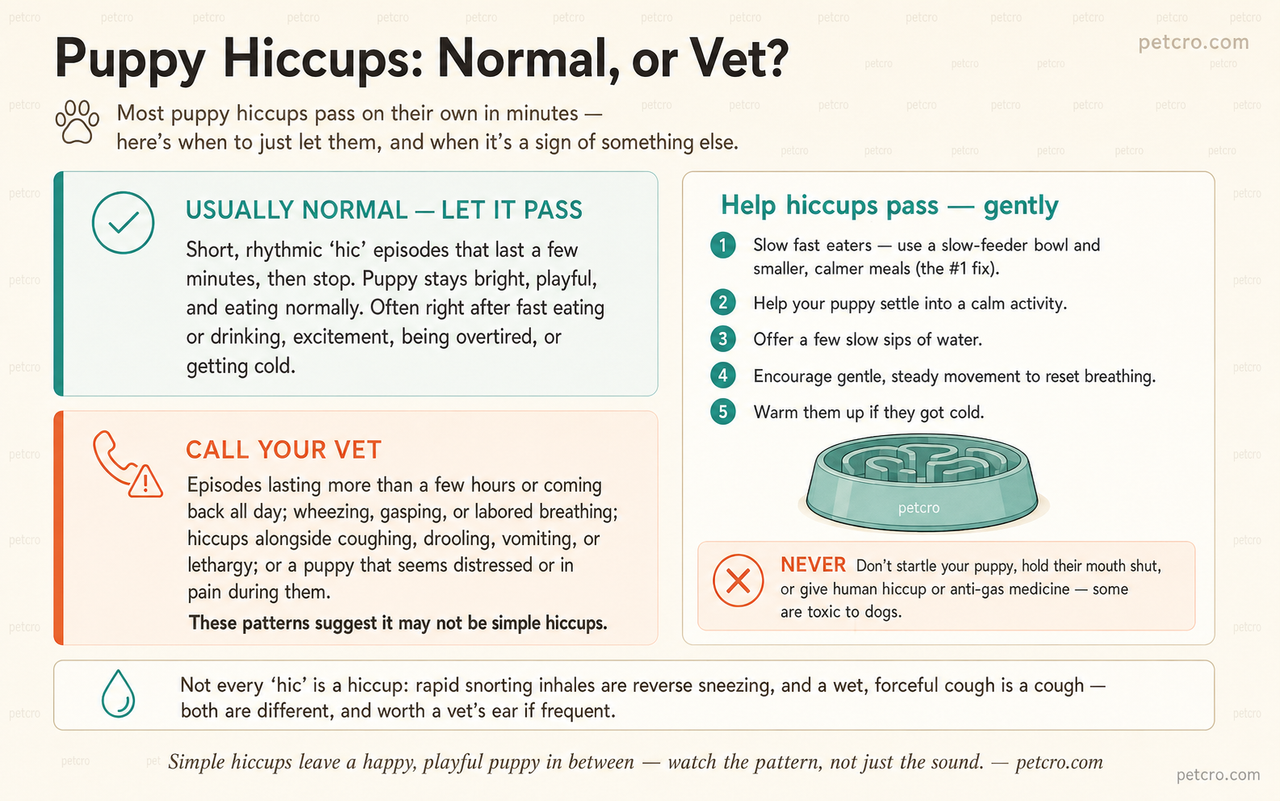
Puppy hiccups are involuntary spasms of the diaphragm — the breathing muscle below the lungs — that snap the vocal cords shut and make the classic "hic" sound. They're extremely common in young dogs, almost always harmless, and usually pass on their own within a few minutes. Fast eating, excitement, and getting cold are the usual triggers.
TL;DR: In the vast majority of cases, puppy hiccups are a normal side effect of a fast-growing, easily-excited body — not a health problem. The fix is prevention: slow down fast eaters and drinkers, keep excitement and cold in check, and let the episode run its course. Skip the human "cures" like startling them. Call your vet only if the hiccups drag on for hours, keep coming back, or arrive with coughing, wheezing, drooling, or labored breathing — those point to something other than simple hiccups.
What are puppy hiccups, exactly?
A hiccup is a reflex, not a decision. The diaphragm — the dome-shaped muscle under the lungs that drives every breath — contracts suddenly and out of rhythm. A fraction of a second later, the glottis — the opening between the vocal cords — snaps shut. That abrupt closing is what makes the sound: hic.
You'll usually see a small twitch or bounce in your puppy's belly or chest with each one, spaced a second or two apart. Between hiccups, the puppy acts completely normal — playing, wagging, and often looking mildly puzzled by the whole thing.
Puppies hiccup far more than adult dogs do, and most grow out of frequent episodes as they mature. If you have a new puppy at home and this is your first time seeing it, it can look alarming. It rarely is.
Why does my puppy have hiccups?
There's no single cause, but a handful of everyday triggers account for almost all puppy hiccups:
- Eating or drinking too fast. The most common trigger by far. A puppy that inhales a meal or gulps water also swallows a lot of air, which irritates the diaphragm. Hiccups that show up right after the bowl is empty almost always trace back to this.
- Excitement and energetic play. A burst of fast, shallow breathing during zoomies or a play session can set the diaphragm off.
- Overtiredness. Much like overtired toddlers, worn-out puppies hiccup more — often as they're winding down for a nap.
- Getting cold. A drop in body temperature can trigger the reflex, which is why hiccups sometimes follow a chilly walk or a cool floor.
- Rapid or irregular breathing. Anything that disrupts a steady breathing rhythm — panting, sudden stress, a coughing fit — can nudge the diaphragm into a spasm.
Because fast eating is the leading cause, a puppy on the right feeding schedule and portion size with a calm eating setup tends to hiccup less. The same goes for how much water your puppy drinks and how quickly they drink it.
Are puppy hiccups normal — and why do puppies get them more than adult dogs?
Yes — occasional hiccups are a normal part of puppyhood. Why puppies get them so much more than grown dogs isn't fully settled, but there are two widely-cited explanations.
The first is simply an immature body. A young puppy's diaphragm and the nerves that control it are still developing, so the reflex fires more easily. As that control matures, the frequency usually drops off.
The second is a popular theory that hiccups are a leftover from the womb. Researchers have observed hiccup-like movements in unborn mammals, and one idea is that they help exercise the developing breathing muscles. Under this theory, puppies simply retain the tendency for a while after birth. It's a reasonable explanation rather than a proven fact — but either way, the practical takeaway is the same: a puppy that hiccups now and then is behaving normally.
What matters more than why is the pattern. Short, occasional hiccups in an otherwise happy, active, normally-eating puppy are nothing to worry about. It's a change in that pattern — longer episodes, or hiccups paired with other symptoms — that's worth a second look.
How to get rid of puppy hiccups
Most hiccups end on their own before you've finished worrying about them. When you want to help them pass faster — or head them off next time — work through these calm, gentle steps:
- Slow down eating and drinking. This is the single most effective fix. Use a slow-feeder bowl or a puzzle feeder, split meals into smaller portions across the day, and put water down between (not during) bursts of play. Our feeding calculator gives you a sensible portion to divide up.
- Help your puppy settle. If the hiccups followed excitement, guide them into a calmer activity — a chew, a lap cuddle, a quiet spot to rest. Lowering the energy usually lets the diaphragm reset.
- Offer a small drink of water. A few slow sips can help regulate breathing. Let them lap calmly; don't tip water into their mouth or rush them, which just makes them gulp.
- Encourage gentle, steady movement. A short, easy walk or slow play can re-establish a normal breathing rhythm. Keep it low-key — the goal is to smooth the breathing, not to rev the puppy back up.
- Warm them up if they're cold. If the hiccups started after a chilly outing, a blanket or a warm spot indoors often does the trick.
What not to do: skip the human hiccup "cures." Don't startle or scare your puppy, don't hold their mouth shut, and never give human hiccup or anti-gas medications — some are toxic to dogs, and none are made for a puppy's system. If you feel a remedy is needed, ask your vet first.
Puppy hiccups vs. reverse sneezing vs. coughing (a quick comparison)
Owners often mistake two other normal-to-concerning behaviors for hiccups. Telling them apart matters, because reverse sneezing and coughing can occasionally point to something a vet should see. Use this quick guide:
| Sign | Puppy hiccups | Reverse sneezing | Coughing |
|---|---|---|---|
| Sound | Rhythmic, repeated "hic" | Rapid snorting or honking | Forceful hack or wheeze |
| What the body does | Small belly/chest twitch; puppy acts normal between | Stands still, neck extended, elbows out | Chest heaves; may gag or retch |
| Airflow | Quick catch of breath | Sharp pulls of air in through the nose | Air forced out |
| Typical length | A few minutes, then gone | Seconds to about a minute, in episodes | Varies; can be persistent |
| Worry level | Very low | Usually low, but note frequency | See a vet if frequent or productive |
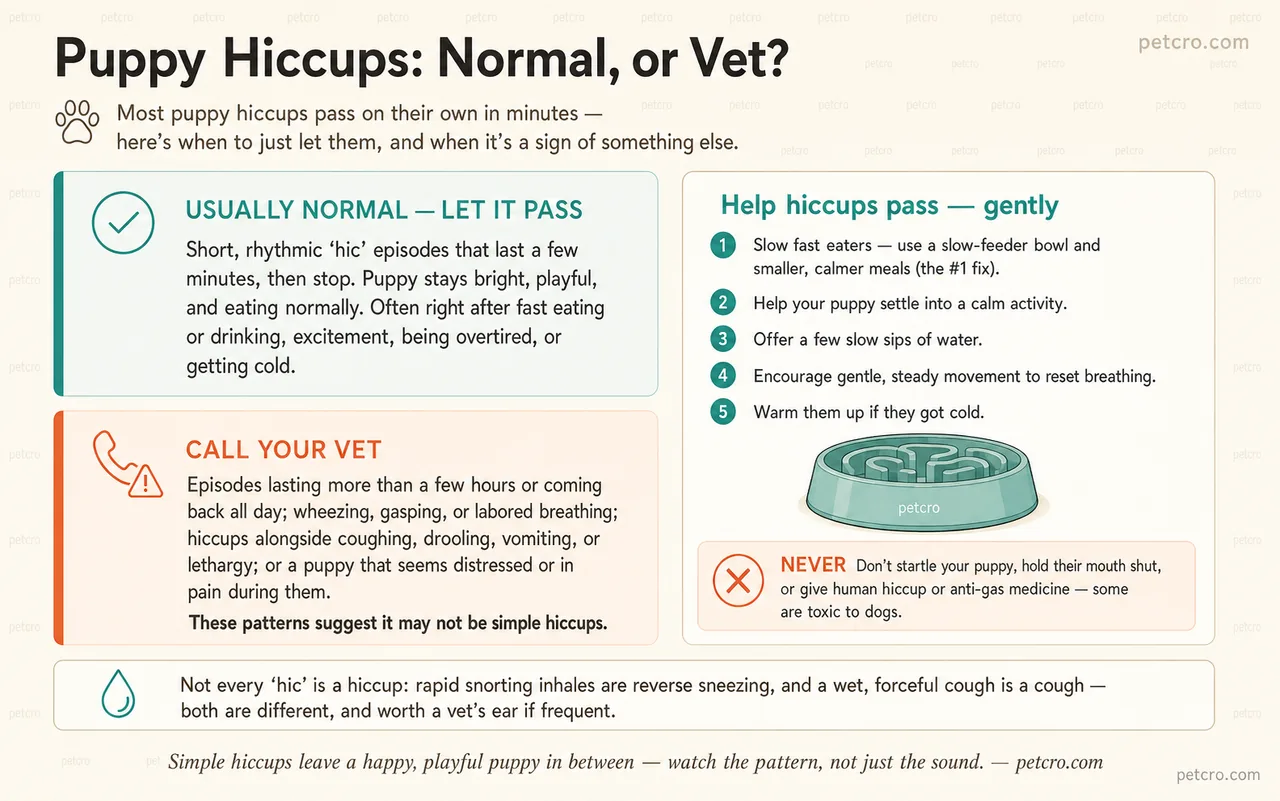
If what you're seeing is a wet, productive cough — or breathing that looks like effort rather than a simple twitch — treat it as a cough, not a hiccup, and read our guide on when a puppy throwing up or bringing up fluid needs attention.
When to worry about puppy hiccups
Simple hiccups are quiet, brief, and leave a bright, playful puppy in between. The signs below are your cue to stop watching and call your vet — not because hiccups are usually dangerous, but because these patterns suggest what you're seeing may not be plain hiccups:
- They last a long time. Episodes that run for more than a few hours, or keep returning through the day, are worth a call.
- Breathing looks labored. Wheezing, gasping, or visible effort to breathe is never "just hiccups."
- They come with other symptoms. Coughing, drooling, vomiting or regurgitation, lethargy, or a puppy that goes off food alongside the hiccups.
- Your puppy seems distressed or in pain during the episodes, rather than carrying on as normal.
Persistent or symptom-paired "hiccups" can occasionally relate to respiratory irritation, parasites that affect the airways, or a stomach that's upset — all of which a vet can check quickly. When in doubt, a phone call to your clinic is the right move; describe exactly what you're seeing, including how long it lasts and anything that comes with it.
A quick, everyday reset for a new puppy — calm feeding routine, warm resting spots, sensible play — prevents most hiccups in the first place. Our new puppy checklist and first-week arrival guide walk through setting that up.
This guide is general guidance, not veterinary advice. For your specific dog's nutrition, health, or behavior needs, consult your veterinarian.
Frequently asked questions
Why does my puppy get hiccups after eating?
Hiccups right after a meal almost always come from eating too fast. A puppy that gulps food swallows air along with it, and that swelling of the stomach irritates the diaphragm just below. A slow-feeder bowl, smaller and more frequent meals, and a calm, unhurried eating spot usually cut down puppy hiccups after eating within days.
How long do puppy hiccups last?
Most puppy hiccups last only a few minutes and stop on their own without any help. Some episodes are shorter; a longer one might run ten minutes or so. What matters is the overall pattern — brief, occasional hiccups in a happy, normal puppy are fine. Episodes that stretch on for hours or keep recurring are worth a vet's opinion.
Are puppy hiccups a sign of worms?
Usually not. Most puppy hiccups come from fast eating, excitement, or getting cold — not parasites. That said, some worms can affect a puppy's airways or stomach, so hiccups that are persistent or paired with coughing, a pot belly, poor growth, or diarrhea deserve a vet check and a stool test as part of routine puppy care.
How do I get rid of my puppy's hiccups fast?
Slow the trigger and lower the energy. Offer a few calm sips of water, guide your puppy into a quiet activity, and gently warm them if they're cold. A short, easy walk can help reset their breathing. Avoid human tricks like startling them or holding their mouth — those don't help dogs and can frighten your puppy.
Should I be worried if my puppy hiccups every day?
Daily hiccups alone, in a puppy that's eating, playing, and growing normally, are generally still within the normal range — young puppies simply hiccup a lot and tend to grow out of it. Track them anyway. If the episodes get longer, come with other symptoms, or your puppy seems bothered by them, mention it to your vet.
Can puppy hiccups turn into vomiting?
Hiccups and vomiting are different reflexes, and simple hiccups don't "become" vomiting. But the same trigger — eating too fast — can cause both. If your puppy frequently hiccups and then brings food back up, slow their eating and read our guide on a puppy throwing up to know which signs mean it's time to call the vet.
TL;DR — the puppy hiccups cheat sheet
- Puppy hiccups are involuntary diaphragm spasms — very common in young dogs and almost always harmless.
- The usual triggers are eating or drinking too fast, excitement, overtiredness, and getting cold.
- The best fix is prevention: slow fast eaters with a slow-feeder bowl and smaller, calmer meals.
- Let episodes run their course; skip human "cures" and never give human hiccup or anti-gas medicine.
- Reverse sneezing (snorting inhales) and coughing (air forced out) are different — don't confuse them with hiccups.
- Call your vet if hiccups last hours, keep recurring, or come with coughing, wheezing, drooling, or labored breathing.
Occasional hiccups are just part of being a puppy — manage the triggers, watch the pattern, and only worry when something else joins the picture.
Sources & further reading
- American Kennel Club — Can Dogs Get Hiccups? — why puppies get hiccups, the common triggers, and when to see a vet.
- American Kennel Club — What Happens When a Dog Reverse Sneezes? — how to tell reverse sneezing apart from hiccups and coughing.
- Merck Veterinary Manual — Lung and Airway Disorders of Dogs — when respiratory signs warrant a vet visit.
- Cornell Riney Canine Health Center — owner-focused canine health information from a leading veterinary college.
If your puppy is on a vet-prescribed diet or has a known health condition, follow your veterinarian's guidance over any general tip here.
More from Petcro's new-puppy cluster
- How Much to Feed a Puppy — portions and schedule that keep fast eaters (and hiccups) in check.
- Puppy Throwing Up — the causes, color clues, and the 48-hour rule for puppy vomiting.
- How Much Water Should a Puppy Drink? — healthy intake and why gulping too fast backfires.
- Feeding calculator — a sensible daily portion for your specific puppy in 30 seconds.
Petcro is reader-supported. We may earn an affiliate commission when you click through links to products in this guide. Our editorial picks are independent of any commercial relationship with any brand.