How much water does your pet need?
Enter your pet's weight to see how much water they need in a day, what their diet changes about the bowl, and the amount that should send you to the vet.
Signs of dehydration.
- Skin check: gently lift the skin over the shoulders and let go. In a well-hydrated pet it snaps back almost immediately; in a dehydrated one it is slow or stays tented. Older pets can have less elastic skin even when they are well hydrated.
- Gums: dry or sticky instead of moist and slippery
- Other signs: sunken or dry-looking eyes, lethargy, poor appetite, thick saliva, panting, vomiting or diarrhea
A change in drinking, up or down, matters more than any single day. Measure the bowl for a few days if you are unsure.
Sources
How much water should a dog drink?
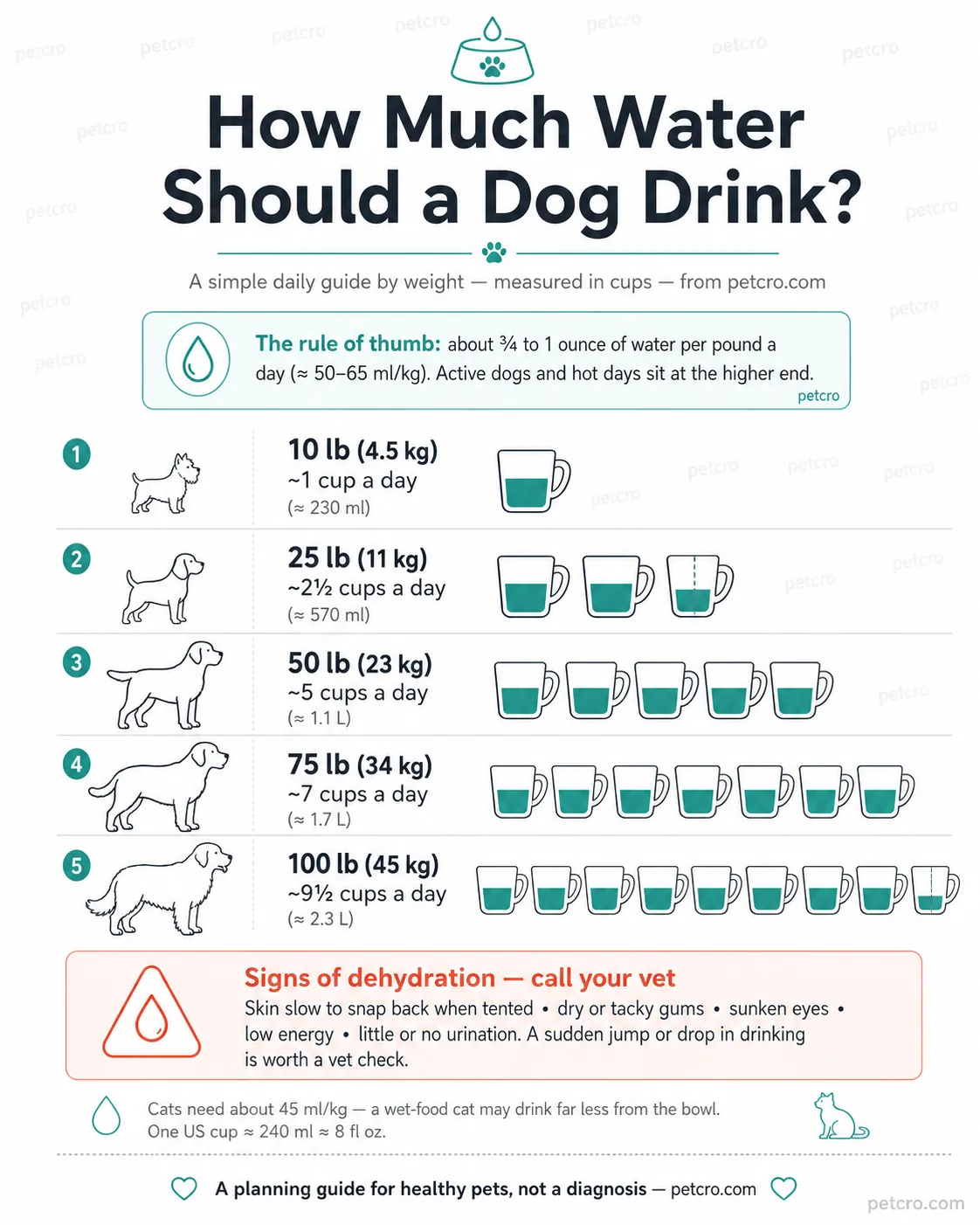
According to the AKC, dogs drink around 40 to 60 ml of water per kilogram of body weight a day, roughly 0.6 to 0.9 fluid ounces per pound. So a 25-pound dog drinks about 2 to 3 cups, and a 50-pound dog about 4 to 5½ cups. The calculator above shows the full range for your dog; the table below is the quick version.
The AKC lists weather, activity level and diet as the things that move it day to day. Diet matters more than most owners expect: canned food is mostly water (60% to over 87%, per the Merck Veterinary Manual), so a dog on wet food drinks less from the bowl than one on dry kibble. Puppies, senior dogs, nursing mothers and toy breeds are at higher risk of dehydration. What matters most is the pattern: a steady amount is normal, a change up or down is the signal worth acting on.
Dog water intake by weight
Approximate daily water for a healthy adult dog, at the middle of the AKC's 40 to 60 ml/kg range. Hot days and exercise push it higher; a wet-food diet means less from the bowl.
| Dog weight | Roughly per day | In ml / liters |
|---|---|---|
| 10 lb (4.5 kg) | ~1 cup | ≈ 230 ml |
| 25 lb (11 kg) | ~2½ cups | ≈ 570 ml |
| 50 lb (23 kg) | ~5 cups | ≈ 1.1 L |
| 75 lb (34 kg) | ~7 cups | ≈ 1.7 L |
| 100 lb (45 kg) | ~9½ cups | ≈ 2.3 L |
One US cup ≈ 240 ml ≈ 8 fl oz. Cats need about 4 oz (½ cup) per 5 lb of lean body weight a day, from food and drinking combined (Cornell Feline Health Center), so a wet-fed cat may drink far less.
Drinking too much or too little: the red flags
Water intake is one of the most useful early-warning signs a dog owner has, because it changes before a dog looks obviously sick.
Vets generally call more than 100 ml per kg a day excessive (about 2½ times the low end of normal). The most common causes are diabetes, Cushing’s disease and chronic kidney disease, per the AKC. If your dog keeps drinking more than its usual amount, measure it for a few days and call your vet.
In cats, Cornell lists weakness, a poor appetite and dental problems among the reasons for drinking less; in dogs, puppies, seniors, nursing mothers and toy breeds are at higher risk of dehydration (AKC). Pair it with the dehydration checks above and call your vet rather than waiting it out.
How to get your pet to drink more
- More stations. Fresh water in several easy-to-reach spots, not just one. In multi-pet homes, make sure no pet is being kept away from the bowl.
- Add water to food. Feeding wet food or adding water to meals raises intake. A little low-sodium broth (or, for cats, water from a can of tuna) can tempt them to drink.
- Try a fountain. Some cats drink more from a fountain, though preferences vary.
- On hot days. Offer water often. Some owners give dogs ice cubes to chew.
Frequently asked questions
How much water should a dog drink per day?
About 40 to 60 ml per kilogram of body weight a day, according to the AKC, roughly 0.6 to 0.9 fluid ounces per pound. A 25-pound dog drinks about 2 to 3 cups, a 50-pound dog about 4 to 5½. Weather, exercise and diet all change it: dogs on wet food drink less from the bowl.
How much water should a cat drink per day?
Cornell Feline Health Center puts it at about 4 ounces of water per 5 pounds of lean body weight a day, so an average 10-pound cat needs about one cup. That includes water from food: wet food can be up to 80% water, so a wet-fed cat may drink very little from the bowl.
What are the signs of dehydration in a dog or cat?
Skin over the shoulders that is slow to snap back when gently lifted, dry or sticky gums, sunken or dry-looking eyes, lethargy, poor appetite and thick saliva. Any of these, especially with vomiting or diarrhea, is a reason to call your vet rather than trying to force fluids at home.
Why is my dog suddenly drinking so much water?
Drinking much more than usual is called polydipsia. Vets generally use more than 100 ml per kilogram a day as the line, and the most common causes are diabetes, Cushing’s disease and chronic kidney disease, according to the AKC. If your dog keeps drinking more than its normal amount, measure it for a few days and talk to your vet.
Can cats get enough water from wet food alone?
Often, yes. Cornell notes wet food can be up to 80% water, so wet-fed cats may drink less, while cats on dry food take more of their water by drinking. Fresh water in easy-to-reach spots helps, and some cats drink more from a fountain, though preferences vary.
How do I get my dog to drink more water?
Keep fresh water in more than one spot, add water or a little low-sodium broth to meals, or mix in some wet food. Some owners also flavor water with broth or give ice cubes to chew. If your dog suddenly drinks much less than usual, call your vet rather than waiting.
Related guides
Dogs: AKC (40 to 60 ml/kg a day; more than 100 ml/kg is excessive). Cats: Cornell Feline Health Center (about 4 oz per 5 lb of lean body weight). Diet: Merck Veterinary Manual. Full sources are listed under the calculator. A planning estimate for healthy pets, not a diagnosis. A sustained change in drinking, or any sign of dehydration, is a reason to call your vet.
Ask CRO about specific symptoms or water-bowl recommendations.