Foods, plants, and household items that poison dogs
Searchable safety database covering 58 common toxins. Color-coded by severity — tap any item for the full emergency guide.
Browse all toxic foods, plants, and household items
 FatalPlant
Castor bean
Ricinus communis
Contains ricin, one of the most potent natural toxins known. Inhibits protein synthesis in cells.
Full guide FatalPlant
Sago palm
Cycas revoluta
Cycasin (via its aglycone methylazoxymethanol) causes acute liver failure. Even with aggressive treatment, mortality rate is around 50%.
Full guide FatalPlant
Yew
Taxus spp.
Contains taxine alkaloids that disrupt heart rhythm. Death can occur within hours, sometimes with no warning symptoms.
Full guide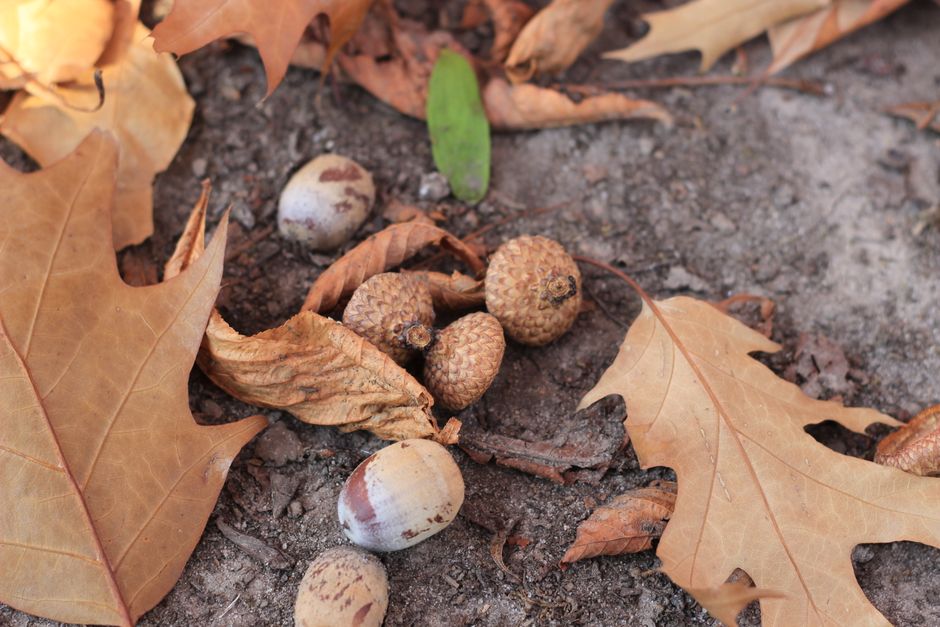 SevereFood
Acorns
Tannins irritate the gut and, in quantity, can damage the liver and kidneys; whole nuts can block the gut.
Full guide SevereFood
Alcohol
Rapid central-nervous-system depression and drop in blood sugar.
Full guide SeverePlant
Azalea
Rhododendron spp.
Contains grayanotoxins that disrupt sodium channels in nerve and muscle tissue, including the heart.
Full guide SevereFood
Cherry
Pits contain amygdalin which breaks down to cyanide. The pit itself is a choking hazard.
Full guide SevereFood
Chocolate
Contains theobromine. Dogs metabolize it very slowly, so it builds up to toxic levels.
Full guide SevereFood
Coffee
Similar to theobromine — cardiac and nervous-system stimulant.
Full guide SeverePlant
Foxglove
Digitalis purpurea
Contains cardiac glycosides (digitoxin and related compounds) that disrupt heart rhythm. The plant family is the source of digoxin used medicinally in humans; in pets, the raw plant compounds are lethal at small doses.
Full guide SevereFood
Grape
The exact toxic agent is still being researched (likely tartaric acid). Reactions vary wildly between individuals.
Full guide SeverePlant
Lily of the valley
Convallaria majalis
Contains cardiac glycosides (convallatoxin) that disrupt heart rhythm.
Full guide SevereFood
Macadamia
Unknown toxin causes weakness and tremors. Not usually fatal but very unpleasant.
Full guide SevereFood
Mushroom
Many yard and woodland species cause liver/kidney failure or neurological signs.
Full guide SevereFood
Nutmeg
Myristicin causes tremors and seizures in large doses. A sprinkle in cooking is low-risk.
Full guide SeverePlant
Oleander
Nerium oleander
Contains cardiac glycosides (oleandrin) that disrupt heart rhythm. Effects similar to digitalis poisoning.
Full guide SevereFood
Onion
Allium species damage red blood cells, causing anemia. Garlic is ~5× more potent than onion.
Full guide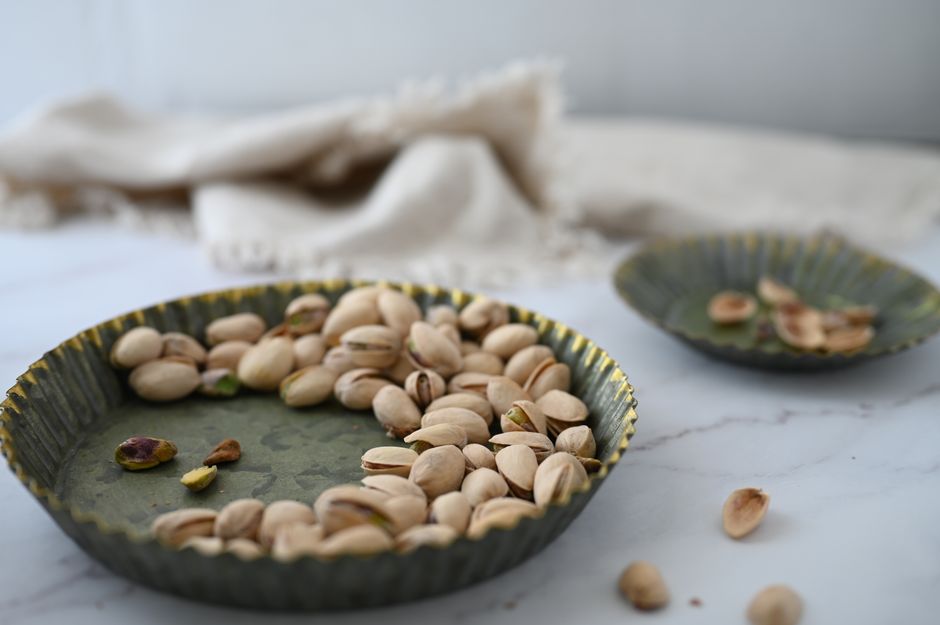 SevereFood
Pistachios
Not acutely toxic, but high fat and salt, possible aflatoxin mold, and shells that choke or block.
Full guide SevereFood
Raw dough
Yeast continues fermenting in the warm stomach — produces ethanol and painful gas distension.
Full guide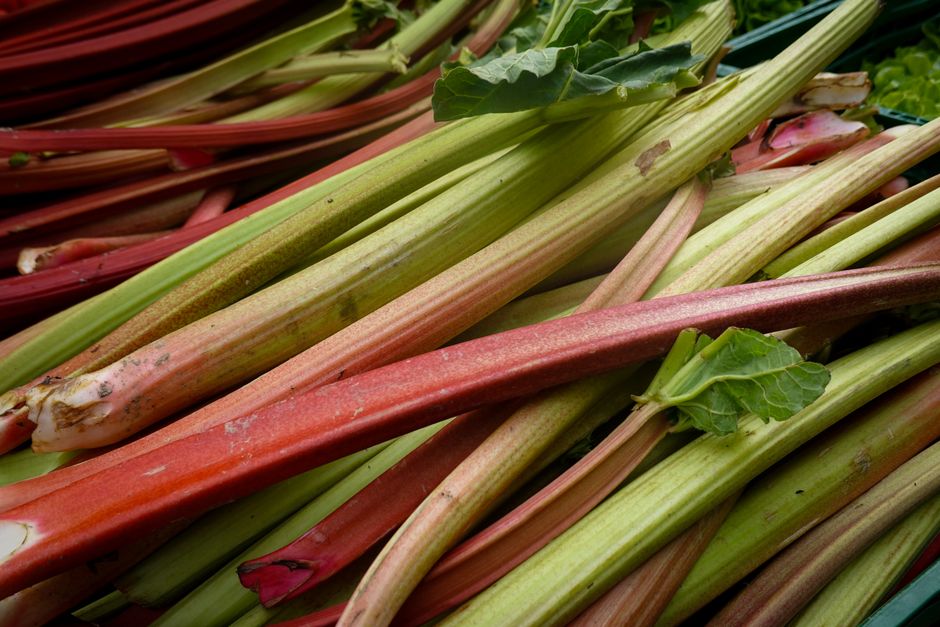 SevereFood
Rhubarb
Rhubarb leaves contain soluble calcium oxalates; stalks are high in oxalic acid. No benefit to dogs.
Full guide SevereFood
Walnuts
Black walnuts are toxic; moldy walnuts carry tremorgenic mycotoxins; all are high in fat.
Full guide SevereFood
Xylitol
Triggers massive insulin release in dogs, dropping blood sugar; higher doses cause liver failure.
Full guide ModerateFood
Avocado
Contains persin — more concern in birds and horses than dogs. Pit is the real danger.
Full guide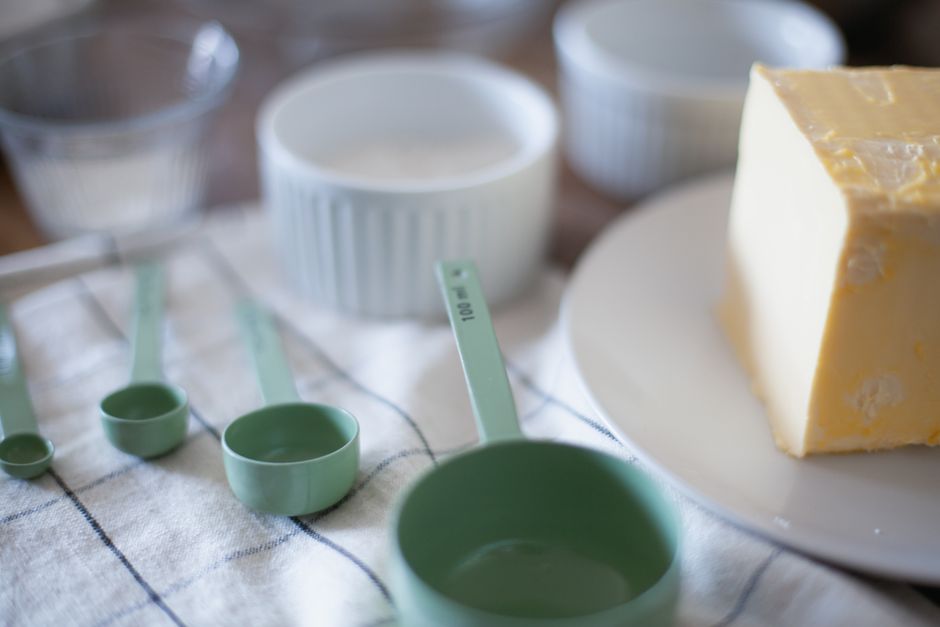 ModerateFood
Butter
Almost pure fat plus dairy. No benefit; fat is a pancreatitis trigger.
Full guide ModerateFood
Cat food
Formulated for cats — far higher protein and fat than dogs need. Regular access causes GI upset, weight gain, and pancreatitis risk.
Full guide ModerateFood
Cooked bone
Cooking makes bones brittle and likely to splinter — causing mouth, throat or gut injury.
Full guide ModerateFood
Ham
Cured, very high in salt and fat, with nitrates. No nutritional reason to feed it.
Full guide ModerateFood
Honey
Trace antioxidants but essentially sugar. Raw honey can carry botulism spores.
Full guide ModerateFood
Ice cream
Sugary and full of dairy many dogs can't digest. Some flavors (chocolate, coffee, xylitol) are toxic.
Full guide ModeratePlant
Lily
Lilium spp., Hemerocallis spp.
GI irritation. Dogs lack the kidney-specific sensitivity that cats have.
Full guide ModerateFood
Milk
Variable lactose tolerance. Ice cream also has too much sugar.
Full guide ModerateFood
Peanut butter
Plain peanut butter is safe — but many "sugar-free" brands contain xylitol which is deadly to dogs.
Full guide ModerateFood
Popcorn
Plain popped corn is low-calorie. Butter, salt, and unpopped kernels are the real problems.
Full guide ModerateFood
Pork
Good protein and B vitamins. Risk is in the form: raw pork carries parasites, cured pork (bacon/ham) is too salty/fatty, and cooked bones splinter.
Full guide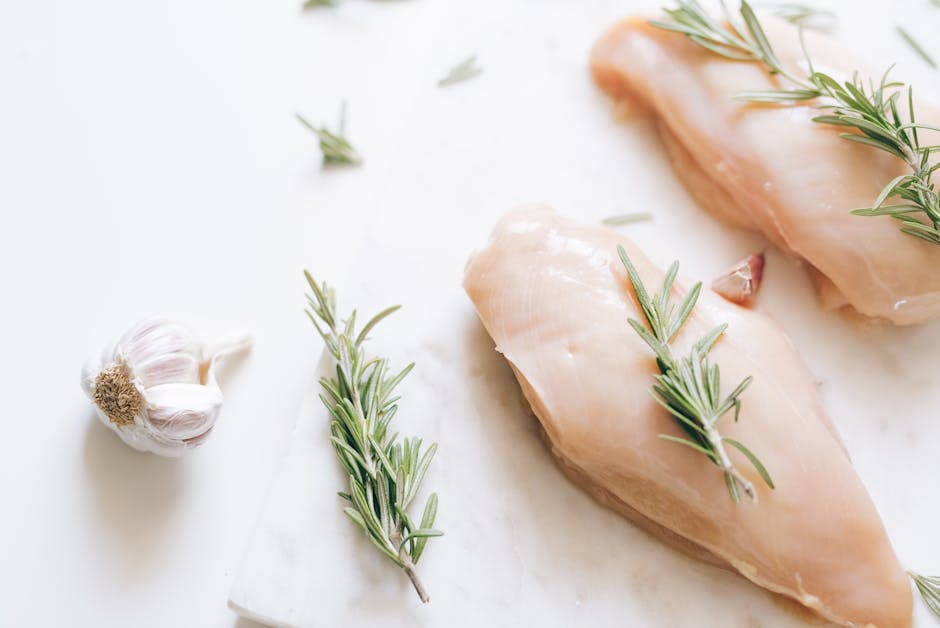 ModerateFood
Raw chicken
Raw poultry commonly carries Salmonella and Campylobacter, a risk to the dog and household.
Full guide ModerateFood
Raw egg
Salmonella risk (to pet and family); avidin binds biotin if fed long-term.
Full guide ModerateFood
Raw fish
Parasitic risk; thiaminase as with cats.
Full guide ModerateFood
Salt
Excess salt shifts water out of brain cells; also worsens heart and kidney conditions.
Full guide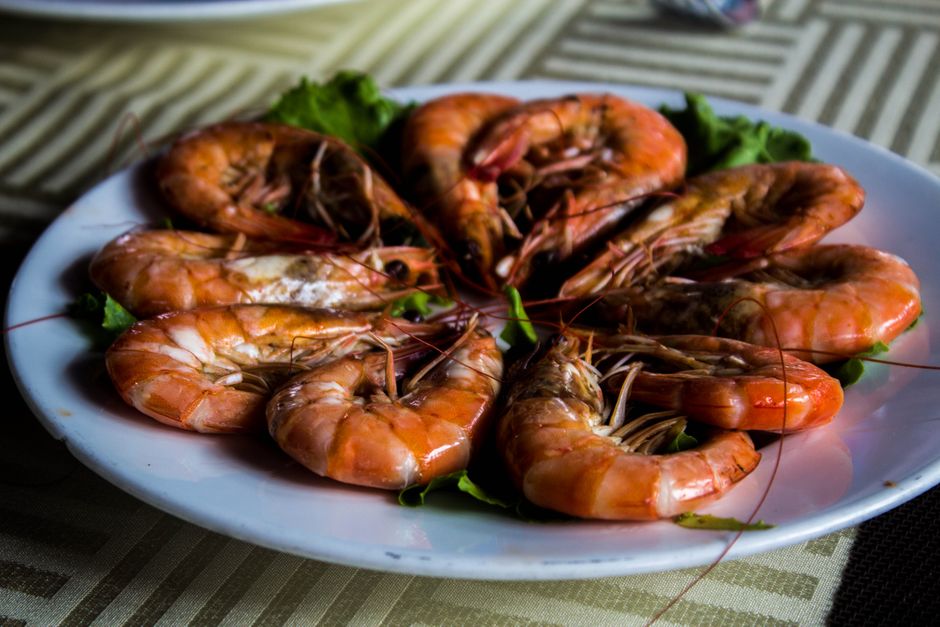 ModerateFood
Shrimp
Lean protein with B12 and antioxidants. Risk is all in prep: raw shrimp carries bacteria/parasites, and shells are a choking/obstruction hazard.
Full guide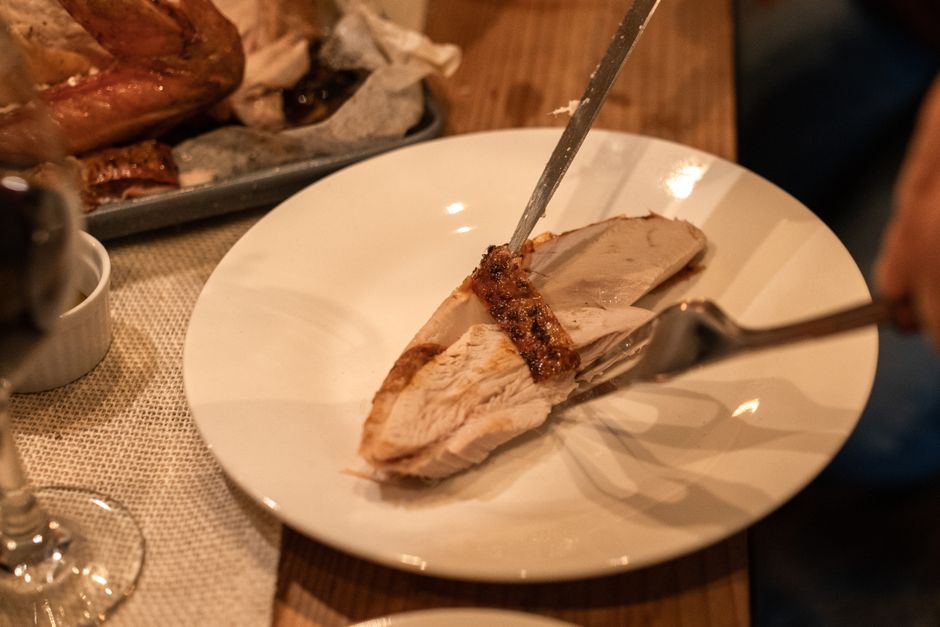 ModerateFood
Turkey
Lean protein used in many dog foods. The dangers are skin, bones, and seasoning.
Full guide MildPlant
Aloe
Aloe barbadensis
Saponins and anthraquinones cause GI irritation; rarely fatal.
Full guide MildPlant
Peace lily
Spathiphyllum spp.
Insoluble calcium oxalate crystals.
Full guide MildPlant
Philodendron
Philodendron spp.
Insoluble calcium oxalate crystals.
Full guide MildPlant
Pothos
Epipremnum aureum
Insoluble calcium oxalate crystals embed in oral tissue, causing intense irritation and swelling.
Full guide SafeFood
Apple
Good fiber and vitamin C. Seeds contain cyanide — small amounts are harmless but remove for safety.
Full guide SafeFood
Banana
High in potassium and vitamin B6. High in sugar — don't overdo it.
Full guide SafeFood
Blueberry
Low calorie, high in antioxidants. Most dogs love them.
Full guide SafeFood
Carrot
Low calorie, good for teeth, high in fiber and beta-carotene.
Full guide SafeFood
Chicken
Lean protein. Avoid bones, skin, and heavy seasoning.
Full guide SafeFood
Green bean
Low calorie, high fiber — great for weight management.
Full guide SafeFood
Oranges
Vitamin C and potassium. Sugar and acidity mean it is an occasional treat at most.
Full guide SafeFood
Pumpkin
Fiber helps with constipation and mild diarrhea. Avoid pie filling (spices + sugar).
Full guide SafeFood
Rice
Easy to digest, low fiber. Combines well with plain chicken for bland-diet days.
Full guide SafeFood
Strawberries
Low-calorie source of vitamin C, fiber, and antioxidants. Natural sugar only matters in excess.
Full guide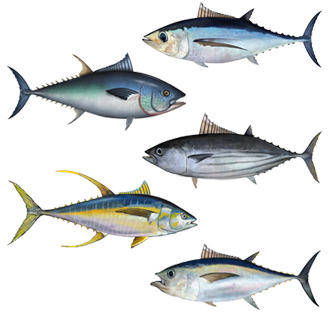 SafeFood
Tuna
Occasional tuna in water (not brine) is fine for dogs.
Full guide SafeFood
Watermelon
90% water — great summer hydration.
Full guide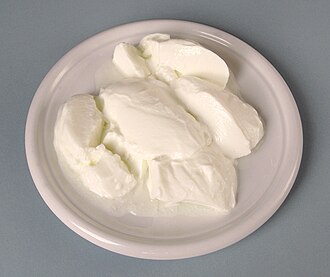 SafeFood
Yogurt
Probiotics can support gut health. Avoid flavored varieties (sugar, xylitol).
Full guide SafeFood
Zucchini
One of the safest veggies — low calorie, high fiber and water, with vitamins A and C.
Full guide
If your dog has eaten something toxic
- Don't wait for symptoms. Many poisonings are far easier to treat in the first 1–2 hours.
- Don't induce vomiting at home unless a vet tells you to — some substances cause more damage coming back up.
- Bring a sample. For foods: the wrapper, packet, or bottle. For plants: a piece of leaf or stem in a paper bag (not plastic). Your vet needs to know the exact item and dose.
- Call before you drive. The vet can prep emergency treatment and may direct you to the nearest out-of-hours clinic.
This database is a reference, not a substitute for veterinary advice. When in doubt, call your vet or the ASPCA Animal Poison Control — the call fee is far cheaper than treatment for a missed case.